Sesame Halvah Cookies

Halvah cookies (9)

My grandmother would have turned 91 last Saturday.  Since I couldn’t bring her a cake or call her and sing, I decided on a small act in her honor.  I bought some halvah – the sweet treat she always had in her fridge – and I heartily savored a few too many slices of it.  Dense with sesame sweetness, each bite brought me back to the kitchen of grandma’s house, where my sister and I spent many summer afternoons sipping iced tea, snacking on brie cheese, and nibbling on halvah: one of grandma’s most favorite indulgences.

Halvah cookies (1)

Made and spelled in various ways, halvah has ties to numerous regions.  For my grandma, halvah came through her Jewish background and was always the sesame kind, preferably marbled with chocolate. The day after her birthday this year, I found myself with plenty of extra halvah and a yearning to bake. I remembered a scrumptious recent post on a favorite blog of mine, where halvah had been imbedded into a nutty loaf cake — an utterly mouthwatering idea!  Inspired, I created my own halvah-laden treat: thumbprint-style cookies with a chunk of halvah as their filling.  Here is the recipe.

Sesame Halvah Cookies (makes 20)Halvah cookies (5)

  • 1.5 tablespoons sesame seeds
  • 1 cup flour
  • ¼ cup sugar
  • ½ teaspoon salt (omit if using salted butter)
  • ½ cup butter, softened to warm room temperature
  • 1 teaspoon pure vanilla extract
  • 3 ounces sesame halvah, cut into ½” cubes (about 20 cubes)
  • 3 ounces chopped dark chocolate or ½ cup chocolate chips

Preheat oven to 325 F.  Line a large baking sheet with parchment. Toast sesame seeds on the baking sheet for about 15-20 minutes or until fragrant and golden brown.  Transfer seeds to a bowl to cool.  Whisk the flour, sugar and salt together.  Add the butter and mix until an even dough forms (using damp, warm hands can be easiest).  Add the vanilla and knead until just incorporated.

Halvah cookies (14)Form dough into balls a little over 2 teaspoons each (about .6 ounce a piece), placing them at least 1.5” apart from one another on prepared baking sheet.  Push a cube of halvah firmly into the center of each cookie, bracing sides of dough and squeezing gently to hold the halvah in place.  Freeze cookie sheet for 10 to 15 minutes (they will still spread a bit when baked, but this will help them hold their shape).

Bake cookies for 20 minutes at 325 F.  They’ll be about 2″ in diameter with toasty edges. Remove from oven and let cool completely, setting in fridge or freezer to hasten cooling if desired.  Carefully melt the chocolate (a few 20 second stints in the microwave, stirring after each until just smooth will do).  Transfer chocolate to a pastry bag or plastic bag with its corner snipped.  Drizzle over cooled cookies a few at a time, immediately following with a sprinkle of toasted sesame seeds.  Let chocolate harden before eating (if you can wait).

Halvah cookies (10)

Surrounded with buttery shortbread dough and topped with rich chocolate, the decadence of halvah is truly celebrated in these one of a kind cookies.  A sprinkle of fragrant sesame matches perfectly with the sweet paste within, just as the crisp adornment pairs nicely with the crumble of the cookie. With their marvelous flavors inside and out, sesame halvah cookies would make grandma proud.  I only wish I could share them with her right now.

Halvah cookies (6)

Maybe next time… Though I haven’t tried it myself, I trust that these cookies would work well with almost any kind of halvah in their centers.  Moreover, the dough would taste great with a dash of ground spice (cinnamon, nutmeg, cloves or the like), and some fresh citrus zest such as orange could also be yummy.  For a more chocolatey cookie, replace ¼ cup flour with cocoa powder, and consider dunking the cookies in melted chocolate instead of drizzling them with it.  Candy in a cookie — can it get any better?

Halvah cookies (4)Halvah cookies (2)Halvah cookies (13)Halvah cookies (12)Halvah cookies (7)

Posted in Sweets, Cookies & Bars | Tagged , , , , , , , , , , , , , , , | 14 Comments

Mango Meringue Pie with Coconut Macadamia Crust

Mango Meringue Pie (14)

I love this time of year at the market, when mountains of fragrant mangoes seem to surround me as I shop.  Mangoes lure me in with their promise of sweetness and a juicy, tropical taste.  When I thought about making a mango confection recently, I was skeptical at first.  Could they be any better than they are plain?  Would their natural sweetness make for a wince-inducing, sugary dessert?  After much thought and experimentation, I decided to pair my mangoes with a crispy graham crust full of macadamias, coconut and lime.  Then I slathered the creation with fluffy vanilla meringue and toasted it like a marshmallow. The result was a perfect spring treat, and it disappeared before I knew it.

Mango Meringue Pie (12)

Despite the long recipe, this pie is pretty simple to make.  The most difficult task is finding the very best mangoes around; their flavor really comes through.  I urge you to use fresh, seasonal mangoes that are very ripe; they should be incredibly fragrant and hold an indention when you push on their skin.  I chose not to strain the mango puree, so the tiny threads of mango fiber and all their pleasant flavor are present.  This texture also helps the gelatin form a sliceable but not rubbery structure.  (I’ve made mango curd with corn starch instead of gelatin before, but the outcome was more paste-like than pie-worthy.  I’ve also tried making mango fillings and custards with cream and eggs, but I found the additions did little but dilute the delicious mango–so in this recipe, gelatin it would be.)

Mango Meringue Pie (makes a 9” pie; serves 8-10)

For the crust:Mango Meringue Pie (1)

  • ¼ cup unsweetened shredded coconut (a little over .75 ounce)
  • 1/3 cup whole shelled macadamia nuts (about 1.75 ounces)
  • 1 medium lime
  • 9 whole graham crackers (one sleeve; about 5 ounces)
  • 1/3 cup melted butter
  • dash of salt (omit if butter and/or nuts are salted)

Preheat oven to 325 F.  On a large baking sheet, spread out the coconut and macadamias separately, side by side.  Toast in oven for about 6-8 minutes, until edges of nuts are golden brown, coconut is browned, and both are fragrant.  Finely zest and juice the lime; set juice aside for later.  Crush graham crackers into even, coarse crumbs.  Once they are cool, chop the macadamia nuts finely.  Lightly butter a 9” pie pan, preferably glass.  Mix coconut, nuts, lime zest, crushed graham crackers, salt (if using), and butter until moist.  Press mixture evenly and very firmly into pie pan, holding it up to light (if glass) to avoid thin spots.  Bake for 15 minutes, then cool (place in freezer to hasten cooling if desired).

For the filling:Mango Meringue Pie (2)

  • 4 large mangoes (such as the common Tommy Atkins or Haden variety), very ripe and fragrant,  weighing about 14-16 ounces each
  • 1.5 tablespoons gelatin (2 envelopes)
  • Juice of one lime (from lime above)
  • ¼ cup powdered sugar
  • water

Cut mangoes and discard pits and skins.  Place in food processor and blend until smooth and creamy, about 3 minutes.  Place lime juice in measuring cup and add water to make ½ cup liquid total. Heat the mixture to scalding (a minute in the microwave will do). Whisk gelatin and powdered sugar into the liquid; mix rapidly until all powder has dissolved. Quickly pour into the mango puree and blend for another minute or so.  Transfer the mixture to the cooled crust, cover with tin foil, and chill for at least 3 hours.  (My fridge is not the coolest, so I placed mine in the freezer for one hour, and in the fridge for the other two; the texture was perfect.)  When ready to serve (within a day), make the meringue.

For the meringue:Mango Meringue Pie (8)

  • 3 egg whites
  • ½ cup granulated sugar
  • ¼ teaspoon vanilla bean paste

Whisk egg whites and sugar in a large metal bowl (preferably the bowl of a standing mixer).  Place bowl over a pot of simmering water; do not let bottom of bowl touch water.  Whisk constantly for 3 to 5 minutes, until mixture feels hot to the touch and all sugar granules have dissolved. Remove bowl from heat and beat egg whites on high for 6 to 8 minutes, until stiff, shiny peaks have formed, adding vanilla bean paste at the last minute.  Spread meringue over pie in a decorative fashion, then toast the meringue with a kitchen torch, like this:

Mango Meringue Pie99

Mango meringue pie is vivid with complementary flavors.  The crumbly, coconutty crust is perfectly studded with rich macadamia pieces, and the trace of lime is just enough to highlight the tangy fruit filling.  Mango lovers are sure to enjoy the almost-purely mango filling, while those with a sweet tooth will happily devour the sweet meringue topping.  Taken all together, though, this pie is surely at its best; after all, there is a marvelous magic that happens when creamy, sweet, fruity and nutty meet in one bite.

Mango Meringue Pie (17)

Maybe next time… If you like your meringue piled high and your pie on the sweeter side, feel free to double the meringue recipe above.  If you don’t have a kitchen torch (yes, it’s one of the most unnecessary yet addictive cooking gadgets), you can instead heat your oven to broil with a rack at the top position, and place the pie there for about a minute.  To make this pie dairy-free, replace the butter in the crust with melted coconut oil.  Yum!

Mango Meringue Pie (18)Mango Meringue Pie (11)Mango Meringue Pie (10)Mango Meringue Pie (19)Mango Meringue Pie (9)

Posted in Pies, Tarts & Cheesecakes, Sweets | Tagged , , , , , , , , , , , , , , | 15 Comments

Gin and Tonic Cake: A Cocktail Turned Confection

Gin and Tonic Cake (15)Herbal and effervescent, a gin and tonic just might be the most refreshing concoction in existence. I’m not sure why the drink has been on my mind lately; perhaps it’s the recent surge of warm weather, or more likely, my own need for invigoration. Whatever the reason, gin and tonic was quick to transform from a classic cocktail to a fresh dessert – first in my mind, then in my kitchen.

Gin and Tonic Cake (17)Juniper berries are intrinsic to gin, so it seemed natural to reach for them here, ignoring their common use as a savory seasoning. A bit sweet and sour with a hint of pepper and pine, the little blue spheres taste a lot like the liquor they flavor: aromatic, clean, earthy and botanical. I chose a unique, locally-sourced gin that proved to be simultaneously warm, cool and forest-like on the palate. It was sure to pair wondrously with fizzy tonic water and fresh lime – not merely to sip, but to bite, chew and savor.

Gin and Tonic Cake (makes a tall 8″ round cake; serves 10-12)

  • 3 small limesGin and Tonic Cake (10)
  • 45 juniper berries* (about 1 tablespoon)
  • 2 large eggs
  • ½ cup vegetable oil
  • ¾ cup granulated sugar
  • 1 tablespoon pure vanilla extract
  • 2 cups flour
  • 2 teaspoons baking powder
  • 2 teaspoons baking soda
  • ½ teaspoon salt
  • 2/3 cup gin, divided
  • ¾ cup tonic water (fresh; not flat)
  • 2 cups powdered sugar (for the glaze; don’t be alarmed — this large amount shrinks)

Gin and Tonic Cake (9)Line an 8” cake pan with parchment paper; lightly grease paper and sides of pan.  Preheat oven to 350 F.  Finely zest limes; set aside zest.  Juice limes and measure out ¼ cup juice and, separately, 1 tablespoon juice; set both aside. Using a mortar and pestle or spice grinder, mash 30 of the juniper berries until small flakes are formed; set aside.  In a large bowl, beat together eggs, oil, granulated sugar and vanilla until even and smooth.

Sift over the mixture: flour, baking powder, baking Gin and Tonic Cake (13)soda and salt. Mix on low speed, gradually adding 1/4 cup lime juice and 1/3 cup gin.  Beat until smooth. Toss in the lime zest and crushed juniper berries, mixing until evenly disbursed. Gently fold in the tonic water with a spatula, then quickly pour into prepared pan.  (If desired, watch the batter bubble, brown and gloriously raise in your oven!) Ultimately, bake the cake for about 40-45 minutes, checking center with a wooden skewer or toothpick at the 35 or 40 minute mark; cake is done when golden, domed, and no wet better appears.

Remove cake from oven and let cool in pan at least 20-30 minutes. Loosen sides of cake with a butter knife, and carefully transfer cake to a wire rack placed over a baking sheet.  While cake cools a bit longer on rack, place the powdered sugar, remaining tablespoon lime juice, and remaining 1/3 cup gin in a saucepan. Whisk over low/medium heat until just bubbling. Let bubble for about 20-30 seconds (longer will turn sugar into a clear sticky glaze). Remove from heat and keep stirring.

Working quickly, pour half of the glaze over cake; it will harden quickly.  Immediately repeat with second half of glaze, letting it drip down the sides of the cake. Reserve a bit of glaze in pan, tossing the remaining 15 juniper berries in it.  If glaze in pan is already too hard, place pan over low heat momentarily. Using small tongs or baking tweezers (the sugar coating is HOT), quickly place glazed juniper berries evenly around edges of cake and a few in the center.  (You may notice that I only used 8 around the edges of my cake, but I suggest placing 12+ around the edges so that each slice bears at least one berry.)   Store the cake covered at room temperature (don’t refrigerate); eat within 2 or 3 days.

Gin and Tonic Cake (4)

With an undeniable echo of the cocktail behind it, the gin and tonic cake offers herbal undertones and citrusy traces of juniper in a moist and fulfilling format. The sweet, boozy glaze envelops a tender crumb, giving each bite both crispness and a kick.  While the carbonation vanishes from the end result, its tiny air pockets make for a springy and scrumptious dessert. Refreshment, sweetness, and spirits – what more do you really need?

Gin and Tonic Cake (14)Maybe next time… For a ginnier taste, brush the cake with a little more liquor before drizzling with icing. For less boozy flavor, replace some or all of glaze’s gin with more lime juice. As for the gin itself, it goes without saying that using a different kind will change the flavor of this dessert. Use whatever kind you like–though I can recommend with great confidence the magical type I used here, whether for sipping or for baking. (Despite the notion that distinctive spirits and cooking shouldn’t mix, the quality and character of what you use will always come through, so my philosophy is: might as well use something good!) Finally, for a more classic, less liquor-y, citrus yellow cake, use traditional frosting instead of the glaze, but to keep the dessert dairy-free, make sure your frosting is, too.

Gin and Tonic Cake (18)

*I found my jar of juniper berries in the spice aisle of my local grocery store.  I admit I tossed a handful of them my salad a few nights ago and greatly enjoyed the enhancement — but above all, their promise as a baking ingredient has captivated me, and I can assure you they’ll be back on my dessert menu in the future.  In fact, I’ll likely add more to this recipe next time; feel free to adjust your amount to your taste, too.

Gin and Tonic Cake (1)Gin and Tonic Cake (20)Gin and Tonic Cake (22)

Posted in Cakes & Cupcakes, Sweets | Tagged , , , , , , , , , , , , , , , , | 30 Comments

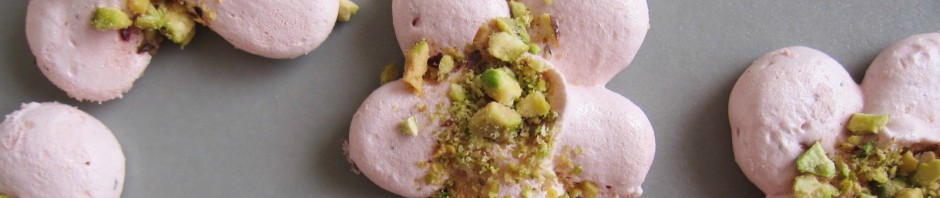
Scrumptious Spring Flowers: Hibiscus Pistachio Meringues

Hibiscus pistachio meringues (5)As I was leaving work last Friday, I felt even more compelled than usual to bake over the weekend. There was no particular event to bring dessert to, and no one was expecting any treats from me. My desire to make something was all about the process; I craved the presence and focus that would be required as I’d stand in the kitchen.  I wanted to get lost in sweet fragrances and to have messy, sticky hands — to feel in awe of the magic of transforming various ingredients into a new, independent creation.

Hibiscus pistachio meringues (1)When I finally thought about what I wanted to bake, I knew it had to be something pretty.  Something that required some decorating time.  Something that ushered in a little much-needed brightness.  Something spring-like that would hint of summer’s imminence. Something, say, reminiscent of my favorite iced drink that might evoke the stunning crimson flowers it’s brewed from: beloved hibiscus. The answer was flower-shaped meringues sweetened with tangy hibiscus syrup. Enhanced with citrus zest and sprinkled with bright green pistachios, my weekend creation proved to be a fulfilling, therapeutic creative process with a delicious and adorable outcome.  Here’s the recipe.

Hibiscus Pistachio Meringues (makes about 125 meringues)

Hibiscus pistachio meringues (18)¾ cup boiling water
¾ cup dried hibiscus petals, divided
3 ounces shelled pistachio nuts
1 lemon or lime
1 tablespoon clear corn syrup
¾ cup + 1 tablespoon sugar
3 egg whites (about 3/8 cup)
red food coloring or beet powder, optional
salt for sprinkling (if nuts are unsalted)
candy thermometer

In a heatproof container, pour boiling water over 1/2 cup of the hibiscus flowers.  Cover and let brew for 10 minutes. Strain and measure out 1/3 cup brewed tea. Set aside. Use a mortar and pestle or spice grinder to finely crush the remaining 1/4 cup dried hibiscus petals. Sift or sieve them into a container, then measure out a heaping teaspoon; set aside.

Hibiscus pistachio meringues (10)Adjust oven racks to evenly spaced positions with plenty of space in between.  Preheat oven to 200 F. Line three baking sheets with parchment. Fit a large pastry bag with a medium plain round tip, such as #10. Zest the lemon or lime; set zest aside.  Crush the pistachios to make about ½ cup crushed; set aside.

Hibiscus pistachio meringues (17)In a small saucepan, whisk together the brewed hibiscus tea with ¾ cup sugar and corn syrup. Fit with a candy thermometer; set pan aside. With an electric mixer (preferably free standing), beat egg whites on high until frothy and white. Add 1 tablespoon sugar; keep beating until medium/stiff peaks begin to form. Meanwhile, bring the sugar mixture to a boil over medium heat. As soon as mixture hits 230 F (“soft ball stage” in candy-maker lingo), slowly pour it into the egg whites with mixer on medium. Turn to high, and let it beat until bowl is barely warm and meringue looks glossy and thick (about 6-8 minutes). For a pink tint, add a drop of red food coloring or a teaspoon of sifted beet powder. At the last minute, toss in the ground hibiscus and citrus zest, turning mixer off just when evenly distributed.  (At this point, the egg whites are actually cooked; feel free to taste the meringue and/or simply use it as a delicious frosting.)

Quickly transfer meringue into pastry bag and pipe it onto prepared baking sheets to make 1.75 – 2” diameter meringues. I made 5-petaled flowers to echo the hibiscus flower, but any Hibiscus pistachio meringues (11)shape will do. Dip finger or small spoon in water, pushing an indention into the center of each meringue. Fill each center with a pinch of crushed pistachios (using your ¼ teaspoon measure can help). You’ll have some extra pistachios to use as you please. If your pistachios are unsalted, lightly sprinkle meringues with a bit of salt. Bake for a total of 60 minutes: After 30 minutes, switch cookie sheets from top to bottom racks and vice versa. Bake for another 30 minutes, turn off oven, and let meringues cool for 45 minutes in closed oven.  Remove from oven and transfer to an airtight container.  Store at room temperature away from moisture.

Hibiscus pistachio meringues (9)I’ve come to profess that these meringues are a delight to all five senses.  Feather-light between your fingertips, their scent is tart and refreshing.  The sound of their crispy crunch is music to the ears, and they melt in your mouth with harmonious hints of citrus,  salt, and nutty warmth at once.  A nod to the flower that inspired them, these treats offer an authentic echo of hibiscus’ beauty and tang.  Indeed, they make a lovely spring gift — in this case, both for the baker and for those with whom she might find to share them.

Hibiscus pistachio meringues (4)Maybe next time… If you’re not in the decorating mood or don’t have a pastry bag, feel free to pile the meringue on the parchment instead of piping it; use two spoons — one to scrape the other — to make little meringue mountains.  Similarly, the nuts can be folded into the batter rather than sprinkled on top; add them gently just before divvying out the meringue. Aside from lemon or lime, one of my favorite additions to hibiscus iced tea is fresh peppermint leaves; a few minced teaspoons would be a fine addition here.  Likewise, cinnamon hibiscus tea is known to be wondrous, and I’m sure a teaspoon or two of ground cinnamon would taste great in this batter.  Finally, if you live in a humid area like I do, consider adding a desiccant packet (perhaps borrowed from your vitamin bottle) to the container of your stored meringues to keep stickiness at bay.  

Hibiscus pistachio meringues (6)Hibiscus pistachio meringues (12)

Posted in Cookies & Bars, Sweets | Tagged , , , , , , , , , , , , , | 14 Comments

Sweet Sesame Matzah Bars

Matzah bars (12)You don’t have to be Jewish or even to have participated in a Passover seder to be familiar with matzah crackers.  They’re crisp and dry and plain on the palate — put simply, they’re much like a giant water cracker.  Growing up, we’d sometimes end up with extra boxes of them around the house in the spring, and I have vivid memories of making matzah-crust pizzas, matzah-speckled omelets, and peanut butter and jelly matzah-wiches (crunch!).

But it wasn’t until this Matzah bars (9)year that I decided to transform the ceremonial bread into a decadent dessert. Something about its blank-canvas quality and its distinctive browned edges had finally lured me in. Together with a heap of toasted sesame seeds, my broken matzah would meld with sweet almond paste and honey, bits of citrus zest and a splash of vanilla. The result was a delicious and decadent treat: a perfect new spring tradition.

Sesame Matzah Bars (makes a 9 x 13″ pan; up to 24 bars)

  • 1.5 cups sesame seedsMatzah bars
  • 10 ounces plain matzah crackers (about 8 cups once broken, loosely packed)
  • 14 ounces almond paste*
  • 2 medium oranges
  • ¾ cup butter
  • 1 teaspoon salt
  • ¾ cup honey
  • 2 teaspoons pure vanilla extract

Preheat oven to 350 F.  Place sesame seeds in a 9 x 13” pan and bake for 20 minutes, stopping halfway through to stir and turn seeds.  Remove from oven and let seeds cool in pan.  Meanwhile, break matzah crackers into roughly 1.5 inch pieces in a large bowl.  Grate almond paste with a standard sized grater; set aside.  Zest oranges with a fine grater or zester, set zest aside, and juice oranges over a sieve until you have 1/3 cup strained juice.  When sesame seed pan is cool enough to handle, pour the toasted seeds into the matzah.  Line the bottom and sides of the pan with foil; grease the foil, set pan aside nearby, and then grease a wooden spoon for easy mixing.

Matzah bars (4)In a large pot over low-medium heat, melt the butter.  Add the honey and salt, stirring gently.  Add the grated almond paste and stir until mixture is smooth and bubbling.  Turn off heat and carefully add 1/3 cup orange juice and the vanilla (mixture is very hot and will spatter).  Mix until just even in consistency.  Quickly add matzah, sesame seeds and zest to the pot.  Mix vigorously from the bottom of the pan so that all crackers and seeds get coated with honey mixture.  Transfer to lined pan and push down on it very firmly, letting matzah break as you create an even, well-packed bar.  Once pan has cooled (feel free to chill it if desired), use tin foil to remove bars, transfer to cutting board, and slice with a sharp knife.

Matzah bars (8)Fragrant with nutty sesame flavor, these crisp bars offer the moist richness of almond paste and the tart tang of fresh orange peel.  Beside the light crunch of seeds and crackers, the sticky, sweet honey makes their texture sing with scrumptiousness.  A legendary symbolic bread in the form of a delightful dessert — this signals celebration!

Matzah bars (7)*Maybe next time… If you have marzipan on hand, it will work in place of the almond paste (but I prefer the latter for its higher nut-to-sugar ratio, always choosing the block or tube variety, such as Odense, over the canned type).  An added handful of chewy, tart fruit such as dried cherries or cranberries would be delicious in this recipe, as would toasted coconut.  Chocoholics might enjoy a drizzle of bittersweet or semi-sweet atop the sliced bars.  The nutty sweetness of these bars would likely taste great with almond or peanut butter (or maybe even a bit of plain tahini) in place of some of the almond paste: a substitution that would also make the bars a little less sweet.  To make these bars vegan, choose egg-free matzah and replace the butter with coconut oil.

Matzah bars (14)Matzah bars (2)

Posted in Cookies & Bars, Sweets | Tagged , , , , , , , , , , , , , , , , , , , , , , | 12 Comments

Sweet Pea Spring Cake

Sweet Pea Spring Cake (6)Frozen peas are my backup for fresh veggies, and the kind I buy come in a bag that boasts: “Naturally sweet!”  Those pretty italic words have been calling to me lately.  Of course, I usually mask the peas’ sweetness with a bit of sea salt or parmesan and eat them as a savory side.  But then again, I’ve done the same thing with carrots, zucchini and pumpkin;  and if these can make popular desserts — cakes, sweet breads, pies — why not give peas a chance?  So last weekend I finally paired my sweet peas with sugar, flour and vanilla (along with fresh peppermint leaves and tangy lemon zest).  The result was a delicious and utterly un-pea-like cake, bursting with citrus and sweet herbal undertones.  Here is the recipe.

Sweet Pea Spring Cake (1)Sweet Pea Spring Cake (makes two 8” layers)

  • 1 ¾ cup green peas (about 9.5 ounces), defrosted if using frozen peas, drained if needed
  • ¼ cup fresh peppermint leaves, moderately packed, rinsed and dried, stems removed
  • 3/4 cup fresh lemon juice (from about 4 lemons)Sweet Pea Spring Cake (15)
  • 5 egg whites
  • 1 cup sugar, divided
  • 1 tablespoon pure vanilla extract
  • ¼ teaspoon mint extract*
  • ¾ cup melted coconut oil*
  • 1 ½ cup flour
  • ½ teaspoon salt
  • 1 teaspoon baking powder
  • 3/4 teaspoon baking soda
  • scraped seeds from one medium vanilla bean
  • finely grated zest of one lemon

Preheat oven to 350 F.  Line bottoms of cake pans with parchment and lightly grease pans. Finely zest the peel of one lemon; set zest aside. Juice the lemon plus 2-3 more to make 3/4 cup lemon juice; set aside.  Fill food processor with peas and peppermint leaves.  Blend, gradually adding 1/2 cup of the lemon juice, stopping occasionally to scrape down sides.  Keep blending for just a few minutes, until mixture is consistent and there are no remaining big leaf pieces or whole peas.  Texture should be even and rather thick.

Sweet Pea Spring Cake (14)With an electric mixer, beat egg whites on high speed, gradually adding ¼ cup of the sugar once whites are foamy and becoming white.  Keep beating until whites are fluffy, opaque, and hold solid peaks; set aside.  In a large bowl, beat the remaining ¾ cup sugar, coconut oil, and extracts until smooth.  Gently fold in the pea mixture, stirring until even.  Sift or sieve over the mixture: flour, salt, baking powder and soda.  Mix until incorporated, adding remaining ¼ cup lemon juice along the way.  Fold in the vanilla bean seeds and zest until just evenly disbursed.  Gently fold in the egg whites 1/3 at a time until just incorporated, being careful not to flatten them.  Batter will be frothy and delicate.  Quickly transfer it equally into the prepared pans, spreading gently to edges.  Bake for 25-30 minutes or until center is set and edges are barely golden brown. Cakes will be an unusual color and not very tall.  Let them cool completely in pans before removing.  Once cool, cover until ready to frost (within 24 hours), then store and serve at room temperature; do not refrigerate.

Sweet Pea Spring Cake (13)Because the cake is best at room temperature, you’ll want to wait to frost it until just ready to serve.  This refreshing cake matches perfectly with a basic cream cheese icing, enhanced with some lemon juice and a drop of mint extract.  To keep the dessert dairy-free, I opted to frost mine with this meringue frosting, replacing the orange juice/champagne mixture with: 4 tablespoons lemon juice, 3.75 teaspoons vanilla, and 1/4 teaspoon mint extract.  If desired, add a drop of green food coloring to your icing and/or decorate with peppermint leaves and even peas — that is, if you’re confident they won’t scare away your diners.

Sweet Pea Spring Cake (4)Extraordinarily spring-like and scrumptious, this sweet pea cake is a truly luscious dessert. Rather unsurprisingly, its texture reminds one of moist carrot cake with pineapple in the batter, while its flavor offers grassy hints that perfectly highlight the citrus and mint within.  With an open mind and an open mouth, let us all welcome peas to the wonderful world of veggie-laden desserts.  After all, they’re in very good company.

Sweet Pea Spring Cake (8)*Maybe next time… If you want to skip the frosting, a dusting of powdered sugar would make a winning topping. Similarly, I imagine orange zest would be a great addition or replacement for the lemon.  I chose coconut oil because of its natural sweetness and pleasant flavor, but if you don’t have any, melted butter will work fine. Also, I chose mint extract (which is a mixture spearmint and peppermint) over the more potent pure peppermint extract.  Peppermint extract is known as a finer product because of its purity and strength, but sometimes I prefer the more generic mixed mint type because of its softer flavor.  If you use peppermint extract, use caution and add it very slowly.  Finally, organic peas tend to be sweeter than conventional peas and often don’t cost much more.

Sweet Pea Spring Cake (2)Sweet Pea Spring Cake (10)Sweet Pea Spring Cake (5)Sweet Pea Spring Cake (12)

Posted in Cakes & Cupcakes, Sweets | Tagged , , , , , , , , , , , , , , , , , , | 18 Comments

Oatmeal Raisin Hazelnut Pie

Oatmeal raisin pie When I first decided to make an oatmeal-cookie-like pie crust, I couldn’t imagine a finer filling than creamy, plump raisins.  What a better way to emulate the classic cookie that’d inspired me?  But something was missing.  For one, I didn’t want my pie to look like a black blob of raisins from the top.  Second, even though I don’t usually make my oatmeal cookies with nuts, I felt the urge to add them here.  I decided to reach for hazelnuts, trusting my well-known favorite to be delightful for the eyes and mouth alike.  All together, the oatmeal raisin pie proved to be hearty, fragrant and utterly scrumptious.  Here is the recipe.

Oatmeal Raisin Hazelnut Pie (makes one 9” pie; serves 10-12).

For the crust:Oatmeal raisin pie

  • ½ cup butter at room temperature
  • 2-3 tablespoons brown sugar, depending on sweetness of filling
  • ¾ teaspoon salt (decrease if butter is salted)
  • 1.5 teaspoons ground cinnamon
  • ¾ cup whole wheat flour
  • 1.25 cups whole old fashioned oats
  • 1 tablespoon lemon juice

Mix butter and sugar until even in consistency.  Sift salt, cinnamon and flour over butter mixture; stir, adding lemon juice to aid moisture.  Fold in the oats and mix with bare hands until dough sticks together and texture is even.  Firmly push into 9” pie pan, using fist to pack dough evenly in bottom and sides (about 1/4 to 1/3” thick).  Freeze crust for 45 minutes or up to overnight.

Oatmeal raisin pieFor the filling:   

  • 2 cups raisins, well packed
  • 1.25 cups boiling water
  • 1/3 cup melted butter
  • 1/3 cup brown sugar
  • 2 teaspoons vanilla
  • 3 eggs (room temperature)
  • 1/3 cup whipping cream
  • 1 tablespoon corn starch
  • 2 teaspoons orange zest
  • 1.25 cup roasted hazelnuts, most skins removed

Preheat oven to 375 F.  Bake the frozen pie crust for 6-8 minutes, then remove from oven to let cool a bit.  Pour the boiling water over the raisins in a heatproof bowl.  Let sit in water 5-10 minutes; drain in sieve.  While raisins are draining, beat the butter, sugar, vanilla, eggs, and whipping cream.  Sift cornstarch over the mixture, and keep beating until batter is bubbly and light in color; set aside.  Shake any excess water out of the raisins, then toss the orange zest in with them.  Pour raisins and zest into the pie crust.  Top with an even layer of nuts.  Slowly pour batter over pie, filling to inner edge of crust but not overflowing (you may have a few extra tablespoons batter) and rearrange nuts if needed.  Bake 30 minutes.  Pie will be amazingly fragrant and toasty at this point.  Cover it loosely with a piece of aluminum foil and return to oven for another 10 minutes. Remove from oven; let cool for at least 3 hours or overnight.  For best results, store and serve at room temper-ature, topping each small slice with lightly sweetened whipped cream before devouring.

Oatmeal raisin pieFabulously filling and rich, oatmeal raisin pie is satisfying on many levels.  Its chewy raisin center matches perfectly with its crumbly whole wheat crust, just as its hints of cinnamon complement the spontaneous butterscotch in the filling.  Nutty and nourishing, this pie is as perfect for dessert as it can be for breakfast. With fruit, oats and eggs on your fork, who’ll argue with its wholesomeness? (No need to mention the brown sugar, butter and cream.)

Oatmeal raisin pieMaybe next time…  If you’re not a fruit-and-nuts kind of person, please consider making the unusual oatmeal crust, which is independently delicious and versatile (I’m already working on a cinnamon caramel custard pie in it—stay tuned!).  If you want to stick with dried fruit, I’m sure that dried apples, pears or cranberries would make winning additions.  If hazelnuts aren’t your favorite, try walnuts, pecans or macadamias in their place.  I love adding orange zest to many dessert recipes, but if you want to omit it here or use lemon instead, feel free.  Finally, for a punch of spice, you might try tossing in a tablespoon of finely minced crystallized ginger with the raisins.  Whatever you do, enjoy!

Oatmeal raisin pie Oatmeal raisin pieOatmeal raisin pieOatmeal raisin pieOatmeal raisin pie

Posted in Pies, Tarts & Cheesecakes, Sweets | Tagged , , , , , , , , , | 19 Comments