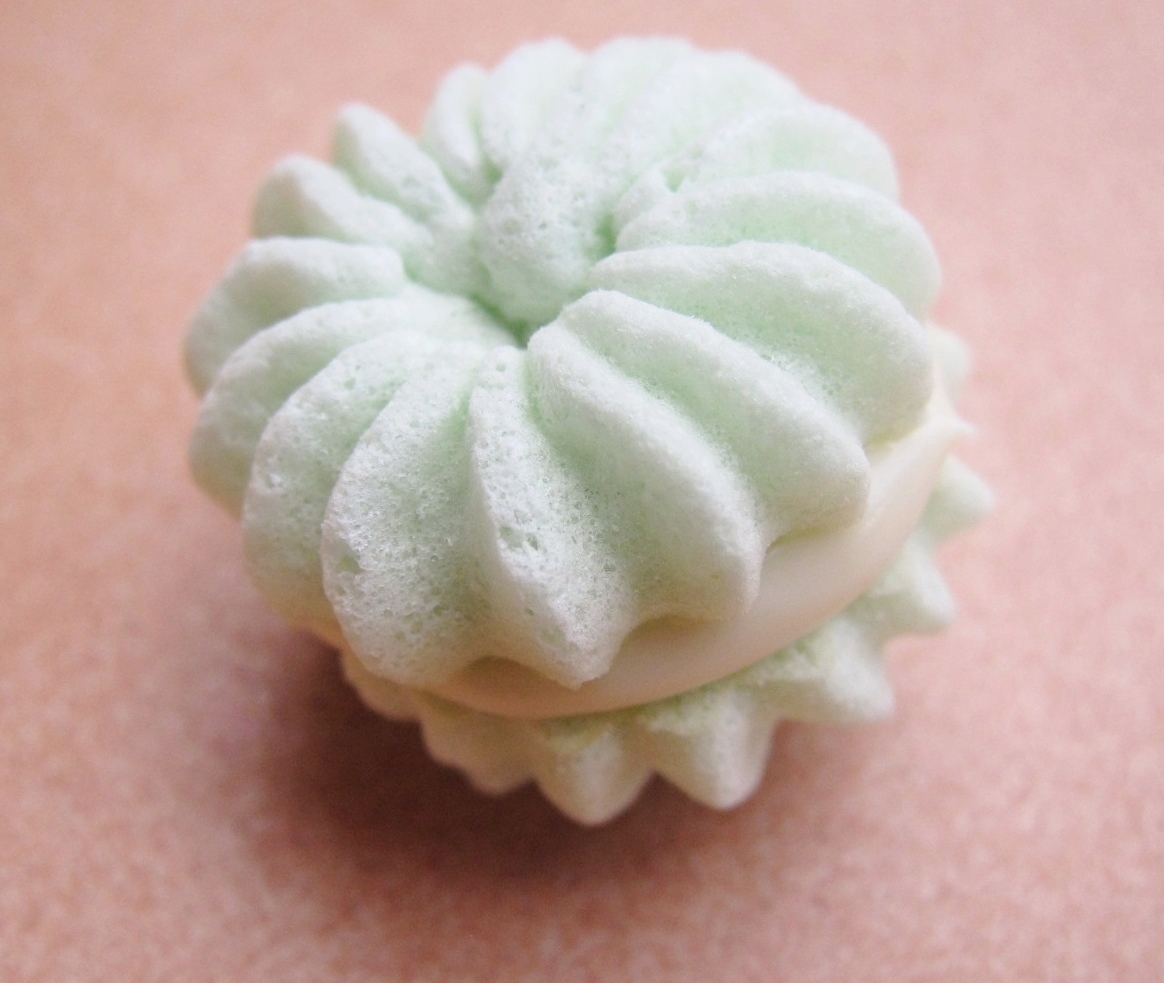
 Whenever I have Japanese food, I look forward to the rush wasabi offers. First there’s its burst of tangy flavor, followed by an intense but ephemeral heat. Eating sushi recently, I was struck by the idea of creating a dessert using this otherwise savory condiment. I knew it would have to be something light and little, perhaps paired with a mild and creamy counterpart. While it might first sound odd or even unappetizing, wasabi white chocolate meringues proved to be a perfect concoction. In fact, a few of my adventurous taste testers guessed they were eating a caramel meringue, and many commented that they could finally appreciate the pleasant flavor of wasabi without its usual overpowering spice.
 While I bought both wasabi powder and prepared wasabi paste, I chose the powder after tasting both kinds and closely reading the packages. The powder had a cleaner taste and its list of ingredients was only three words long (horseradish, spirulina, turmeric) — a stark contrast to the paste’s more mysterious and lengthy list. For the white chocolate, I always choose a kind that contains a generous amount of vanilla, cocoa butter rather than oil, and as few other ingredients as possible.* Now, onto the meringues!
Wasabi White Chocolate Meringues
(makes 40-50 little sandwiches, each about 1.25″ diameter)
- 3 egg whites at room temperature
- 1/2 teaspoon cream of tartar, sifted*
- 1.5 teaspoons powdered wasabi, sifted
- 6 tablespoons powdered sugar, sifted
- 1/4 teaspoon finely ground white pepper, sifted
- 1 teaspoon pure vanilla extract**
- 1 teaspoon strained lemon juice
- 1 drop green food coloring (optional)**
- 3.5 – 4 ounces chopped white chocolate, or about 1/2 – 2/3 cup white chocolate chips
Preheat oven to 200 F.  Line cookie sheets with parchment paper. Using an electric mixer (preferably free-standing) beat the egg whites on high until bubbly and frothy. Sprinkle the cream of tartar over the whites as you keep beating. Working quickly, add the wasabi powder to the bowl; be sure to do this while whites are still quite wet, as powdered wasabi’s flavor is activated by liquid. Keep beating on high speed. When whites are just becoming opaque, gradually add the powdered sugar one tablespoon at a time, followed by the white pepper, with mixer going. Continue beating until whites are voluminous and stiff. Mix in the vanilla, lemon juice, and food
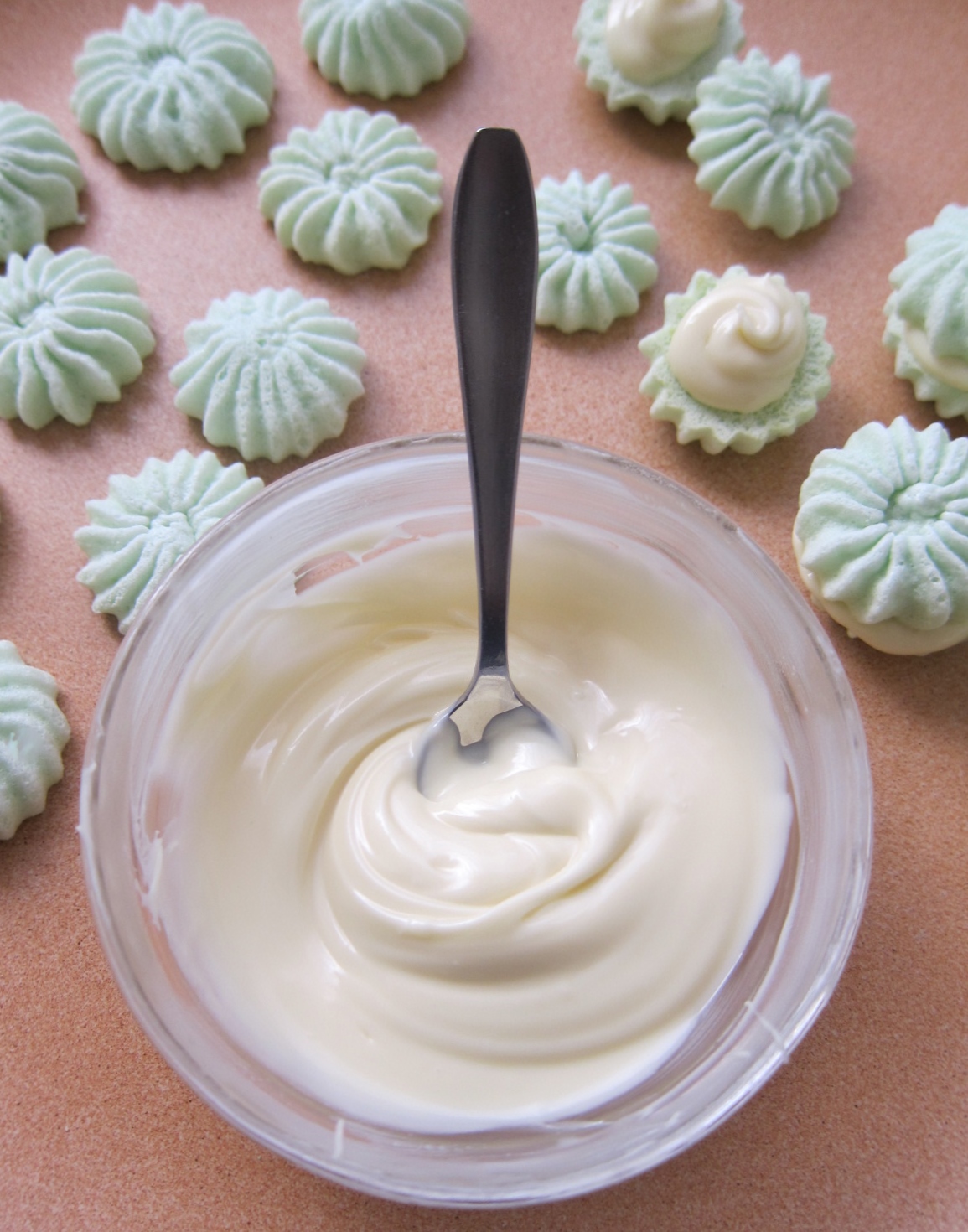 coloring (if using), beating until just incorporated. Transfer batter to a pastry bag and pipe small meringues (about 1.25″ diameter each) onto lined cookie sheets. They won’t spread much; feel free to place them near each other. You should have about 80-100 little meringues. Bake for one hour, then turn off oven; leave meringues inside oven with door closed for another hour or two at most. Transfer meringues to an airtight container and store for up to 24 hours. If you live in a humid area, consider adding a desiccant packet (perhaps borrowed from a vitamin bottle) to the container of meringues, lest they become sticky.
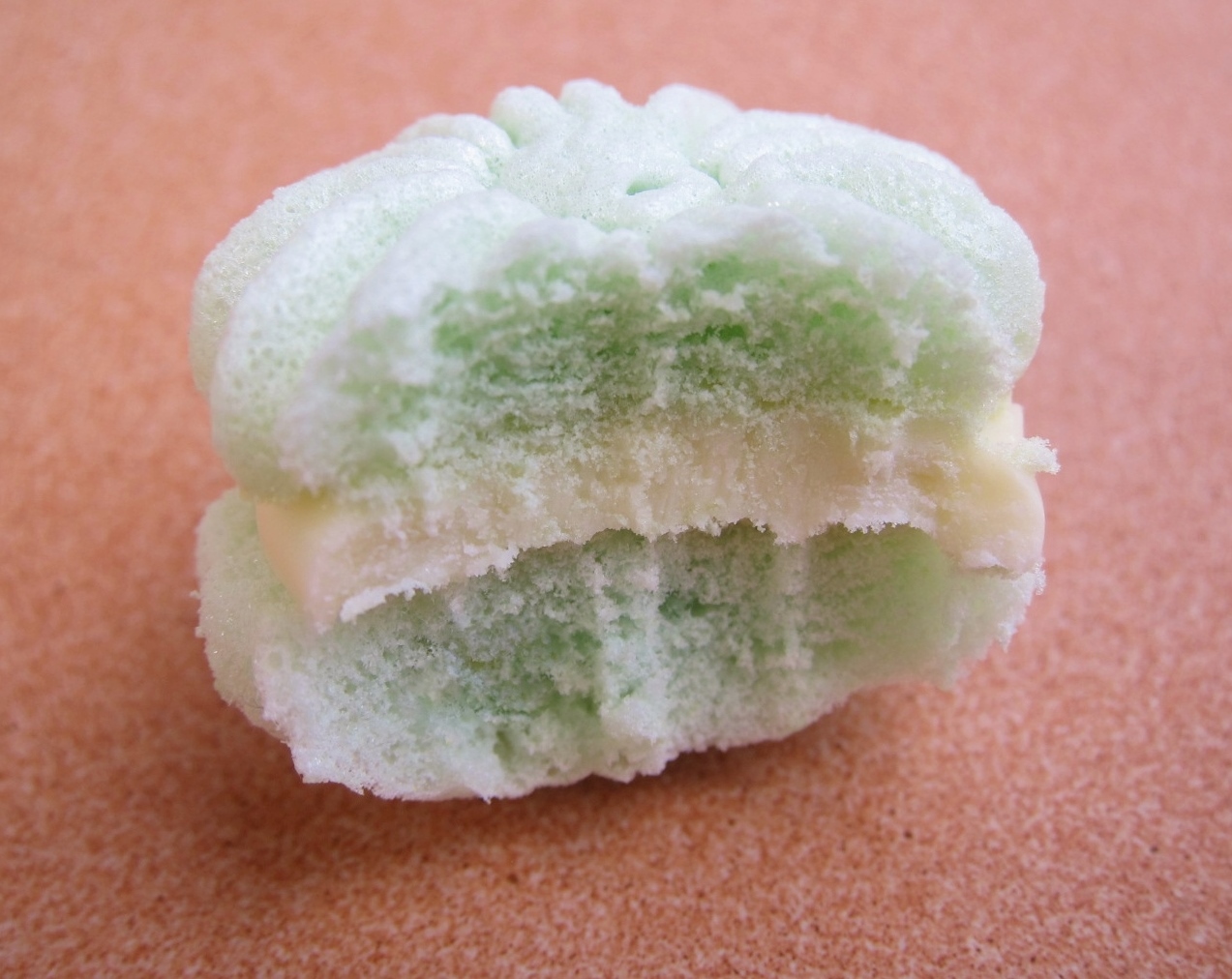
When ready to sandwich the meringues, place white chocolate in a heatproof bowl, and either place the bowl over a pot of simmering water, whisking constantly until smooth; or microwave the bowl in 30 second intervals, stirring well after each time (2 or 3 intervals is usually plenty). Stop heating just when all lumps have disappeared as you mix it. Do not overheat. Place 1/4 to 1/2 teaspoon melted white chocolate on the bottom of a meringue, and gently top it with another. Repeat until all meringues are sandwiched, and let them cool until white chocolate has hardened to at least room temperature. Store in an airtight container as described above, or devour immediately (they’re addictive!).
 Wasabi white chocolate meringues offer a unique, subtle flavor in a delicate, delectable format. Sweet and light, they carry just a trace of familiar warmth, complemented by a whisper of soft white pepper. While the vanilla and lemon counter- balance the bit of spice, the milky white chocolate imparts a gentle filling between airy, crisp cookies. In the form of a fantastic new dessert, wasabi has shown off its terrific taste once again. It’s well known for its notorious heat, but who knew it could be so sweet?
 *Maybe next time… Cream of tartar is not required for making meringues, but it helps stabilize the egg whites, acting as a sort of baking insurance policy. (As my dad likes to say of such things, “Can’t hurt, might help!”) I tried a version of this recipe using more wasabi and no white pepper, but I found that the above formula had a preferable balance of flavors. If you want to surprise your tasters with more heat than the trace of wasabi here, try hiding a smidgen of wasabi paste (prepared using the instructions on the powder’s package) beneath the white chocolate. In line with my preferences noted above, my favorite brands are Green & Black’s and Guittard wafers; or for value, Whole Foods 365 White Chocolate Chunks or Trader Joe’s White Chocolate Chips.
**Avoid coloring and extract containing oil (meringue’s structural enemy).






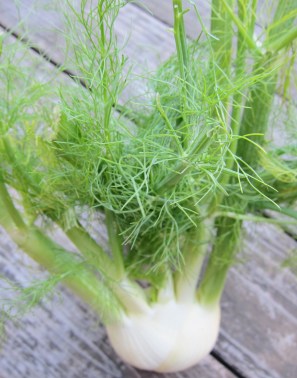

 In a large bowl, beat the sugar, eggs, and melted butter well, until pale and smooth. Mix in the vanilla. Sift the flour and baking soda over the butter mixture. Mix, scraping sides of bowl often, until batter is even in consistency. Finally, add the fennel and lemon juice to the batter, and fold in the lemon zest. Mix until evenly incorporated. Scoop batter into prepared muffin tin, filling cups 1/2 to 2/3 full. Bake for 15 minutes; begin checking at the 12 minute mark. Cakes are ready when their tops are toasty and golden, and a toothpick inserted in the center comes out batter-free.
 Remove pan from oven and let cupcakes cool for just a few minutes in pan, then carefully transfer them to a cooling rack or a towel on your counter top. They will still be quite warm; I suggest using a large spoon to help move them. This step will help prevent oily condensation on the bottom of the cooled cupcakes. Let cupcakes cool completely, until they are not at all warm to the touch, before frosting.
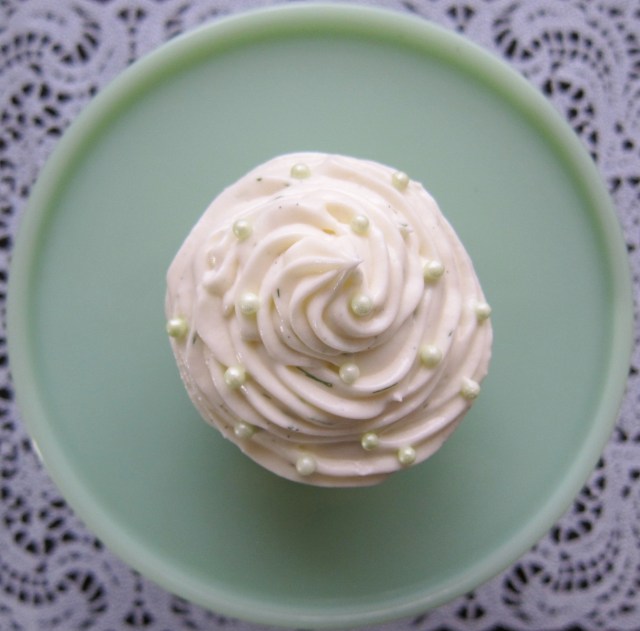
 These fennel cupcakes offer a burst of lemon and a whisper of the fragrant herb within. Aromatic,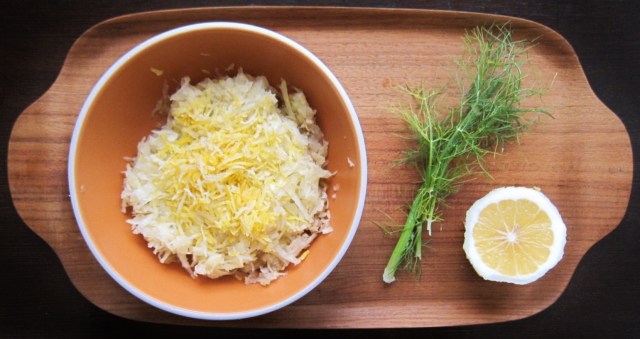



 butter, sugar, flowers

