Fresh Fig Torte: Frosted, Spiced, Divine

Fig torte (24)

I have a friend who is so enamored with fresh figs, I’d even call it an obsession.  When we walked past a woman carrying a basket of figs recently, my friend talked about it for a week. “I wonder where she got those figs. Is there somewhere around here that sells figs? I want figs!”  Sure, she can get figs from the right market or from her CSA box — and when she does, she bounces off the walls with excitement.  But naturally, the figs disappear fast, and her demeanor quickly sinks: she sulks, “Meh. All out of figs again…”
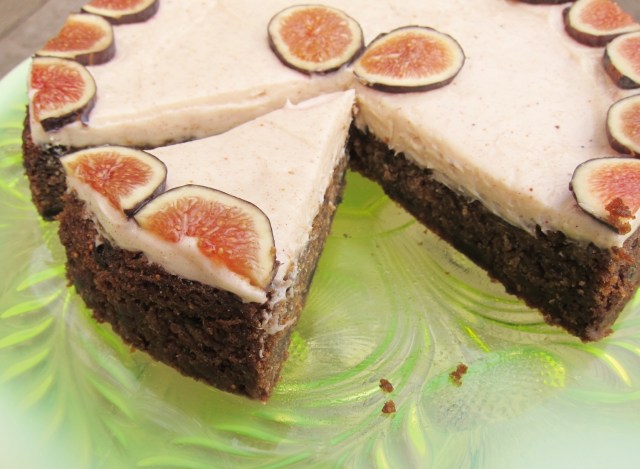
Fig torte (19)Her birthday was coming up on quite a timely date — right in the height of fig season — and I had the honor of making her cake.  As I thought about what to make, I dreamt up ways to create a dessert whose slices would deliver the most figgy-ness possible.  A batter made with more figs than flour would be the answer (for both my friend’s birthday and as a new versatile fall dessert).  I started by drizzling ripe figs with warm molasses, then blended them with butter and spice. The result was a moist, flavorful torte enjoyed by both fig-lovers and the fig-averse alike, all with a slather of decadent cream cheese icing.

Frosted Fig Torte (Makes an 8″ torte; serves 10)
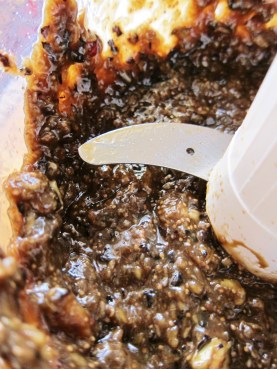
Fig torte (4)For the torte:

  • About 12.5 ounces ripe figs (about 15 small/medium figs — I used Black Mission. Over-ripe figs work just fine.)
  • 1/4 cup molasses
  • 1/2 cup unsalted butter at room temperature
  • 1/3 cup (2.5 ounces/71 grams) granulated sugar
  • 1 large/extra large egg
  • 1 teaspoon pure vanilla extract
  • 3/4 cup (4 ounces/110 grams) all purpose flour
  • 1 teaspoon baking soda
  • 1 teaspoon ground cinnamon
  • 1 teaspoon ground nutmeg
  • 1/2 teaspoon salt

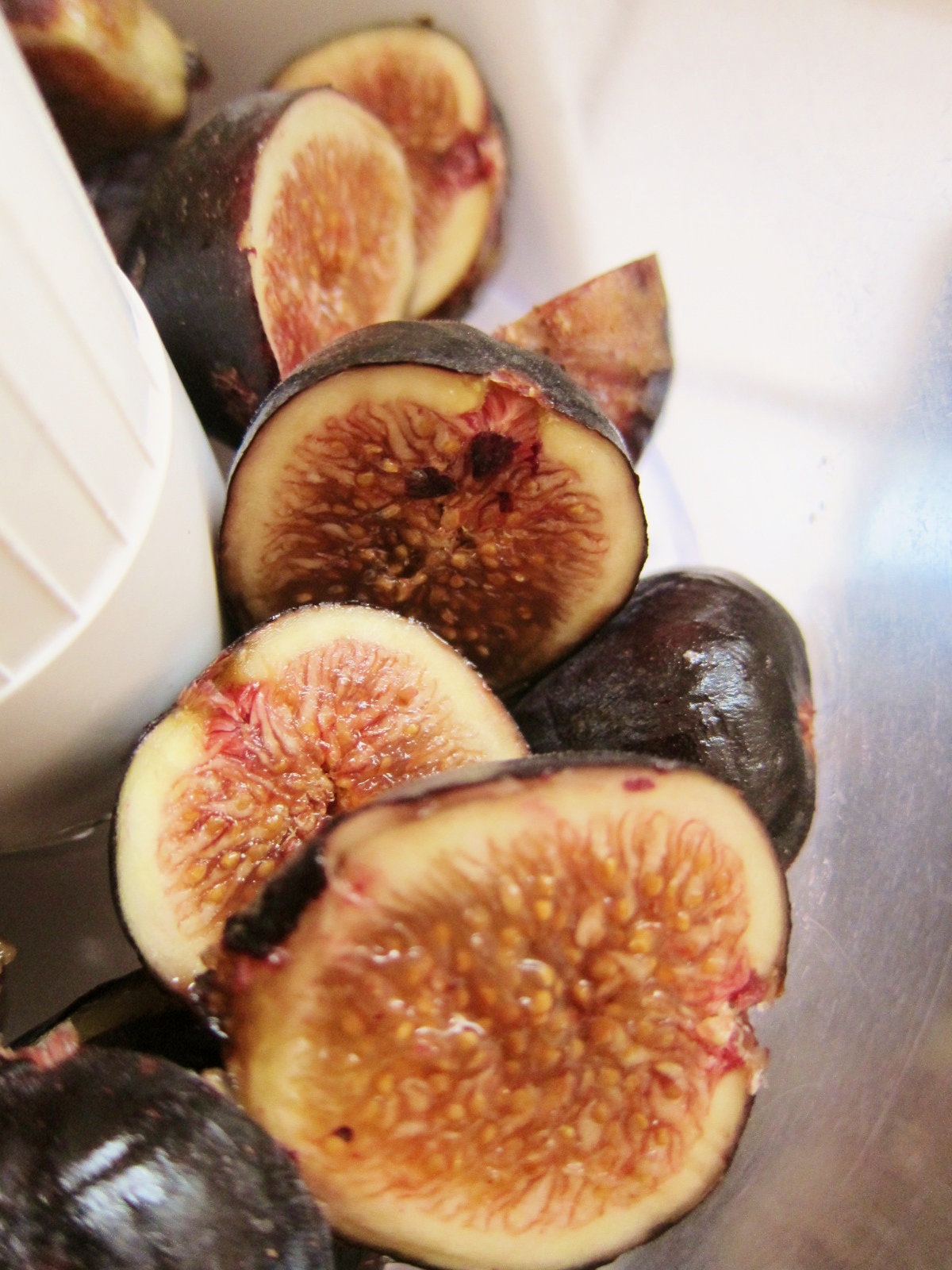
Preheat oven to 350 F.  Butter and flour an 8″ cake pan, or butter it and line bottom with parchment. Set aside. Rinse and dry figs. Remove stems and slice in half. Place in the bowl of a food processor. For best results, heat your molasses a bit before measuring; this will make pouring it easier, and will allow it to really permeate the figs. Pour 1/4 cup warm molasses over the Fig torte (5)sliced figs. Pulse in food processor, stopping to scrape bowl with a spatula once or twice, until a thick puree has formed, speckled with fig peel and seeds (some small chunks of fig are also OK).  Measure out 1.25 cup fig-molasses puree for the batter; set aside.  Use the rest as you wish (it’s marvelous spread on warm toast or folded into oatmeal).
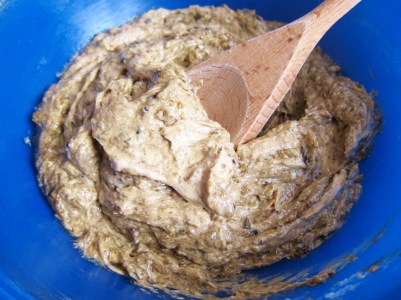
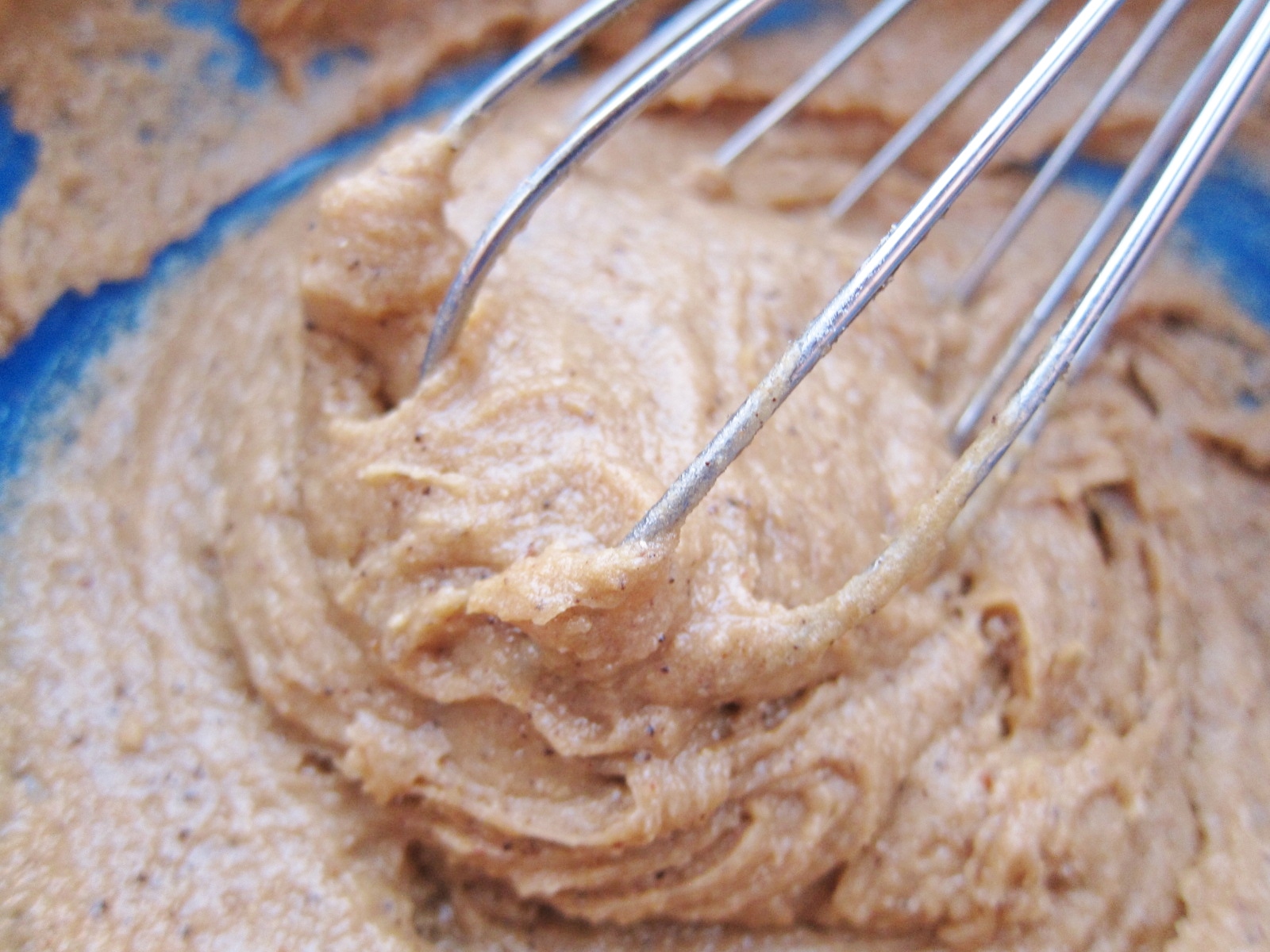
In a large bowl, beat the butter and sugar until creamy. Add the egg and beat until fully incorporated, followed by the vanilla. Sift over the bowl: flour, salt, baking soda, and spices. Mix until an even, thick batter has formed. Fold in the 1.25 cup fig puree, stirring until consistency is even. Spread batter into prepared pan.  Bake for 25 – 30 minutes.  A wooden toothpick inserted into the center should come out batter-free (a few moist crumbs are OK).  Let torte cool completely, to at least room temperature, in the pan.  Once completely cool and ready to frost and serve, invert onto a plate.

Fig torte (14)For the frosting and decoration:

  • 4 ounces (113 grams) cream cheese at room temperature
  • 1/4 cup (2 ounces/57 grams) unsalted butter at room temperature
  • 1/2 teaspoon pure vanilla extract
  • 1/2 cup (2.75 ounces/75 grams) powdered sugar, packed
  • 1/2 teaspoon cinnamon
  • 1/2 teaspoon ground nutmeg
  • 1/8 teaspoon salt
  • A few medium figs for decoration, ripe but not mushy

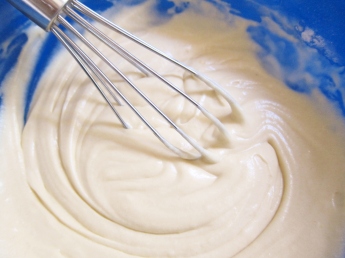
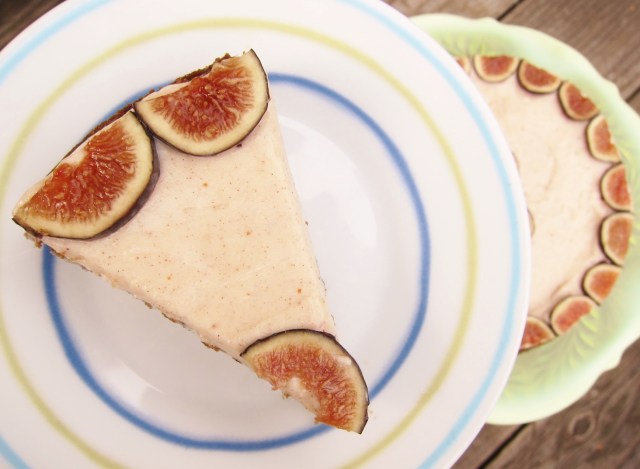
Beat together the cream cheese and butter until smooth and even. Add the vanilla and mix well. Sift over the mixture: powdered sugar, cinnamon, nutmeg, and salt. Beat until smooth and even.  With the cooled torte inverted onto a plate, slather generously and evenly with frosting. Rinse and dry figs. Cut most of the figs in half vertically, place face down, then slice into thin half circles using a sharp knife.  Use the half circles to create a border around the edges of the torte.  If desired, thinly slice remaining fig(s) into full circles for a center decoration like the one shown here.  Cover and keep refrigerated if not serving with a few hours, and finish within two days.
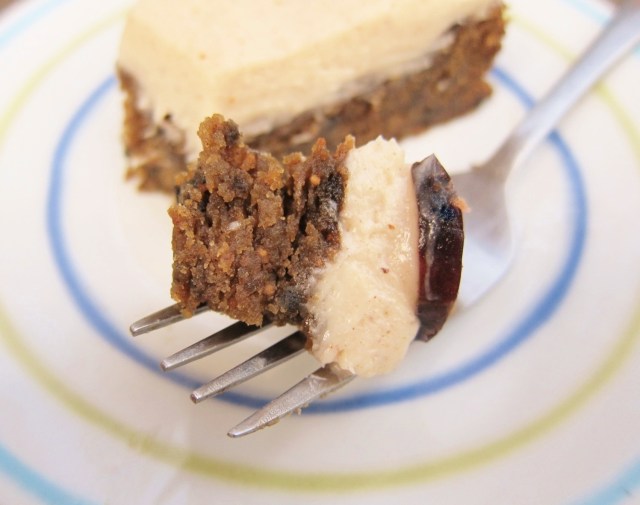
Fig torte (33)

With its burst of fall spices and its creamy, dense texture, this fresh fig torte goes beyond a fig-lover’s treat: it’s a succulent dessert that sings of the season.  Rustic and luxurious at once, its speckles of fruit and spice will fill your kitchen with sweet autumn aromas: the kind that delight both one’s yearning tastebuds and one’s nostalgic heart. It’s wonderful enjoyed as a dessert, an accompaniment for afternoon tea, or even a decadent breakfast. For best results, share it with loved ones as a nod to autumn and all its magic.
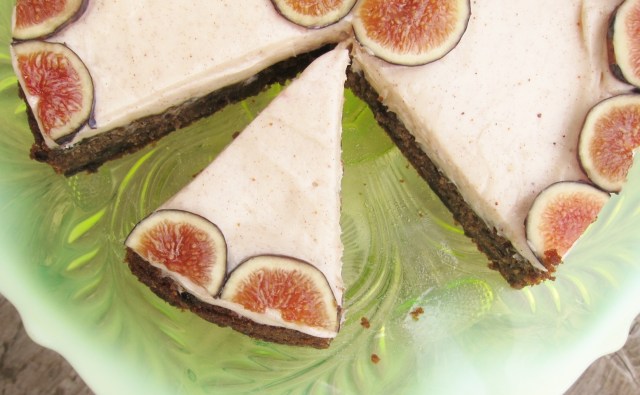
Fig torte (22)

Maybe next time… While I chose nutmeg and cinnamon, and found them lovely in this torte, the possibilities are always vast in the fall spice department: a pinch of ground cloves or some cardamom, ginger or allspice would all also be wondrous. In addition, the finely grated zest of an orange would be welcome in this batter as a nice complement the spices.  While the cream cheese icing is scrumptious and heightens the moistness of the torte, a simple dusting of powdered sugar could make a delicious, pretty, and less-rich topping.
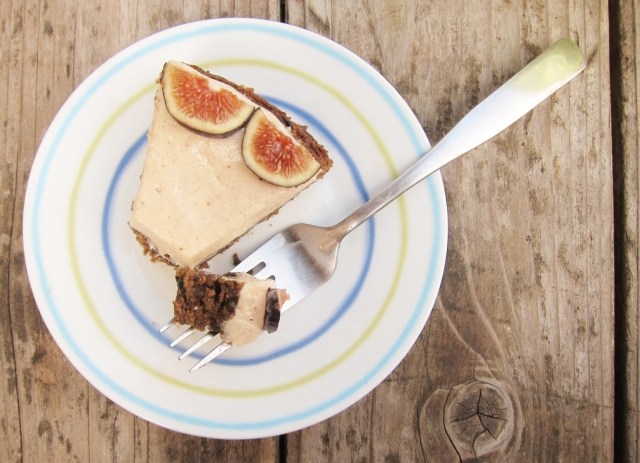
Fig torte (34)

What makes a torte a torte?  As I noted here, this is a debatable issue. In a reliable baking reference book, the index’s entry for “torte” simply states the following: “See cake.”  Indeed, torte is the word for cake in some languages. From my own research, torte batters are much less reliant on traditional flour than cakes are; they tend to use ground nuts and/or fruit.  Moreover, they are almost always single-layer and — unlike mine here — are rarely frosted.  But to make the final version of my friend’s birthday torte more ornate, I tiered two separate layers and gleefully went wild with the decor.  Voilà!
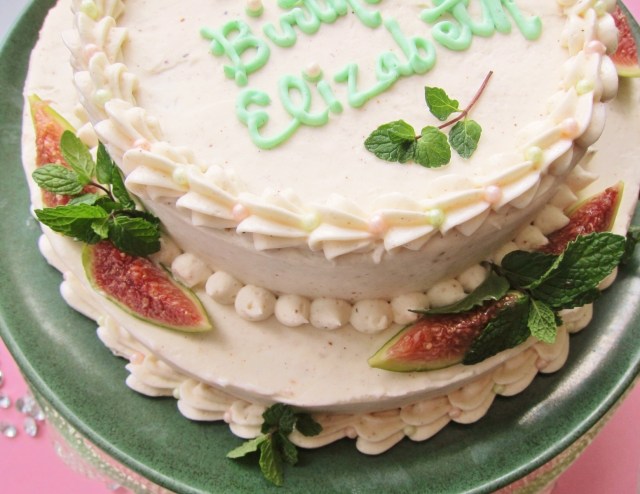
Fig torte (51)

Posted in Cakes & Cupcakes, Pies, Tarts, Tortes & Cheesecakes, Sweets, Traditional with a Twist | Tagged , , , , , , , , , , , , , , , , , , , , | 12 Comments

Mini Rosehip Graham Crackers

Rosehip graham crackers (139)

Other than their occasional presence in tea and jam, rosehips haven’t surfaced much in my life. I suppose they’ve been overshadowed by the ubiquitous flowers of the same plant: roses, which have an entirely different scent and flavor than the fruit we call their hips.  I admit I still haven’t tasted a fresh rosehip (only because I haven’t come across any), but I’ve now tried dried rosehips in both whole and powdered form. Earthy and subtly tangy, their flavor brought to mind the wholemeal taste of graham crackers or digestive biscuits — both of which I’ve long found addicting and wondrously versatile.  But for some reason I’d never endeavored to make my own at home.  Until now.

Rosehip graham crackers (157)

Not surprisingly, homemade graham crackers taste far better than store-bought, even if I have some nostalgia for the latter.  Since whole dried rosehips are very hard, I chose rosehip powder (available at health food stores or herb shops like this one) and sifted it into an eggless dough made with butter, honey and brown sugar.  The addition of rosehips proved to bring a welcome flavor that made for a perfectly balanced cookie.  I decided on coin-sized treats that would not only be adorable but also easy to toss over ice cream, cover with milk, or snack on like popcorn. The recipe yields over 7 dozen cookies, but with their tiny size and delectable flavor, they are sure to disappear fast.

Rosehip Graham Crackers (makes about 90 little cookies: 1.25″/3cm diameter)

  • 1/2 cup unsalted butter at room Rosehip graham crackers (28)temperature
  • 1/4 cup brown sugar
  • 2 tablespoons honey
  • 1/2 cup all purpose flour, plus more for rolling
  • 1/2 cup whole wheat flour
  • 1/4 cup dried rosehip powder
  • 1/2 teaspoon salt
  • 1/4 teaspoon baking soda
  • 1/4 teaspoon ground vanilla bean powder (optional)

Beat together the butter, brown sugar and honey until smooth and even. Sift remaining ingredients over the butter mixture, and beat until an even, thick dough has formed, and all ingredients are incorporated.  Cover the dough with plastic or waxed paper, and chill for at least 30 minutes. (At this point you may refrigerate it up to 2 days, or freeze it for a few weeks — but if doing so, wrap it more tightly and seal in a container with a lid.)

Rosehip graham crackers (9)

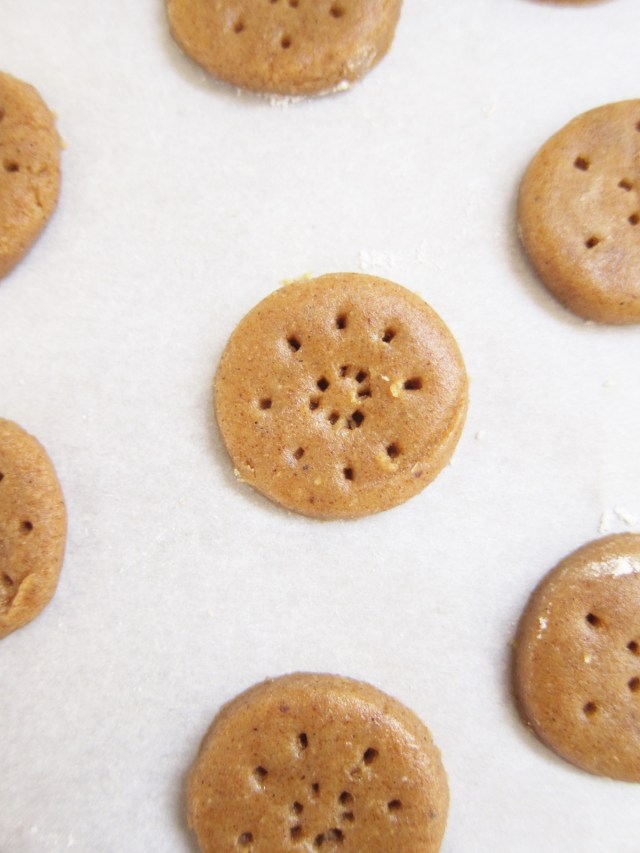
While the dough chills, preheat oven to 350 F.  Line baking sheets with parchment paper; set aside.  Lightly dust a flat work surface with flour, as well as a thin spatula, a rolling pin, and a 1.25″ round cookie cutter (or makeshift cookie cutter, such as the lid of a bottle, or the large end of a jumbo piping tip, like I used).  Once the dough has chilled, roll out about a third or a half of it, into an even, flat slab that’s 1/8″ thick.  Cut circles out of the dough and transfer them with the floured spatula onto the parchment-lined cookie sheets, leaving about 1/2″ between cookies. Re-roll scraps and repeat with remaining dough until all dough has been used, re-flouring surface and equipment as needed.

Rosehip graham crackers (32)

Pierce the cookies with the prongs a fork to make an asterisk of indentations on each one, but don’t push all the way through.  Bake, one cookie sheet at a time, for about 8 minutes. (Watch carefully and start checking at the 6 minute mark; with their petite size, they can burn fast.)  Remove from oven and let cookies sit on hot cookie sheets for 10 minutes before attempting to move or eat.  Let cool completely to room temperature, then store tightly covered at room temperature if not eating right away.

Rosehip graham crackers (58)When homemade honey grahams meet the unexpected but delectable flavor of rosehips, delicious things happen.  The rosehips bring a perfect bit of earthiness that’s almost herbal-tasting, along with a faint whisper of tartness reminiscent of fresh sourdough bread. Crisp and buttery, rosehip graham crackers are so tasty, light and small, they’re simply addictive.  Enjoy a bowl of them on their own, alongside coffee or tea, or any way you’ve eaten graham crackers (pie or cheesecake crust, anyone?).  What’s more: rosehips are known for their many health benefits, while graham crackers come with their own interesting history of goodness.  Not that you needed an excuse.

Rosehip graham crackers (112)

Maybe next time… For a familiar and classic graham cracker taste, add 1/2 teaspoon ground cinnamon to the dough, or sprinkle the cookies with cinnamon and sugar just before baking.  (But note that cinnamon can be overpowering and too much could overshadow the rosehip flavor.)  Similarly, a bit of ground cardamom would make a lovely addition to these cookies.  If you don’t want to deal with cutting the cookies into circles, you could slice the rolled dough into a 1.25″ grid for mini graham squares. Whatever the shape, these little cookies make the cutest little ice cream sandwiches; just place a tablespoon of ice cream in between two cookies and freeze.

Rosehip graham crackers (46)Rosehip graham crackers (37)Rosehip graham crackers (93) Follow me on Facebook, Twitter, and Instagram!


Posted in Baking with Flowers, Cookies & Bars, Sweets, Traditional with a Twist | Tagged , , , , , , , , , , , , , , , , | 8 Comments

Jicama Lime Cake with Tequila-Glazed Nectarines

Jicama Lime Cake (20)The first time I ever had jicama, it was cut into spears and served alongside a salad. A child then, I was excited for its newness, and I loved the way it added a sweet and mild crunch to my plate of otherwise typical veggies. But somehow I sort of forgot about jicama after that, or at least I didn’t give it much thought — until I recently discovered it pickled with chili peppers on a taqueria’s countertop. Its blank canvas quality had proved perfect for pickling, and I wondered if it might also be a good candidate for dessert.  Earthy, sweet and pleasantly mild, jicama’s recipe potential seemed limitless.

Jicama Lime Cake (82)

With the taqueria fresh on my mind, tequila and lime were natural next ingredients.  I decided on a vanilla-rich cake batter, speckled with turbinado sugar, almond meal and lime zest. Succulent, tangy nectarines in a tequila-spiked syrup would make a perfectly balanced topping.  I admit, at first I wasn’t sure what would happen to jicama when I baked it — I’ve only seen it served raw — but as a jicama-hating friend said when she bravely tasted my creation, “This is what it’s meant for! Deliciousness!”

Jicama Lime Cake with Tequila-Glazed Nectarines (serves 8-10)

FOR THE CAKE:Jicama Lime Cake (73)

  • 1 jicama, weighing at least 10-12 ounces
  • 2-3 limes
  • 1/2 cup vegetable oil
  • 2 eggs
  • 1 teaspoon pure vanilla extract
  • 1/2 teaspoon vanilla bean powder, paste, or seeds scraped from a vanilla bean
  • 2/3 cup all purpose flour
  • 1/3 cup almond meal, preferably from skin-on almonds (not blanched)
  • 1/2 teaspoon baking soda
  • 1 teaspoon baking powder
  • 3/4 teaspoon salt
  • 3/4 cup Turbinado sugar

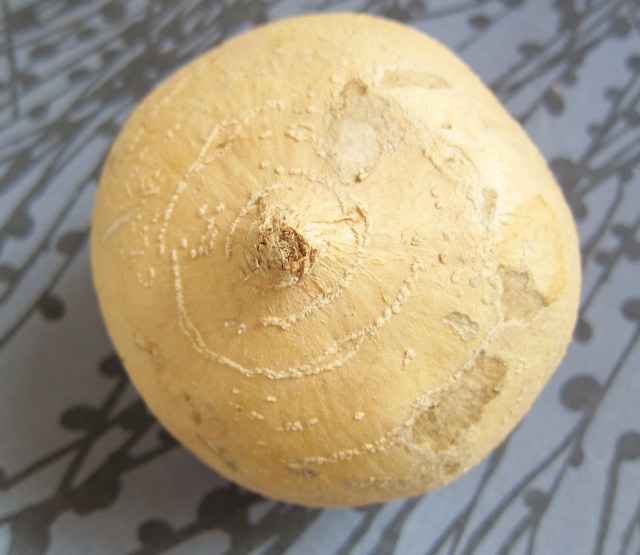
Preheat oven to 350 F.  Lightly grease and flour a 9″ springform pan**. If there’s any chance it leaks, wrap outer bottom and sides of pan with foil. Set aside.  Carefully cut the jicama in half; this can be difficult and may require quite a whack. Cut one half into 3 wedges, and with each wedge, run a knife along the inside of the skin to peel it away and discard it. Using a standard size (large hole) grater, grate the peeled jicama. Before peeling and grating the other half (since you may already have enough), measure what you’ve grated: you need 1 cup grated jicama, moderately packed, weighing 5 ounces. Once you have that amount, set it aside. Using a fine grater, such as a Microplane, finely zest the peel of two limes.  Set zest aside for cake batter.  Juice limes to make 3 tablespoons juice (you may need a third lime to yield this amount); set 1 tablespoon aside for cake batter and the rest for glaze.

Jicama Lime Cake (99)

In a large bowl, whisk the eggs, oil, and both vanillas until smooth and even.  Sift flour, almond meal, baking powder, baking soda, and salt over the egg mixture. (The purpose of sifting the almond meal is to get out any big lumps, not the luscious peel; do add to the batter any little flakes of almond peel that are left behind in the sieve.)  Mix until pasty and smooth. Fold in the sugar until evenly dispersed, then fold in the jicama and zest until texture is consistent. Finally, stir in one tablespoon lime juice until just incorporated. Spread batter into prepared pan. Bake 35-40 minutes, until center no longer jiggles and a toothpick inserted in the center comes out batter-free. Let cake cool in pan until room temperature or a bit warmer.  Meanwhile, make the topping.

FOR THE TEQUILA GLAZE & NECTARINES:

  • 3/4 cup granulated sugarJicama Lime Cake (65)
  • 2 tablespoons lime juice
  • 4 tablespoons tequila
  • dash of salt
  • about 3 large ripe nectarines

Place sugar, juice, tequila and salt in a small saucepan.  Bring to a mellow simmer over low to medium heat and stir occasionally for about 3 – 5 minutes, until sugar is dissolved and syrup is not grainy. Test occasionally by placing a drop on a plate, letting it cool for a moment, and rubbing it between your fingers, feeling for smoothness.  Be careful to not burn or boil. As soon as syrup feels smooth, remove pan from heat and let syrup cool, stirring occasionally (it will begin to thicken as it cools), until warm or room temperature.

Jicama Lime Cake (18)

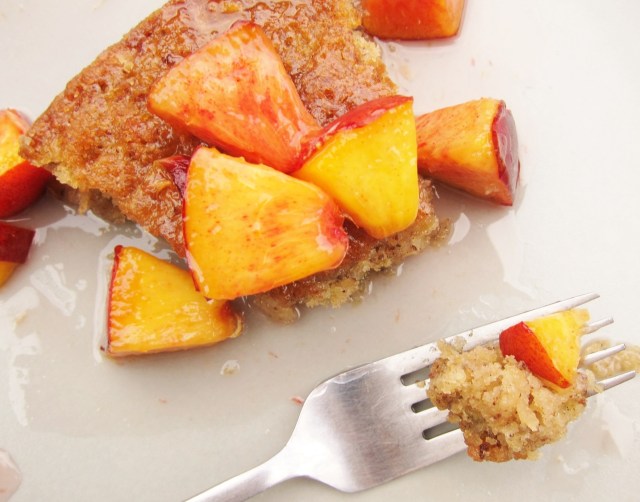
While syrup cools, rinse and dry the nectarines, then remove pits and chop them into a large bowl; you should have about 3 cups chopped fruit.  When ready to serve, remove sides of springform pan, slice cake into wedges, and place slices on plates. Top each slice of cake with a generous scoop of chopped nectarines. If syrup has thickened too much, heat it very briefly and stir. Drizzle generous spoonfuls of syrup over the nectarines atop each cake slice. Serve immediately.

Jicama Lime Cake (48)

Bursting with flavors that seem destined to be together, jicama lime cake is incredibly vibrant-tasting: practically the opposite of the main ingredient within.  The bits of tart lime echo the tangy nectarine topping, just as the turbinado sugar and tequila offer a well-matched warmth.  Thanks to the juicy grated jicama and flecks of almond in the batter, the cake is incredibly soft and moist — its succulence magnified by tender, boozy fruit. Refreshing, balanced, and flavorful, jicama has found a delicious new home.

Jicama Lime Cake (49)

Maybe next time… I love the way tangy, sweet nectarines complement this cake, and they’re very much in season as I write this.  But I trust that raspberries, blueberries, pears, chopped peaches or strawberries could also be delicious.  If you can’t serve this the day you bake it, the cake keeps well covered for a day or two, refrigerated if your house is warm; just be sure to wait to prepare the topping until the day of serving. On a hot day, the fruit topping is especially great chilled.  I was clearly on a Mexican food kick when I made this and am really happy with the flavor pairings, but I’d bet a gin topping would also be yummy, and perhaps lemon or orange zest instead in place of the lime.

Jicama Lime Cake (56)

Jicama Lime Cake (70)

Jicama Lime Cake (45)

**This cake works equally well in a standard 8″ or 9″ cake pan, greased AND either lightly floured or lined (only its bottom) with a circle of parchment. In an 8″ pan it may take a few extra minutes to bake, but start testing for done-ness at the 35 minute mark, just in case. Once cooled, loosen sides of pan with a butter knife, invert cake onto plate or cutting board, and discard any parchment.

Posted in Baking with Spirits, Baking with Veggies, Cakes & Cupcakes, Sweets | Tagged , , , , , , , , , , , , , , , , | 13 Comments

Mulberry Oat Cookies with Nutmeg and Brown Butter

Mulberry Cookies (15)

After a recent dinner out, my dad and I popped into a tiny grocery store and picked up a random sampling of items: Mexican cactus fruit, uniquely flavored popsicles (think salted chili cucumber), and a bag of dried white mulberries from Turkey.

That’s one of the things I love about my dad, and something I think I inherited: food curiosity. He’s known to order the most unusual dish on the menu, while I can’t stop experimenting with new ingredients.

Tonight we’d both expected the popsicles to serve as dessert, but we instead ended up polishing off the mulberries before we knew it.  They were simply addictive: sweet, tender and almost crispy, with warm notes of vanilla and a buttery essence.

Mulberry Cookies (16)

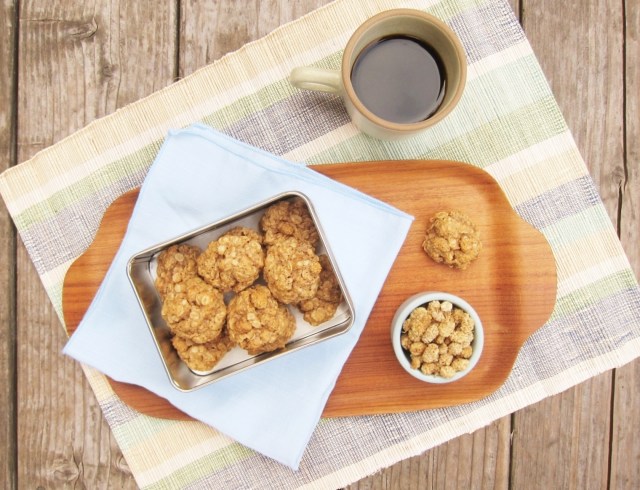
Well, I couldn’t stop thinking about those mulberries after my dad went home.  I meditated on their delicate earthy flavor and their complex texture akin to dried figs.  The next day, I headed back to the little market for more mulberries, then came home and paired them with whole wheat flour, browned butter, nutmeg, and brown sugar.  The concoction proved not only to pay tribute to the fruit, but also to exalt it to a wondrous new level: soft, spiced mulberry oat cookies.

Mulberry Oat Cookies (makes about 30 little cookies)

Mulberry Cookies (1)

  • 1/2 cup unsalted butter
  • 1/2 cup brown sugar, packed
  • 1 teaspoon pure vanilla extract
  • 1 egg
  • 3/4 cup whole wheat pastry flour**
  • 1/2 teaspoon baking soda
  • 1/2 teaspoon baking powder
  • 1/2 teaspoon salt
  • 3/4 teaspoon ground nutmeg
  • 1.5 cup rolled oats (not quick)
  • 1 cup dried white mulberries**

Line two cookie sheets with parchment paper; set aside.  In a small to medium saucepan, heat the butter over low to medium heat, occasionally stirring gently. Let cook just until melted butter is medium brown and fragrant, being careful not to burn. Remove from heat and let cool to lukewarm.  (Browned butter is often strained at this point, to remove the sandy milk solids, but not in these cookies — I wanted to use all parts of the nutty deliciousness let those slightly smoky speckles shine alongside the complementary flavors.)

Mulberry Cookies

Stir the brown sugar and vanilla into the pan of lukewarm browned butter, whisking until mixed.  Transfer to a large bowl, and make sure the temperature is not too hot (warm room temperature at most) before adding the egg.  Beat in the egg until completely incorporated.  Sift over the butter mixture: flour, baking soda and powder, salt and nutmeg.  Stir well, until a smooth pasty dough is formed.  Fold in oats and mulberries until evenly dispersed, scraping sides and bottom of bowl with spatula.  (Unless they’re really large and sharp, there’s no need to remove the berry stems; they soften as they bake.)

Mulberry Cookies (3)Using about 1 tablespoon of dough per cookie, firmly form well-packed dough balls and place them 2 inches apart from one another on the lined cookie sheets; you should have about 30 little cookies.  (If you have many more than this, they may be a bit small, requiring a slightly shorter oven time.)

Place in freezer for at least 15 minutes, preheating the oven to 350 F while the raw cookies chill.  (At this point, you can store the frozen dough balls in a sealed container and bake at your convenience within a week or two.)

Bake for about 9 – 10 minutes, or just until tops of cookies no longer look wet, and bottoms are toasty brown. (If cookies come out very thick and tall, you can press the centers down gently with the back of a fork while hot.) Let them sit on cookie sheets for 10 minutes before touching or moving.  Once cooled, store cookies in an airtight container if not eating right away.

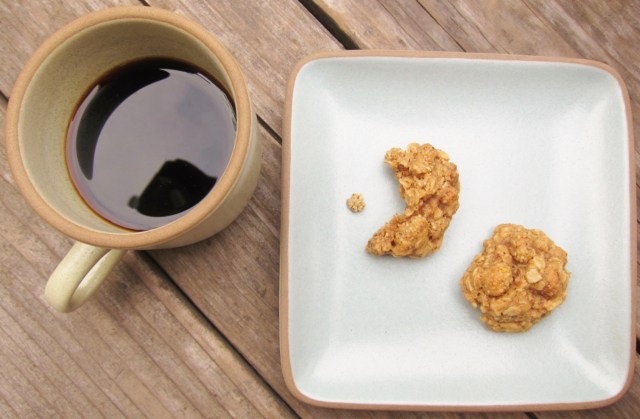
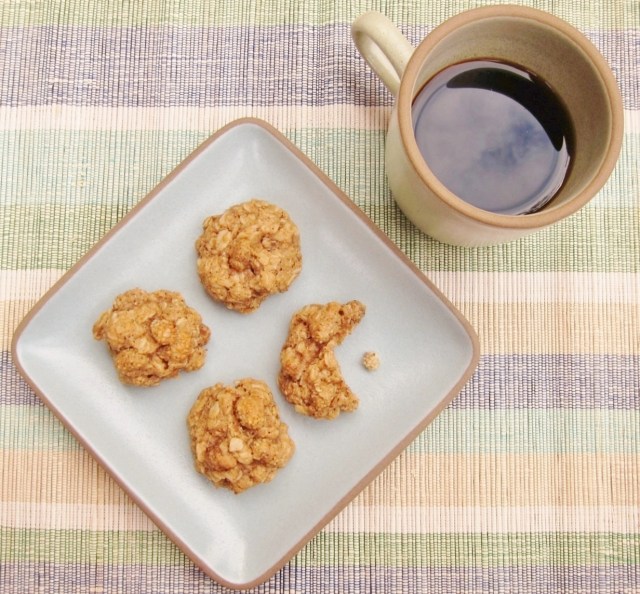
Mulberry Cookies (13)With their soft, tender bite and their deliciously complex texture, mulberry oat cookies are a new favorite in my crowd.  Warm with molassesy brown sugar and rich browned butter, the chewy whole mulberries find a perfect home in a hearty and succulent format.  Speckles of butter and spice bring on the decadence, while whole wheat and oats offer a balance of wholesomeness.  This combination of qualities will make dad proud, and it’s definitely time to bake him some, since my first batch disappeared instantly.
Mulberry Cookies (12)

**Maybe next time… I prefer whole wheat pastry flour for this recipe (it adds the richness of whole wheat without the harder, drier texture), but you can use a combination of regular whole wheat flour and all purpose white flour (1/2 cup WW + 1/4 cup AP). And it’s not the end of the world if you need to use all of one or the other of these two.

No dried mulberries? Try sultanas or chopped dried figs.

If your mulberries are very dry — lightweight, quite crisp/crumbly, and not at all tender — they can result in a dry cookie. No problem if you steam them over simmering water for about five minutes or until tender, then pat dry with a clean towel before adding to the dough.

To add even more zing, a spoonful of orange zest would be a nice addition to the dough.

Mulberry Cookies (6)Mulberry Cookies (10)Mulberry Cookies (14)

Posted in Cookies & Bars, Sweets, Traditional with a Twist | Tagged , , , , , , , , , , , , , , , , , | 13 Comments

Violet Candy Cupcakes

violet cupcakes (10)Lately I’ve been yearning to return to my site’s namesake and bake with flowers again.  It was the cookies with nasturtiums that started it all, followed by recipes with lavender, rose, hibiscus, and even petal-flecked tea (both herbal and black).  But it’s been awhile.  As for new dessert-bound flowers, I found myself craving the flavor of those delicate violet candies made overseas, and wondered if I could find the living flowers that they mimic. I pictured a vibrant, blooming violet plant beside me as I candied its fragrant petals or steeped them into a delightfully perfumed syrup. It was all so romantic and picturesque.

violet cupcakes (19) - CopyBut then I started my hunt for violet plants, and was quickly reminded of how little I know about flora. I found a variety of violets, but none with the signature scent I sought.  So I posted a question on an online hotline, whose kind green-thumbed readers were quick to point me in the right direction. Before I knew it, my lush green Parma violet plant was at my side. There was only one problem: not a single blooming flower!  And after months of tending to my plant with great care, I’ve accepted that its hidden baby flowers are simply not ready to bloom.

violet cupcakes (23)

So instead of turning to the source behind the candy I’d been craving, I decided to celebrate the candy itself.  I visited a favorite store and bought four different types: candied violet petals, tiny French jawbreakers, translucent flower-shaped pieces, and a beautiful tin from Italy full of little matte morsels. While each kind had its own qualities, I decided on the latter for my violet dessert. Its somewhat chalky texture proved perfect to powder and sift into batter and icing, and its flavor was distinct and delicious. I also used the milder candied petals for decoration (and ultimately savored the other kinds).

Violet Candy Cupcakes (makes 12-14 standard sized cupcakes)

violet cupcakesTO PREP THE CANDY:

In three batches, place candies in the bowl of an electric spice grinder (a.k.a. blade coffee grinder). Grind well, for several minutes. Hold lid on tight and gently shake grinder as you go. Stop when a fine powder has formed. You should have about 1 cup powdered candy when done.**  Set aside.

FOR THE CAKES:

  • 1 medium lemonviolet cupcakes (3)
  • 1/3 cup vegetable oil
  • 1/3 cup granulated sugar
  • 1/3 cup powdered violet candy
  • 1 teaspoon pure vanilla extract
  • 2 small to medium eggs
  • 1 cup all purpose flour
  • 1/2 teaspoon baking powder
  • 1/4 teaspoon baking soda
  • 1/2 teaspoon salt
  • 1/2 cup milk or buttermilk

Rinse and dry lemon, then zest with a fine grater. Set zest aside for cake batter; set lemon aside for glaze.  Preheat oven to 350 F.  Line a muffin tin with 12-14 paper liners. In a large bowl, beat the oil, sugar, and powdered violet candy until smooth. Add the vanilla and stir until incorporated. Add the eggs one at a time, beating in completely after each addition. Sift the flour, baking powder, baking soda and salt over the oil mixture. Begin to stir, slowing adding buttermilk as you go.  When batter is even, fold in the lemon zest.

violet cupcakes (5)

Carefully transfer batter into lined cupcake tin, being as tidy as possible and resisting the temptation to fill cups more than halfway. This will ensure that the baked cupcakes have room within the paper liner to hold the glaze.  If you have at least 12 cupcakes, you’re on the right track.  Bake cupcakes for 12-15 minutes, until a toothpick inserted in center comes out free of wet batter. Set cupcakes on a rack and let cool completely before glazing.  If not glazing right away, store cupcakes covered at room temperature (not chilled).

violet cupcakes (7)FOR THE GLAZE:

  • 1 lemon (from batter recipe above)
  • 2-3 tablespoons buttermilk
  • 1 and 1/3 cup powdered sugar
  • 2/3 cup powdered violet candy
  • candied violet petals to decorate

Juice the lemon and strain the juice. Measure out 1 tablespoon strained juice and set it aside (use the rest as you wish). Into a medium bowl, sift the powdered sugar and powdered candy.  Add the tablespoon of lemon juice and two tablespoons buttermilk.  Whisk until smooth.  If glaze seems too thick, gradually add another tablespoon of buttermilk, whisking well.  (If little granules of candy are present and you prefer a smoother texture, mix with an electric mixer for several minutes, beating out the pieces.)  Use immediately, or cover tightly and refrigerate until ready to use.

violet cupcakes (12)

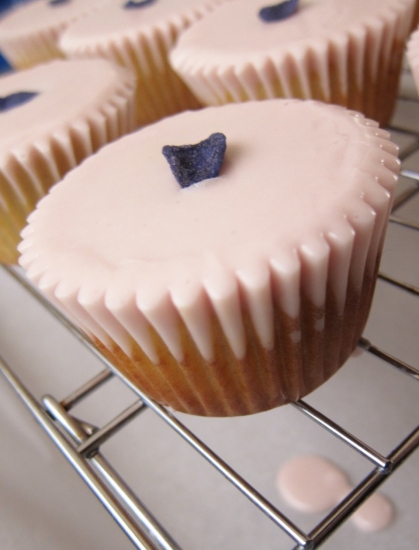
With cupcakes completely cooled, top each one with glaze by the spoonful.  Fill paper liners to the rim, letting icing reach edges, but not overflowing.  Immediately place a candied violet petal in the center of each. Let cupcakes sit at room temperature for at least an hour before attempting to move or handle them — otherwise, the surface of the glaze will form cracks.  Keep at room temperature and eat within 6 hours.  (If you must store them longer, refrigerate the cupcakes. Note that the glaze will become wetter and the cakes will firm up when chilled. Bring to room temperature before serving.)

violet cupcakes (16) - Copy

Perfect with a cup of afternoon tea, violet candy cupcakes offer a delicious (albeit distant) nod to the flowers behind them.  Their tender, lightly lemony crumb and burst of sweet, perfumed glaze prove to make a well-balanced and beautiful duo. Fragrant with floral goodness, they are both delicate and satisfying.  While I still hope to create a dessert with fresh Parma violets someday, I’m truly delighted to use my luscious little candies in the meantime.  Flowers and candy: what’s not to love?

violet cupcakes (2)

**Maybe next time… If you’re leaning toward a smaller amount of candy and prefer a milder floral flavor, feel free to replace some of the glaze’s powdered candy with more powdered sugar.  Most of the violet flavor comes from the glaze; the cakes offer just a whisper of violet, while the icing is distinctively floral.  If you want a stronger violet flavor in the cakes themselves, replace some of the batter’s granulated sugar with more powdered candy.  Finally, if you prefer a more solid, crisp glaze than the texture shown here, start by whisking an egg white into the glaze’s dry ingredients, then very gradually add lemon juice and buttermilk by the teaspoonful, until desired texture is reached.

violet cupcakes (6)violet cupcakes (8) violet cupcakes (11)

Posted in Baking with Flowers, Cakes & Cupcakes, Sweets, Traditional with a Twist | Tagged , , , , , , , , , , , , , , , , , | 16 Comments