Cranberry Quince Skillet Tart with Orange and Sweet Almond

Quince tart (2)I’ve come to think of quince as a sort of magical fruit.  It starts out fuzzy like a peach, growing on a fragrant plant that’s apparently also cultivated for its flowers.  A bowl of quince sitting on your counter will fill your kitchen with sweet, inviting perfume.  As you slice a quince, you’ll find that it’s very firm and tough (much more so than the apple it resembles) — but when you cook it, you’ll witness its exquisite transformation from pale and rigid to soft, sweet and reddish-auburn.  When I was given a bag of quince from a friend’s tree recently, I was naturally quick to celebrate its wonder by turning it into dessert.  Along with sweet almond paste, tangy cranberries and flecks of orange zest, my quince became a scrumptious tart enjoyed by many.  Here is the recipe.

Quince Skillet Tart (Serves 8-10)Quince almond paste tart (92)

  • 4 medium quince
  • 1 and 1/4 cup fresh or frozen cranberries sliced in half (loosely packed, measured after slicing)
  • 1 orange, finely zested and juiced
  • 2 teaspoons vanilla extract
  • 1 teaspoon almond extract
  • 1/4 cup sugar
  • 3/4 teaspoon salt
  • 1 tablespoon butter
  • 7 ounces high quality almond paste
  • 1 sheet thawed puff pastry, preferably a brand that contains all-butter (no oil or shortening) such as Dufour

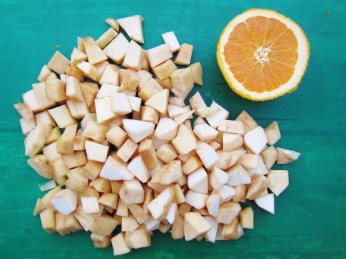
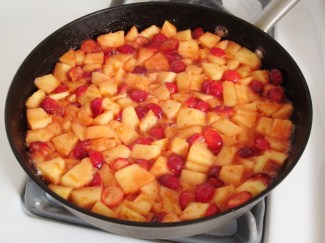
Rinse, peel and chop the quince into cubes that are roughly 1/2″, being careful to avoid the tough core of the fruit.  In a large bowl, whisk 1/3 cup of the orange Quince almond paste tart (1)juice with the extracts, salt and sugar; toss in the quince and orange zest to thoroughly coat.  Fold in the cranberries. Over medium/high heat, heat butter in an ovenproof skillet (9″ or 10″) until melted, tilting pan to coat bottom and sides.  Add the quince mixture and cook, pushing down occasionally with spatula. Let bubble for about 10 minutes or until tender. Remove from heat; set aside. Preheat the oven to 375 F.
While oven heats, roll the almond paste into an even, thin circle large enough to cover the quince in the skillet.  Center almond paste over quince, tucking in or layering any long edges.  Unwrap the sheet of thawed puff pastry, then fold it in half to double its thickness.  Gently roll it Quince tart (5)so that it’s large enough to cover the almond paste layer and to touch the inner walls of the skillet.  Place it on top of almond paste and use a butter knife to tuck in the edges, trimming if needed.  Bake for 25 to 30 minutes, until pastry has risen into a dome and is golden brown. (Don’t worry if the pastry is uneven or lopsided; it’ll be the bottom of the tart and no one will see it.)  Let tart cool in pan for at least an hour.  Just when ready to serve, loosen edges of tart with a knife and carefully invert it onto a plate. If needed, heat the skillet for a minute on the stove to help loosen the tart. Because the crispness of puff pastry disappears quickly, this tart is best kept at room temperature and eaten within 3-4 hours.
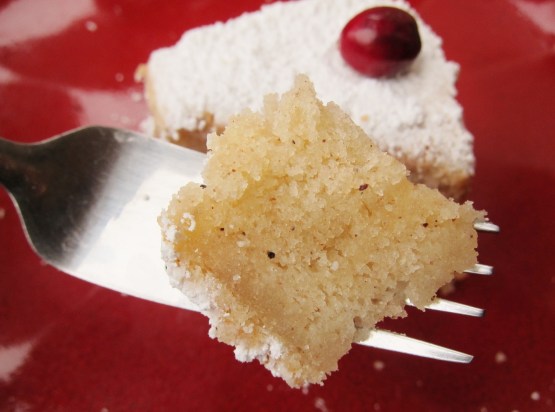
Quince tart (3)Fragrant and refreshing, quince tart is an unusual, delectable dessert.  Its notes of vanilla and orange are wondrous alongside the sweet almond paste and tangy fruit.  Each bite bursts with unique layers of flavor and the wondrous fragrance that only quince can offer.

Quince tart (1)

Maybe next time… This dessert definitely invites whipped cream, hard sauce, or vanilla ice cream — I strongly suggest a dollop on every slice.  To make a deeper tart, add two more quince or a couple of tart apples such as Granny Smith.  If you prefer another fruit to cranberries or want to omit them all together, feel free to remove or replace them. (I chose cranberries for a seasonal flare and to help balance the quince’s perfumed sweetness.)

Quince tart (14)Quince tart shown above without the cranberries.

Quince tart (9)Take a bite… fork optional!
Posted in Pies, Tarts, Tortes & Cheesecakes, Sweets, Traditional with a Twist | Tagged , , , , , , , , , , , | 9 Comments

A Sweet Slice of Egg Nog (Cake)

Egg Nog Cake (13)Here is a cake I created as a tribute to one of my favorite seasonal treats.  As the holidays near, I find myself anxiously awaiting the arrival of egg nog — anticipating its rich, creamy sweetness and the way it signals the new year on the horizon.  For me, one of the best ways to celebrate something delicious is not simply to eat or drink it, but to transform it into a dessert.  So why settle for having a glass of egg nog when I can eat it, too? (Actually, I admit I’m even more satisfied by a slice of this cake than I am by sipping the drink that inspired it.  And whenever I’ve brought this cake to parties, I’ve witnessed it being devoured with great delight, even by those who are otherwise egg nog averse.)

 
Egg Nog Cake (3)Egg Nog Cake (serves 10-16)

  •     4 egg whites
  •     1 cup sugar, divided
  •     1.5 cups flour
  •     2 teaspoons baking powder
  •     1/2 teaspoon baking soda
  •     1/2 teaspoon salt
  •     1.5 teaspoons ground nutmeg
  •     3/4 cup butter, softened
  •     3/4 cup egg nog
  •     1/3 cup spiced rum*
  •     1 teaspoon pure vanilla extract
  •     1 whole vanilla bean
  •     1/3 cup powdered sugar

Preheat oven to 350 F. Butter and flour sides and bottom of an 8″ round cake pan that’s at least 2 inches deep**, or butter and line bottom with parchment. Using an electric mixer, beat egg whites with 1/4 cup sugar until opaque and stiff (about 5 minutes); set aside.

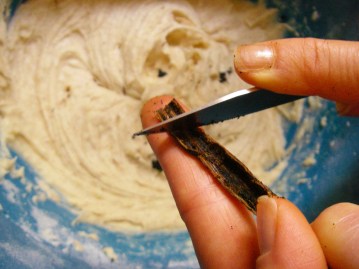
Whisk together the egg nog, rum and vanilla extract; set aside. In a separate, large bowl, cream theEgg Nog Cake (1) butter and remaining sugar, then sift the flour, baking powder, soda, salt and nutmeg over it. Begin to mix; batter will seem dry. Slowly pour in the egg nog mixture, gradually mixing until batter is smooth and even in consistency. Cut the vanilla bean lengthwise and carefully scrape the seeds out with a knife. Add seeds to batter and mix until evenly distributed.

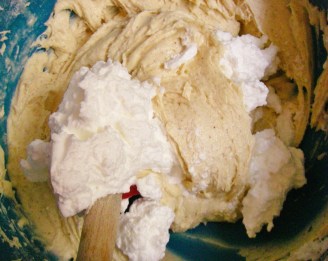
Finally, fold the egg whites into the batter gently, a little at a time, until just mixed and even in texture (batter will be frothy). Quickly spread the batter into the prepared cake pan. Bake for about 40-50 minutes, removing from oven when center tests clean with a toothpick, does not jiggle, and top is golden brown (don’t worry if there are some cracks on the surface).

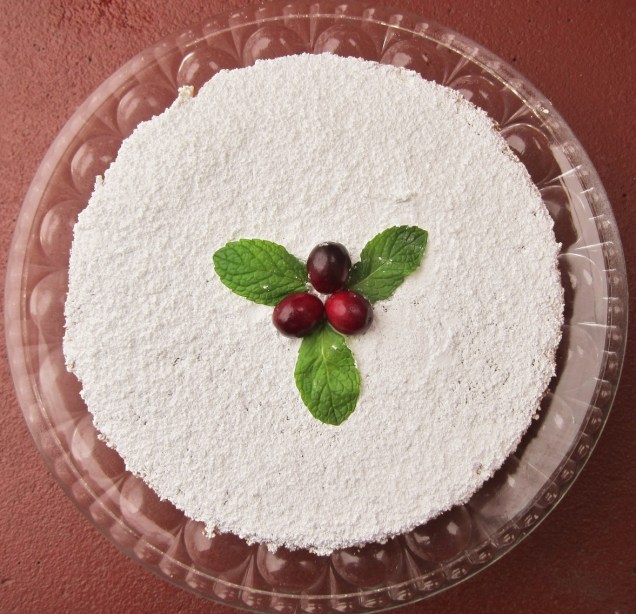
Egg Nog Cake (18)Let cake cool in the pan at room temperature for at least an hour. Loosen sides of cake with a knife, then invert it onto a plate. Using a sieve or sifter, dust the top of the cake with about 1/3 cup powdered sugar. If desired, decorate with cranberries and peppermint leaves. Wondrous still warm or a bit heated up, this cake is best eaten within a day or two of baking.  For premium texture, store at room temperature (not refrigerated), covered.

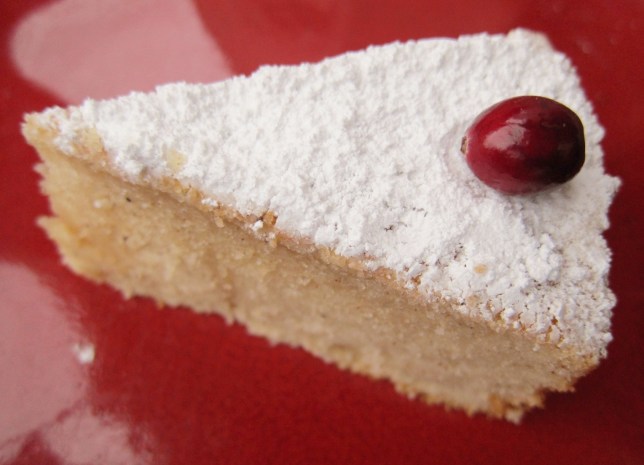
Egg Nog Cake (27)Spicy and sweet, this cake overflows with the goodness of the holiday season.  Its speckles of vanilla bean and nutmeg are a luxurious offering within the creamy egg nog batter, while its tender, moist crumb provides warm hints of rum in every bite. A sweet slice of egg nog to savor bite by bite: this is merry!

Egg Nog Cake (9)*Maybe next time…  If you’re one who prefers brandy or bourbon over rum, feel free to substitute your liquor as you please.  The boozy flavor in this cake is detectable but mild; if you like a stronger flavor, lightly brush another tablespoon or two onto the top and sides of the baked cake before dusting with sugar. Or if you don’t want to use alcohol, freely substitute milk or apple juice.

**If you don’t have an 8″ pan deep enough, or if your pan just really seems too full of batter, go with your intuition. You can take out some batter (use it to make a cupcake or two!), or use a 9″ pan. If you use a bigger pan than 8″, be sure to check the cake for doneness earlier, since the thinner-spread batter can bake faster.

Egg Nog Cake (14)Egg Nog Cake (2)

Posted in Baking with Spirits, Cakes & Cupcakes, Sweets | Tagged , , , , , , , , , , , , , , , | 12 Comments

I’m re-posting this recipe at this perfectly seasonal time. These cookies really taste like the holidays. Enjoy!

Posted in Cookies & Bars, Sweets | Leave a comment

Cut-Out Turkeys: Hazelnut Brown Sugar Cookies


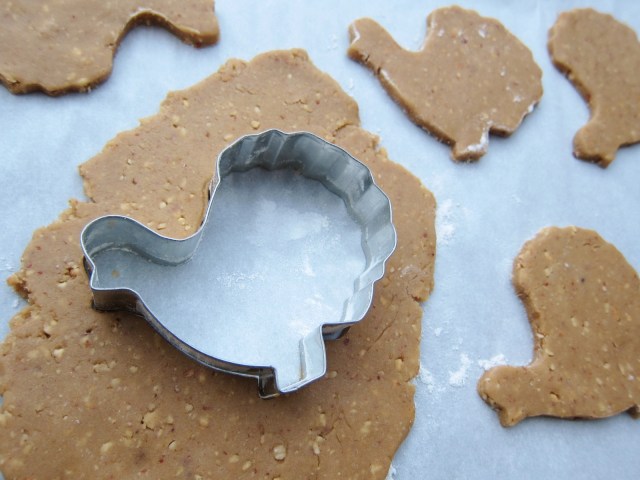
There’s something funny about decorating with turkeys for Thanksgiving, if you ask me.  For one, they’re generally not too cute; plus, their very carcasses are the center of the momentous meal.  But for some reason, I bought a turkey cookie cutter a few years ago.  I remember laughing as the odd shape evoked a sense of welcome goofiness.  And I guess I thought maybe the purchase would bring me one step closer to hosting my very own Thanksgiving dinner someday (which I still haven’t done).  So, I may not have made a traditional turkey supper, but at least I can say I’ve made dozens of little turkeys, right?

The truth is, I like eating cookies far more than eating turkey.  And after making my own turkey-shaped cookies each year, I can say with confidence that turkeys can be cute, after all.  Made with my hazelnut brown sugar cookie dough, these turkeys are delightfully flavorful and hearty with fall character.  So forget pies and plates full of poultry; my Thanksgiving tradition is all about cookies.  Here’s the recipe.

Hazelnut Brown Sugar Cookies (makes about 1.5 dozen large cut-out cookies*)

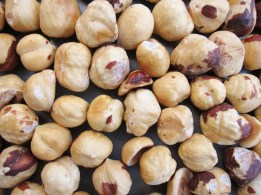
  • 1/2 cup (3 ounces) ground roasted hazelnutsToasted and peeled nuts
  • 1 and 3/4 cup flour plus extra for rolling
  • 1 and 1/4 teaspoon baking powder
  • 1/2 teaspoon salt
  • 1/3 cup butter at room temperature
  • 3/4 cup brown sugar, packed
  • 1 medium to large egg
  • 1/2 teaspoon vanilla or almond extract

In a small/medium bowl, whisk together first four ingredients; set aside.  In a separate, larger bowl, beat the remaining ingredients until smooth, pale caramel colored, and fluffy.  Fold in dry ingredients until incorporated, then knead with hands until dough holds together in a large, cohesive ball.  Split dough in half.  On a floured work surface with floured rolling pin, roll out one half of dough at a time to about 1/6″ thick.  Cut out cookies using a floured cookie cutter, then transfer to parchment lined cookie sheets with a spatula.  Freeze cookies on sheets for about 10 minutes; meanwhile preheat oven to 375 F.  Bake for 10-12 minutes (start checking at 8 minutes if cookie cutters are small), one sheet at a time, until edges and bottoms become golden brown.  Let cool completely on sheets.

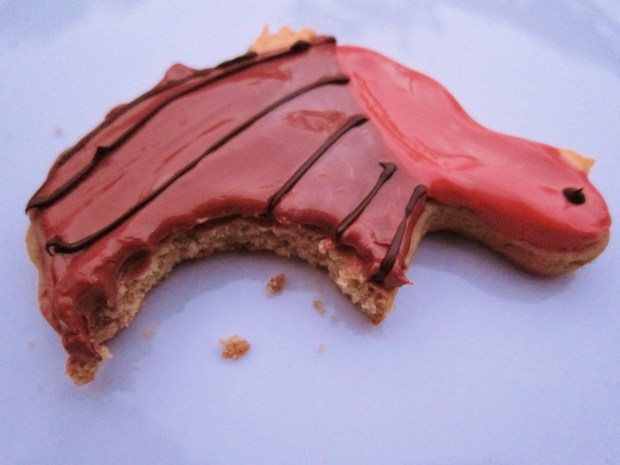
If desired, made a decorative icing as follows. Mix 4 cups powdered sugar with one or two whisked egg whites. Gradually stir in teaspoons of lemon or orange juice until mixture is whisk-able and not grainy, but thick.  Split into bowls and add drops of food coloring or natural dye: carrot or beet juice, cocoa powder, etc. (Note: you may need to add more sugar if using juice as dye, or omit the lemon/orange juice). Transfer colored icing to pastry bags or plastic bags with the corners snipped off. On the cooled cookies, carefully pipe outlines first, then fill in each colored area, smoothing with a knife or finger dipped in water.  Melted chocolate also works well for eyes and details.  Icing will dry and stiffen as it sits out at room temperature.

Nutty and buttery with a hint of molasses, hazelnut brown sugar cookies are rich with delicious flavor that’s absent from traditional sugar cookies. To take their distinctiveness even further, try adding ground cinnamon and nutmeg or some finely grated orange zest.  And if it’s too late to make yours turkey-shaped for Thanksgiving, these cookies are equally wonderful in other shapes — like, say, those meant for certain looming holidays…

*Maybe next time… This recipe works very well for roll-and-cut cookies, but it’s also fabulous when the dough is simply rolled into balls that are a little less than a tablespoon of dough a piece — see the detailed recipe here.  Similarly, smaller cutters than my turkey cutter (which is about 3″ x 4″) will make more cookies and bake in a shorter time than noted above.  Cinnamon and/or other favorite sweet spices are welcome additions.  If you don’t want to decorate the cookies, they are delicious plain or with a simple dusting of powdered sugar or drizzle of melted chocolate.

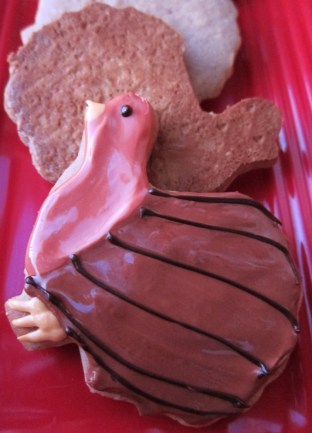
An old photo: Turkey cookies just after decorating, featuring pastry bags and turkey salt & pepper shakers.

Posted in Cookies & Bars, Sweets, Traditional with a Twist | Tagged , , , , , , , , , , , , , | 6 Comments

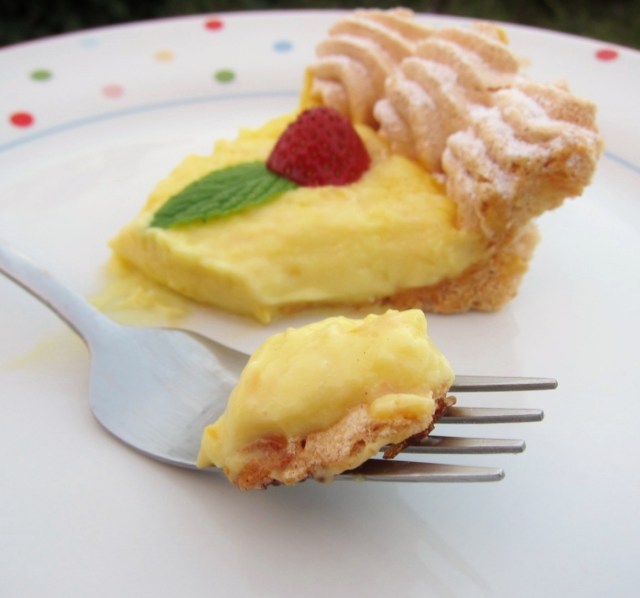
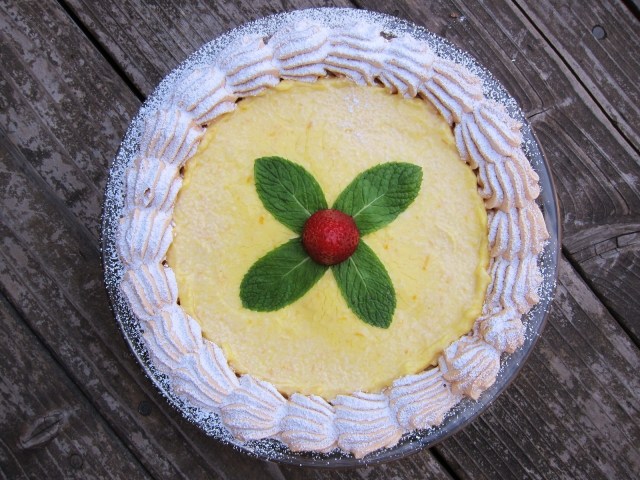
Three Lemons: A Pie In Reverse (Crisp Meringue Crust Filled With Lemon Custard)

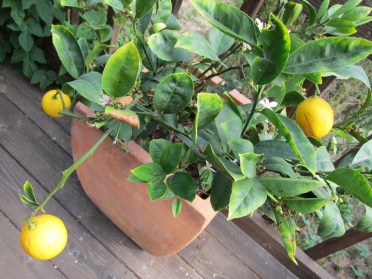
A little over a year ago, my husband gave me a potted lemon tree for my birthday.  He’d long known how much I’d loved lemons.  (He’d also seen how jealous I’d been of our neighbors, whose prolific trees I’d pass on my route to the grocery store, grumbling.)  After readily watching my tree ever since, I was thrilled to pick its first fruits a few weeks ago: three beautiful, succulent lemons.  Intent on turning them into something unusual that would really let their flavor shine, I began to brainstorm.  Traditional lemon meringue pie felt too commonplace, while a lemon tart seemed quite plain.  Then it hit me: rich, creamy lemon curd in a crust made of crisp meringue!

Reverse Lemon Meringue Pie (makes a 9” pie; serves 8-10)

 For the crisp meringue crust:

  • 3 egg whites at room temperature (reserve yolks for filling; see below)
  • Scant ¾ cup powdered sugar, sifted
  • Scraped seeds from ½ vanilla bean pod or a few drops vanilla bean paste

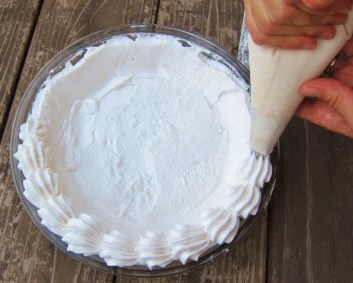
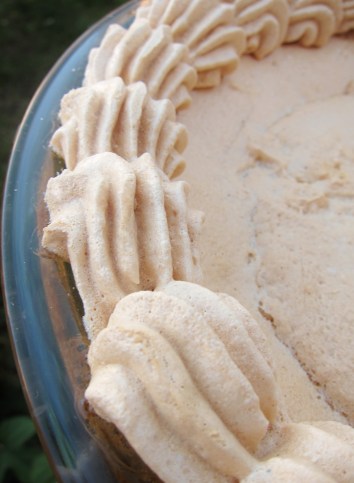
Cut a piece of parchment paper large enough to line a 9” pie pan with at least ¾” overhang on all sides.*  Butter a 9” pie pan, then press parchment into it, evenly placed. Generously butter the parchment.  Preheat oven to 250 F.  Using a mixer with a whisk attachment, beat egg whites on high until white and foamy.  Gradually sprinkle in the powdered sugar and the vanilla, and keep beating until thick, shiny, opaque and stiff – about 5 minutes.  Spread the meringue evenly into the prepared pie pan (about 1/3 to 1/2” thick).  If desired, use a pastry bag to pipe meringue around edges, or make a freeform border using a spatula; it’s just as pretty.  Bake for an hour and 45 minutes, then turn off oven.  Leave crust in oven for another hour, then remove and carefully lift crust from pan by pulling up parchment.  Gently peel the parchment from the back of the crust, then return crust to pan.  It will be delicate and light, browned and fragrant with caramelized sugar. Cover and keep away from moisture at room temperature until ready to use (up to 24 hours).

For the lemon curd filling:

  • 3 medium lemons
  • 3 egg yolks
  • 3 eggs
  • 1/3 cup sugar
  • 2-3 dashes salt (omit if using salted butter)
  • 1 teaspoon pure vanilla extract
  • ½ cup (1 stick) butter at room temperature
  • optional: 1/2 teaspoon pure lemon oil

In a medium saucepan, bring 2-3 inches water to a simmer over low heat.  Meanwhile, finely zest the lemons, then juice them to make 1/3 cup lemon juice with seeds removed.  In a heat-proof bowl sized to sit over the saucepan without dipping into the water, whisk the measured lemon juice, zest, eggs, yolks, sugar, vanilla and salt (if using).  Set bowl over water and whisk constantly for about 10 minutes or until thickened and custardy, about the consistency of sour cream (it will stiffen more once chilled).  Remove from heat and keep whisking for a few minutes while bowl cools a bit.  Add oil (if using), then butter in two portions, whisking until completely incorporated.**  Cover tightly and chill until set and thoroughly cool, about 2 hours.  Keep refrigerated until ready to use (up to 48 hours).

When ready to serve the pie, spread chilled filling into crust.  If desired, decorate with powdered sugar, berries and mint leaves.  Without delay, slice with a sharp knife (don’t fret if the crust cracks a bit), and devour immediately, savoring every luscious bite. To balance the pie’s tart-sweetness, try serving each slice with a dollop of unsweetened whipped cream or crème fraîche and a handful of fresh berries.

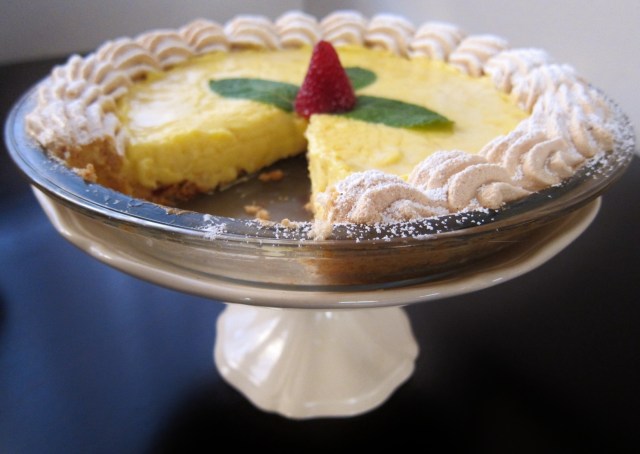
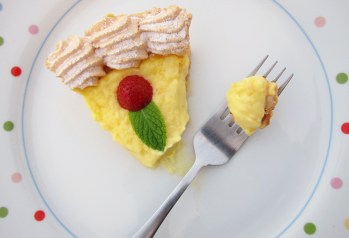
With its crispy shell and creamy, tart center, this unique pie is refreshing in both flavor and texture.  Its unique vanilla crust is full of caramelized flavor, and each sweet bite is both rich and light at once — while bursting with bright citrus notes.  Lemon meringue pie in reverse — who knew it could be so wondrous?

Maybe next time…  A generous handful of crushed macadamia nuts or unsweetened coconut would be divine folded into the meringue before baking.  Likewise, the crust can be made thicker by adding more volume via another egg white.  For a creamier, more decadent version that will mellow the pie’s sweet and tart flavors, spread a layer of soft cream cheese or mascarpone beneath the lemon curd.  To evoke the absent traditional crust, top with crumbles of shortbread or gingersnaps before serving (but if you want to keep the pie gluten-free, be sure to use cookies that are, too).

*You may have noticed the lack of parchment in my photos.  While I was able to remove each slice from my pan without using parchment, it required a meticulous process.  Since then, I’ve tested a few more meringue crust methods, and I strongly suggest the parchment/butter lining (and will be using it myself from now on).

**If desired, push filling through a sieve after adding butter.  This step is usually suggested for lemon curd; it makes it smoother by removing the zest and any bits of egg that might not have integrated when whisked. However, I successfully skipped this step, getting more texture and tang, and I found that my eggs were completely incorporated.

Posted in Pies, Tarts, Tortes & Cheesecakes, Traditional with a Twist | Tagged , , , , , , , , , , , , , | 17 Comments