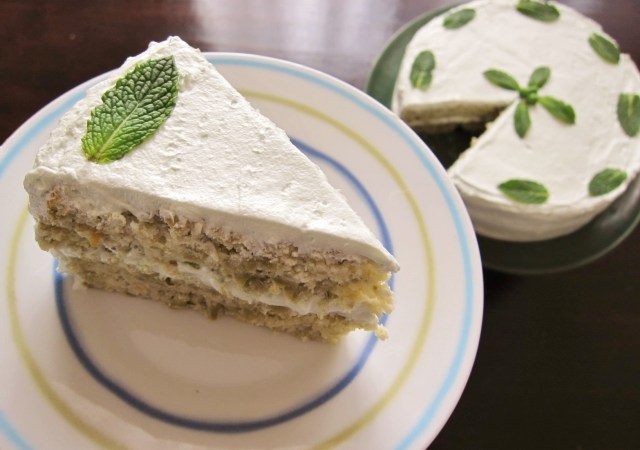
 Frozen peas are my backup for fresh veggies, and the kind I buy come in a bag that boasts: “Naturally sweet!” Those pretty italic words have been calling to me lately. Of course, I usually mask the peas’ sweetness with a bit of sea salt or parmesan and eat them as a savory side. But then again, I’ve done the same thing with carrots, zucchini and pumpkin; and if these can make popular desserts — cakes, sweet breads, pies — why not give peas a chance? So last weekend I finally paired my sweet peas with sugar, flour and vanilla (along with fresh peppermint leaves and a bit of tangy lemon zest). The result was a delicious and utterly un-pea-like cake, bursting with citrus and sweet herbal undertones. Here is the recipe.
 Sweet Pea Spring Cake (makes two 8” layers)
- 4 small lemons
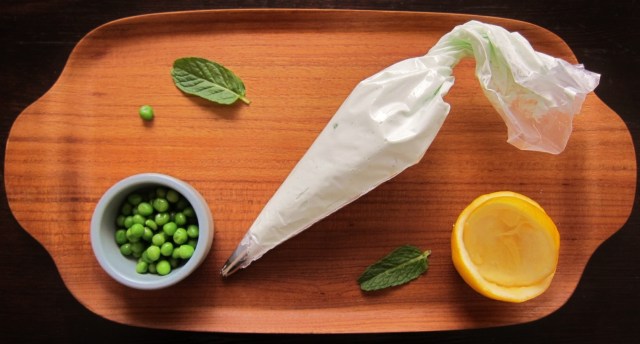
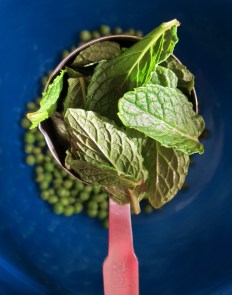
- 1 ¾ cup green peas (about 9.5 ounces), defrosted if using frozen peas, drained if needed
- ¼ cup (about .25 ounce or 5 grams) fresh peppermint leaves, moderately packed, rinsed and dried, stems removed
- 5 egg whites
- 1 cup sugar, divided
- 1 tablespoon pure vanilla extract
- ¼ teaspoon mint extract (optional)*
- ¾ cup melted coconut oil*
- 1 ½ cup flour
- ½ teaspoon salt
- 1 teaspoon baking powder
- 3/4 teaspoon baking soda
- scraped seeds from one medium vanilla bean or 1/2 teaspoon vanilla bean paste
Preheat oven to 350 F. Lightly grease insides and bottoms of two 8″ cake pans, and line bottoms of pans with parchment; set aside. Finely zest the peel of one lemon; set zest aside. Juice the peeled lemon, plus 2-3 more, to make 3/4 cup lemon juice (seeds removed); set aside. Fill food processor with peas and peppermint leaves. Blend, gradually adding 1/2 cup of the lemon juice (reserve remaining 1/4 cup juice). Stop occasionally to scrape down sides, and keep blending for just a few minutes, until mixture is consistent and there are no remaining big leaf pieces or whole peas. Texture should be even but rather thick and not smooth.
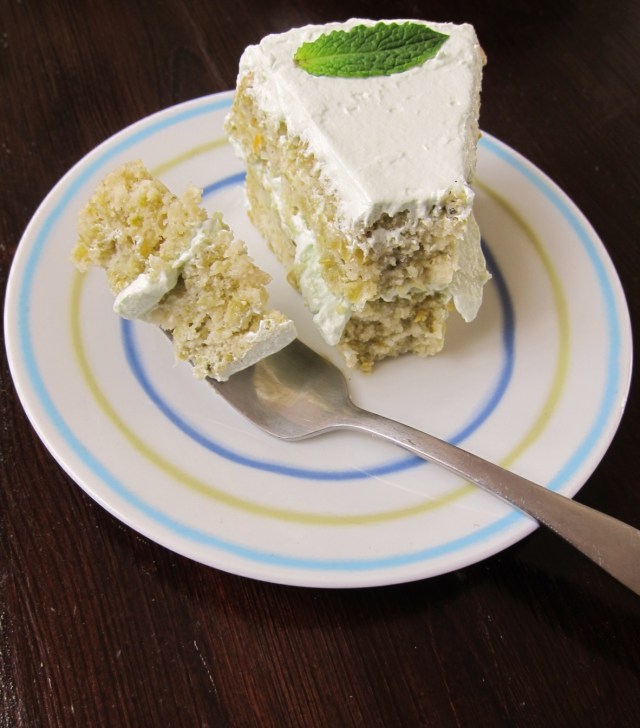
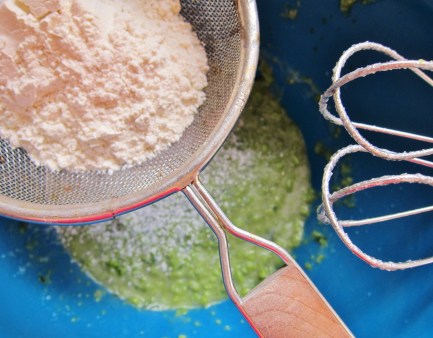 With an electric mixer, beat egg whites on high speed, gradually adding ¼ cup of the sugar once whites are foamy and becoming white. Keep beating until whites are fluffy, opaque, and hold quite solid peaks; set aside. In a large bowl, beat the remaining ¾ cup sugar, oil and extracts until smooth. Gently fold in the pea mixture, stirring until even. Sift or sieve over the mixture: flour, salt, baking powder and soda. Mix until incorporated, adding remaining ¼ cup lemon juice along the way. Fold in the vanilla bean seeds and lemon zest until just evenly dispersed. Gently fold in the egg whites 1/3 at a time until just incorporated, being careful not to flatten them too much. Batter will be frothy and delicate. Quickly transfer it equally into the prepared pans, spreading gently to edges. Bake for 25-35 minutes or until toothpick tests clean in center and edges are becoming golden brown. Cakes will be an unusual color and not very tall. Let them cool completely in pans before loosening edges with knife and removing. Once cool, cover until ready to frost or decorate, then store and serve at room temperature; do not refrigerate.
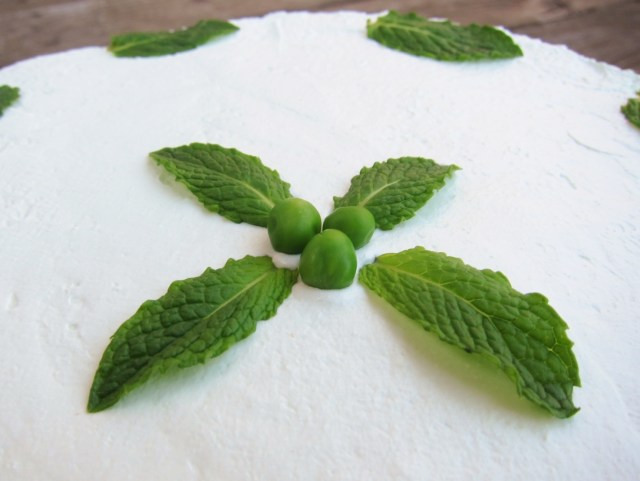
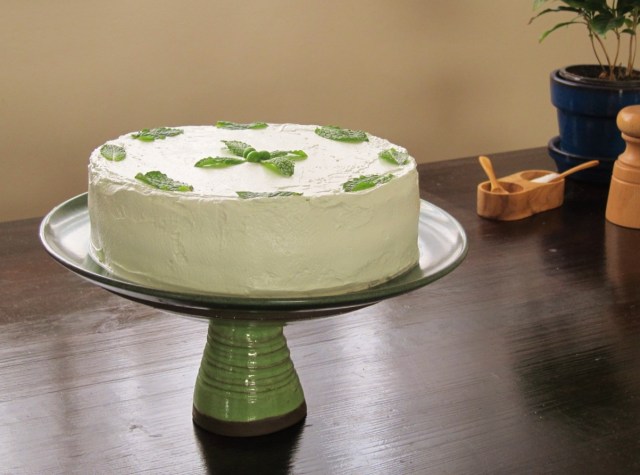
 Because the cake is best at room temperature, you’ll want to wait to frost it until just ready to serve. This refreshing cake matches perfectly with a basic cream cheese icing. To keep the dessert dairy-free, I opted to frost mine with this meringue frosting, replacing the orange juice/champagne mixture with: 4 tablespoons lemon juice, 3.75 teaspoons vanilla, and (optional) scant 1/4 teaspoon mint extract. If desired, add a drop of green food coloring to your icing and/or decorate with peppermint leaves and even peas — that is, if you’re confident they won’t scare away your diners.
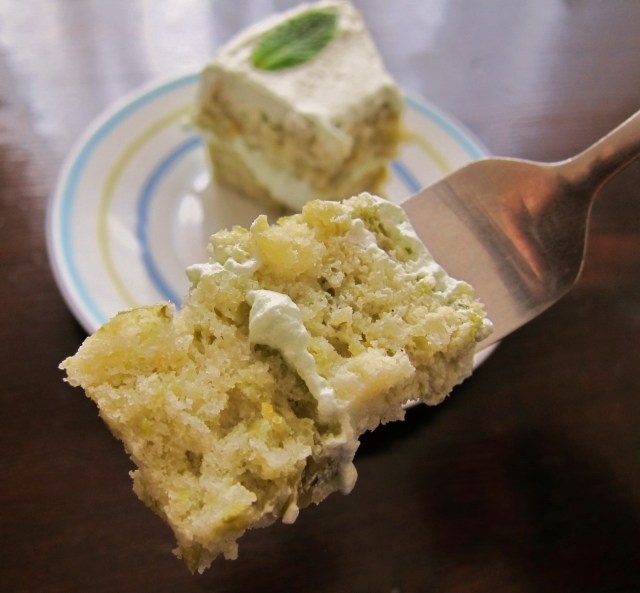
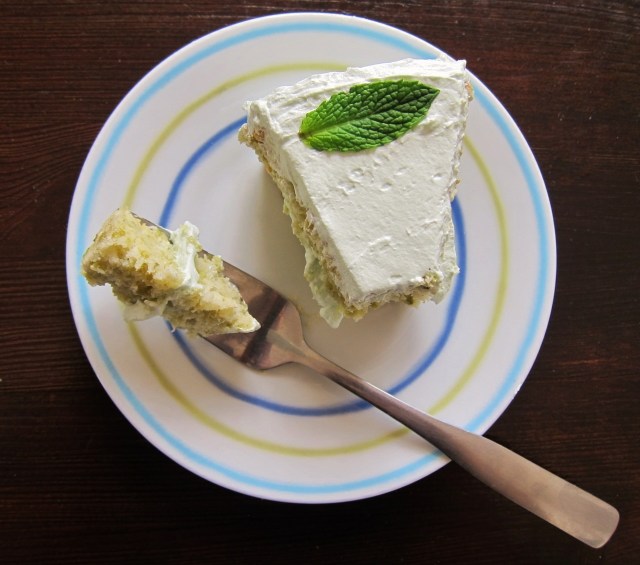 Extraordinarily spring-like and scrumptious, this sweet pea cake is a truly luscious dessert. Rather unsurprisingly, its texture reminds one of moist carrot cake with pineapple in the batter, while its flavor offers grassy hints that perfectly highlight the citrus and mint within. With an open mind and an open mouth, let us all welcome peas to the wonderful world of veggie-laden desserts. After all, they’re in very good company.
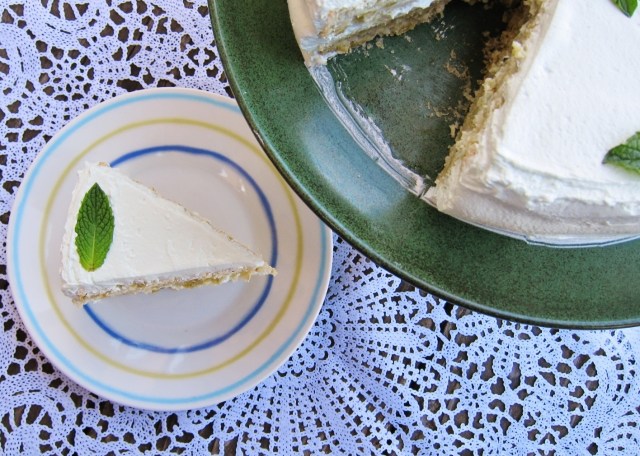 *Maybe next time…If you want to skip the frosting, a dusting of powdered sugar would make a winning topping. Similarly, I imagine orange zest would be a great addition or replacement for the lemon. I chose coconut oil because of its natural sweetness and pleasant flavor, but if you don’t have any, melted butter will work fine. Also, I chose mint extract (which is a mixture spearmint and peppermint) over the more potent pure peppermint extract. Peppermint extract is known as a finer product because of its purity and strength, but sometimes I prefer the more generic mixed mint type because of its softer flavor. If you use peppermint extract, use caution and add it very slowly. Finally, organic peas tend to be sweeter than conventional peas and often don’t cost much more.
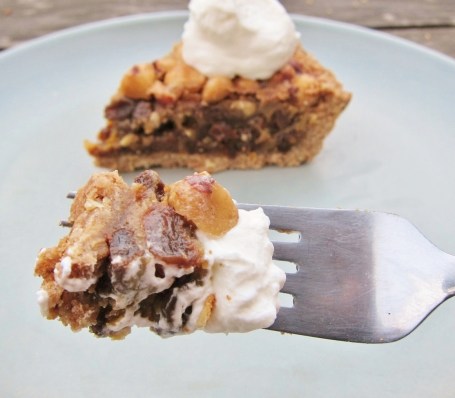
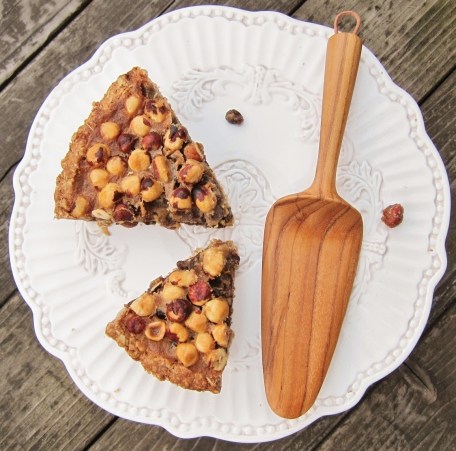

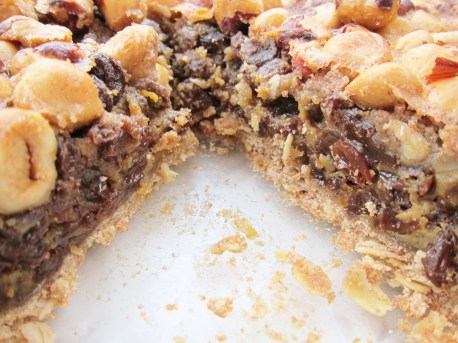
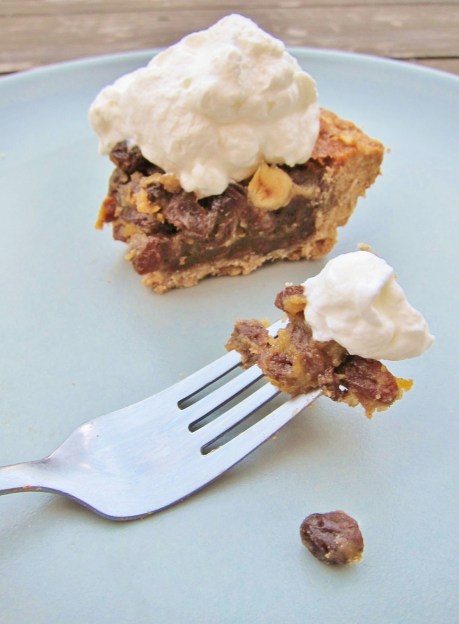
 I’ve been rather intrigued with the array of coconut products at the market lately. Coconut water, coconut creamer — even coconut vinegar, and more. When I was recently given both a fresh jar of coconut oil and a bag of curious coconut sugar (it looked like rocky brown sugar), I felt compelled to combine them and create a new treat. I decided to add coconut milk, coconut flour and shredded coconut: a quintuple coconut concoction! The result was downright delicious (and arguably healthy). Here is the recipe.


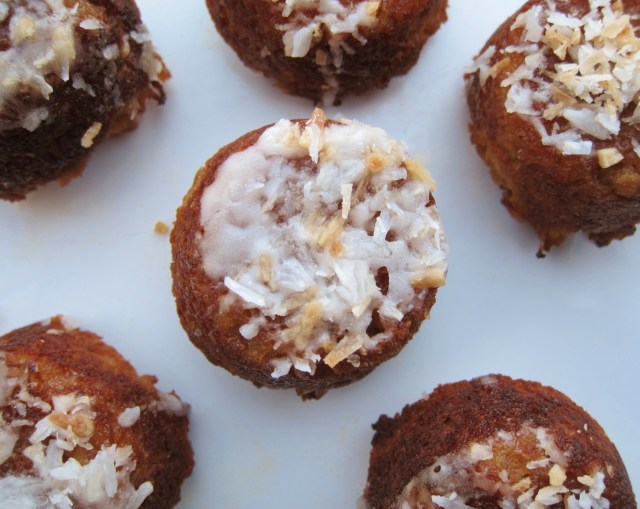 Little coconut cakes are wondrously moist and flavorful, rich with gentle sweetness in every bite. Their tad of glaze creates a crisp shell that surrounds their soft, coconutty centers, while their bits of pineapple offer an inviting texture. Remarkably delicious, they are gluten-free, dairy-free and — aside from the glaze — contain no refined cane sugar.
 Maybe next time… To keep refined cane sugar completely out of this recipe, omit the glaze or replace it with a different topping: perhaps a coconut sugar based frosting or a dab of maple syrup to which the sprinkle of coconut will fasten. These little upside down cakes would also make lovely mini cupcakes; bake with or without paper liners, keep upright instead of inverting, and add a pretty little spiral of icing on top of each one. While I’ve never used coconut extract before, I imagine it would be a yummy replacement for part or all of the vanilla extract, and would be highly fitting, only bumping up the coconut flavor.
 *While I’m sure there are plenty of great brands available, I used





 butter, sugar, flowers