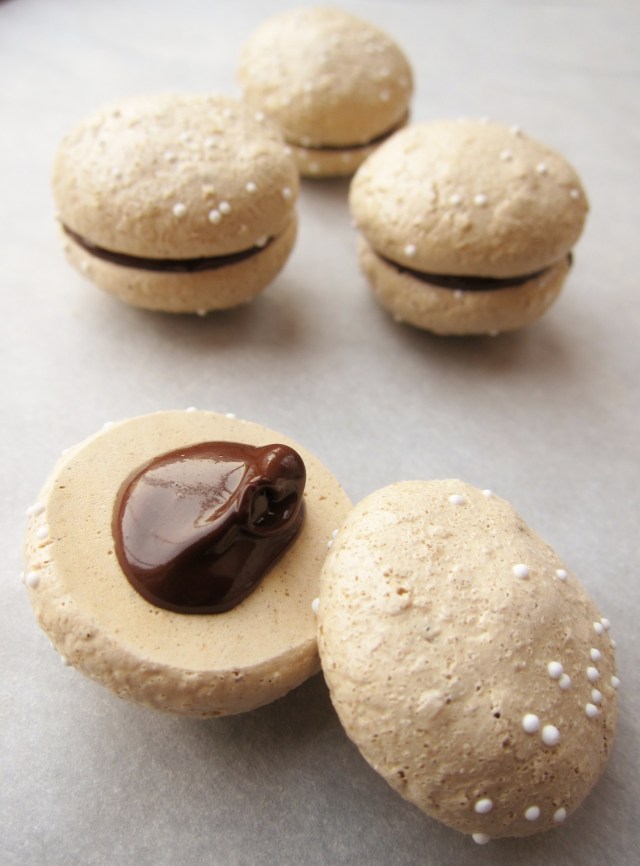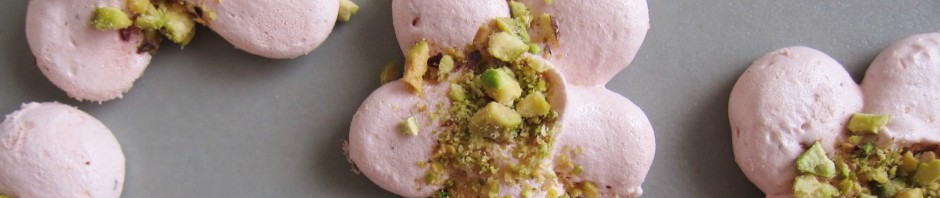
Sentimental Cereal: Easy Almond Bars

I found out this week that my Grandma’s house has been sold.  It’s a strange sense of relief to see it go, and as my sister puts it, I hope the new owners end up with memories as sweet as ours.  Aside from our weekly visits there as kids, I lived with Grandma for part of fourth grade and again in junior high.  Her house was not only our go-to place, but also our ultimate safe place.  It provided more sustenance, order, and peace than we knew to exist in the world, even in our own home.  Simply put, we were happy at Grandma’s.

A rather funny trademark of Grandma was her stockpiling of household items she’d bought on sale.  Her cupboards were packed neatly with vast rows of canned tuna, packs of toilet paper, bottles of dish soap, and much more.  She took pride in letting her loved ones pick freely from her supplies on each visit.  When I moved away after high school and would come back to town, I felt lucky to reap these benefits.  On one instance, I returned to my apartment with two jumbo boxes of cornflakes: Grandma’s favorite cereal.  Upon an urge to make sweets soon after, I ignored my lack of cooking experience and turned to the cornflakes for inspiration. With a salute to Grandma’s generosity, I came up with this simple little recipe.

Easy Almond Bars (makes a 9 x 13” pan, up to 24 bars)

  • 1/4 cup butter
  • 2-3 dashes salt (omit if using salted butter)
  • 10 ounces (about 6 cups) marshmallows
  • 1.5-2 teaspoons almond extract
  • 8 cups corn flakes
  • 1/2 cup sliced almonds

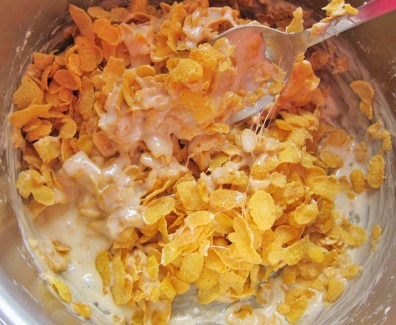
Line a 9 x 13″ pan with foil or parchment, and oil or butter the lining.  Spray or butter a large, heat-resistant spoon or spatula. Melt butter in a large pot over medium heat until it barely becomes brown; quickly turn heat to low.  Move the pot to coat its inner walls with the butter.  Add marshmallows and let them melt, stirring occasionally. Just when marshmallows are smooth, turn off heat; stir in extract and salt (if using). Add cornflakes alternately with almonds; mix until all are coated, then quickly pour into prepared pan.  Press down with buttered spoon or hands to make even.  Cool and slice.
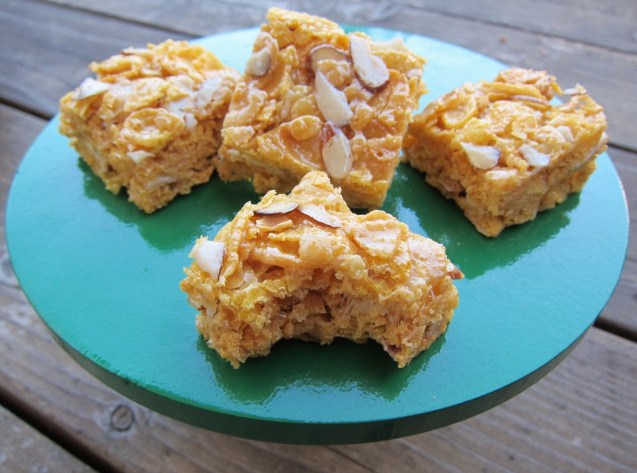
Chewy, crisp and full of amaretto essence, these scrumptious bars are a distinctive twist on a no-bake treat. Their fragrant, simple flavor is sure to please a crowd – plus they’re gluten-free.  I admit that easy almond bars are far from my most extravagant creation, but they take me to a place I can’t otherwise go: Grandma’s house, with all its sweetness.

Maybe next time… These bars allow for some flexibility in measurements; i.e., you might use less extract to make them more mild, or more marshmallows if you want them really chewy.  A generous dollop of almond butter would be a delicious addition to this recipe; try stirring some in just when the marshmallows have melted.  Of course, the possibilities are nearly endless when it comes to nut and extract combinations.  But let me not forget the ingredient Grandma loved most: chocolate.  For a decadent addition, cool and cut the bars, then dip or drizzle them using melted dark, milk or white chocolate.

Yes, this is the same Grandma I wrote about before.  What can I say?  I love her!

Posted in Cookies & Bars, Sweets, Traditional with a Twist | Tagged , , , , , , , , | 12 Comments

Sunroot Spice Cake

Until about a week ago, a stalk of bright yellow flowers peered over my fence from next door.  The blossoms were reminiscent of sunflowers but smaller, and they really towered high at close to ten feet.  On the day the flowers disappeared from my neighbor’s yard, I noticed their absence but didn’t give it a second thought — until I found an unusual gift on my front porch.  It looked a bit like ginger but lacked the signature aroma.  After a bit of research and a chat with my generous neighbor, I found out that I’d been given the very roots of the those swaying yellow flowers, which are part of the sunflower family, after all.

Sunroots, also called sunchokes or Jerusalem artichokes,  are knobby and brown with little speckles of purple.  Crisp and white inside, their texture is much more like a potato than any artichoke, and it turns out they have no origins in Jerusalem — at least not that I can find.  Everyone I talked to suggested that I use them as a replacement or addition in a savory potato-like dish.  This sounded fine, but when I tasted their mild, slightly tangy and pleasantly earthy flavor, two specific words began popping into my mind: spice cake!

Sunroot Spice Cake (makes TWO 8″ round single layer cakes, 16-24 slices total)

  • 1 and 2/3 cup sugar
  • ¼ cup molasses
  • 1 cup oil
  • 4 eggs
  • Seeds scraped from two vanilla bean pods
  • 1 teaspoon ground cloves
  • 2 teaspoons ground cinnamon
  • 2 cups flour
  • 2 teaspoons baking soda
  • 1 teaspoon salt
  • 1 teaspoon pure vanilla extract
  • 3 medium lemons, preferably Meyer, finely zested and juiced
  • 2 cups grated raw sunroot (about 12 – 13 ounces in weight)

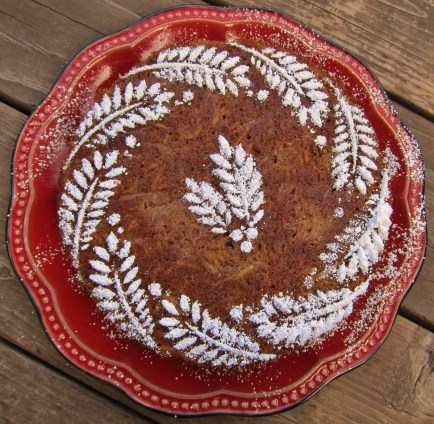
Preheat oven to 350 F.  Grease sides and bottoms of two 8” round pans, and line bottoms with parchment or dust pans with flour.  Beat the first five ingredients very well, until even in consistency and color.  Sift the next five (dry) ingredients over the egg mixture.  Mix until incorporated, scraping sides and bottom of bowl with spatula.  Strain lemon juice and measure out 1/4 cup, then gradually add the 1/4 cup juice with the vanilla extract to the batter.  Fold in the lemon zest and sunroot until even.  Divide batter into prepared pans.  Bake for 35-45 minutes, until toothpick tests clean when inserted in center.  Let cakes cool completely in pans.  Invert when ready to decorate and serve.  Store and eat at room temperature.

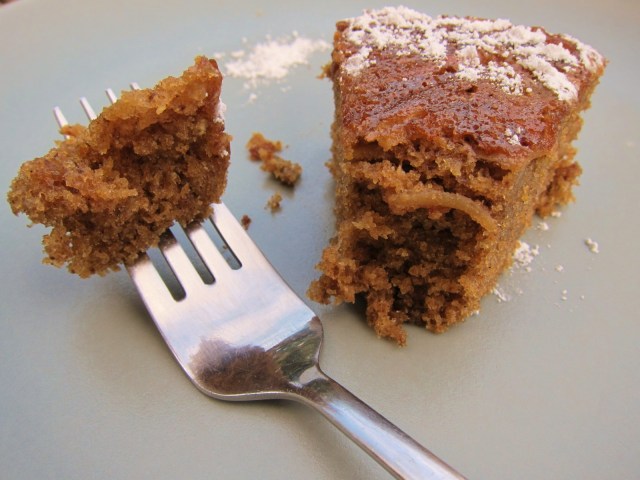
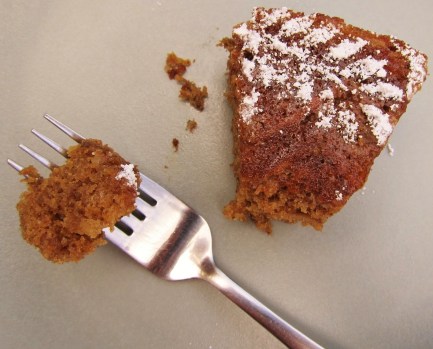
With its moist crumb and spicy-sweet flavor, this cake proved to be delicious despite its unusual main ingredient.  The addition of lemon seemed to complement the tangy quality of the sunroot, while the molasses and cloves paired well with its earthy attributes.  In fact, one taster thought he detected a welcome little hint of cedar with each of his mindful bites.  As for my neighbors, I think it’s safe to say they were happily surprised by such a rare reincarnation of the root.  After all, their unexpected dessert was quite full of fall flavor, a remarkably local ingredient, and a whole lot of gratitude from my little kitchen next door.

Maybe next time…  Like carrot cake or zucchini bread, sunroot spice cake invites the addition of raisins or chopped nuts.  I also have a hunch that orange zest and juice would match just as wonderfully in this recipe as lemon, and that a bit of almond meal would be yummy in place of some of the flour.  One taster perked up and declared, “cream cheese frosting!” — which is indeed a lovely idea; the two cake layers could even be stacked, filled, and iced.  And of course, this recipe can be easily halved if you don’t need two 8″ rounds.  Finally, sunroot spice cake makes as wonderful a breakfast treat as it does a nice dessert.

It’s true: I made another spice cake quite recently.  I could tell you how the two I’ve made differed in flavor and format, but really, I blame this glorious season.  In the fall, the aroma of baking spice cake is so heavenly that I have a hard time resisting the urge!

Posted in Baking with Veggies, Cakes & Cupcakes, Sweets, Traditional with a Twist | Tagged , , , , , , , , , , , , , , , , , | 29 Comments

Orange Cocoa Springerle

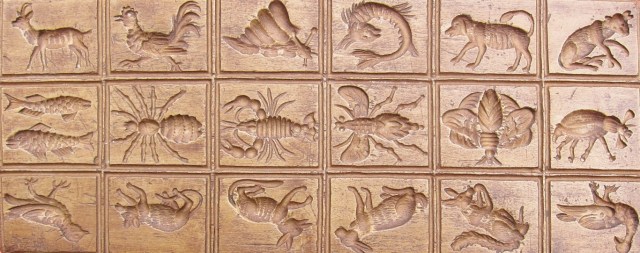
Poking around at an estate sale a few weeks ago, I found that things seemed picked-over for the most part.  But just when I was about ready to leave empty-handed, I saw a familiar looking wall hanging in the corner of the kitchen.  I knew immediately that it wasn’t merely a carved wooden block; it was a large and unusual springerle mold.  I quickly took it to the check-out man and asked for a price.  He shrugged and proposed a bargain: “Three bucks!”  I tried to conceal my excited grin as I gladly handed him the cash.

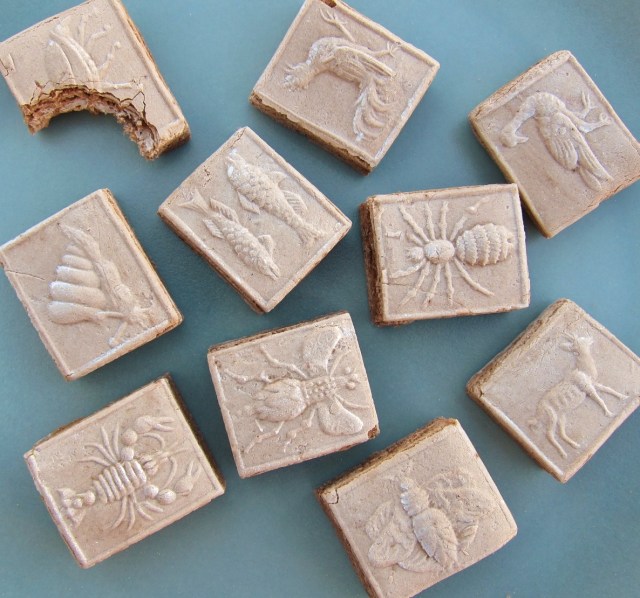
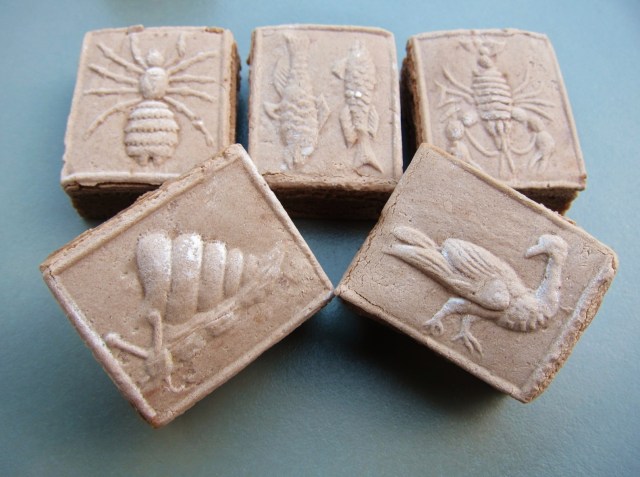
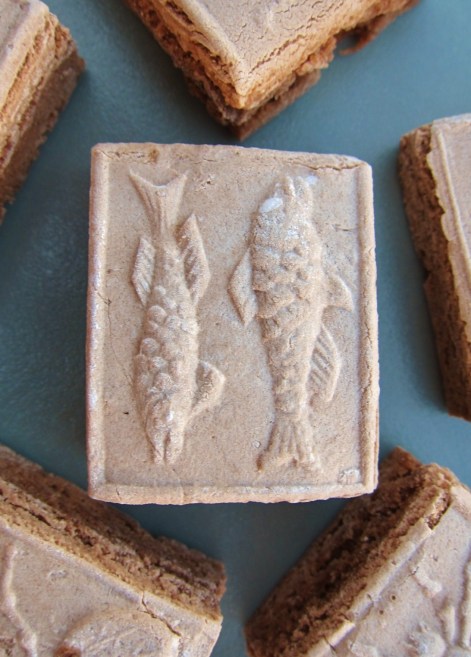
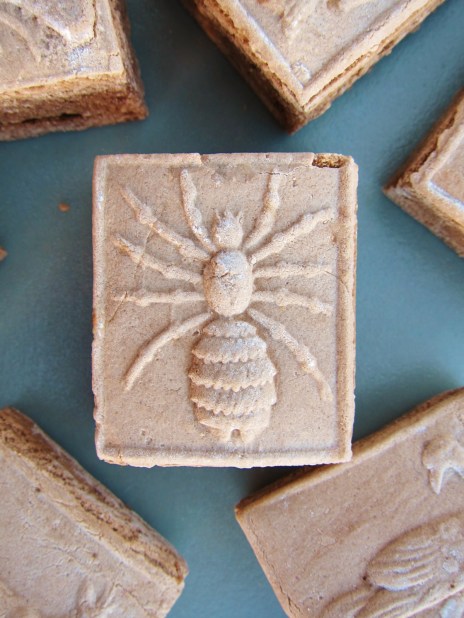
Springerle molds range widely in size, intricacy and age.  This new-to-me mold is wooden, about 4 x 9″, and bears a sticker that says it was made in Strasbourg at a place called Trouvailles.  It’s carved with 18 different critters — perfect for autumn’s own visitors and holidays, in my view.  Having never seen one quite like it, I could hardly wait to put it to use.  I immediately began thinking of new recipes for springerle: those beautiful white German cookies flavored with anise.  Even though I enjoy the traditional style and flavor, I was ready for a fresh twist and was soon to settle on my own color, texture and flavor. 

Orange Cocoa Springerle* (makes about 70 little cookies; mine were 1.25 x 1.5″)

  • 1/4 cup cocoa powder, preferably Dutch process
  • 1 teaspoon salt
  • 3.5 cups flour, preferably cake flour
  • 4 eggs
  • 3.5 cups powdered sugar
  • 3/4 teaspoon pure orange oil

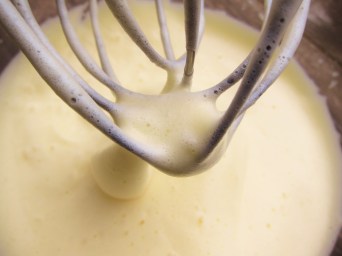
Sift together first three ingredients; set aside.  Beat eggs with an electric mixer (preferably a standing mixer with whisk attachment) on high until they are voluminous, pale and creamy, about 8-10 minutes.  Sift powdered sugar over the beaten eggs, mixing it in slowly.  Add orange oil and mix until incorporated.  Add the flour mixture a little at a time with mixer on low, replacing whisk with paddle or dough hook if needed.  Dough will become very thick; mix it just until it holds together and is even.

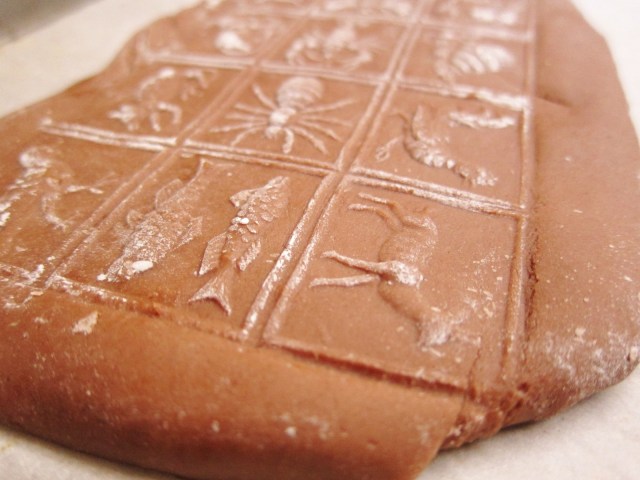
Cover dough in plastic while you line cookie sheets with parchment paper, dust a work surface with flour, and brush your mold with powdered sugar.  Take only as much dough as you need for your first round of pressing, keeping the rest covered in plastic.  If dough feels too sticky, freely add a little flour by hand.  Use a floured rolling pin to roll the dough about 1/3″ thick.  Push the prepared press into it firmly and evenly, then remove.  Cut edges with a pizza cutter, knife, or cookie cutter.  Carefully transfer cookies to prepared cookie sheets. Repeat until all the dough is gone, then leave the raw cookies sitting out at room temperature for 12 to 24 hours.  If desired, drape wax paper or parchment loosely over cookies to avoid debris.  As they sit, they will lighten in color as their imprints set in place.  Preheat oven to 250 F.  Bake the dried springerle for 40 to 50 minutes depending on size.

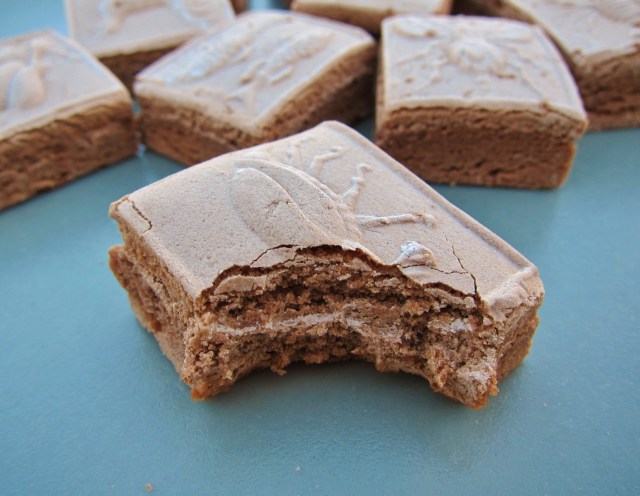
With a toothsome hint of cocoa and orange, these striking little cookies are a treat for the mouth and eyes alike.  Their soft, tender centers stray from the crumbliness of traditional springerle, yet they still do just what the name implies: spring up in the oven and spring off the plate in a flash!  Beautiful, delicious, and a little bit different: that’s my kind of dessert.

Maybe next time… To fancy these up, I’m already planning to serve my next batch in mini-cupcake liners.  One could also use a small paintbrush to gently decorate the tops with more powdered sugar or edible glitter.  In terms of flavor, the possibilities are nearly endless: try almost any flavored oil or extract in place of orange, and feel free to replace the cocoa with flour.  I chose a small amount of cocoa and avoided speckled spices to ensure the design would come through, but there’s no reason to hold back your own baking instincts.

*I admit it: Without being anise-flavored, crisp, and pale white, these cookies probably shouldn’t be called springerle at all.  But I’m doing so for simplicity; besides, the many springerle recipes I’ve seen vary greatly in baking temperature, drying time, and even ingredients.

Posted in Cookies & Bars, Sweets, Traditional with a Twist | Tagged , , , , , , , , , , , , , , , , , , , , | 23 Comments

Party Cakes

Cake signals celebration.  This is one of the most powerful reasons I enjoy baking so much.  Not only does the making process feel as creative as my bygone ceramics class did; the result makes life feel decorated and, of course, sweet.  So I was quite honored and quick to accept an offer to bake two sheet cakes for an election debate party last week.  I admit I’m not much of a politics person, but I’ll bring the cake to almost any kind of party if I can.

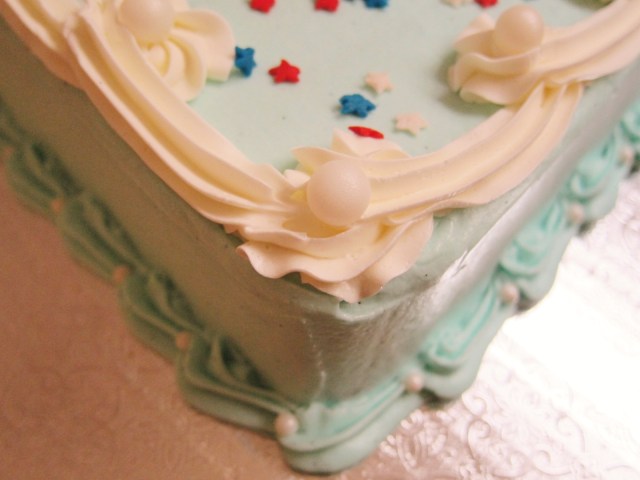
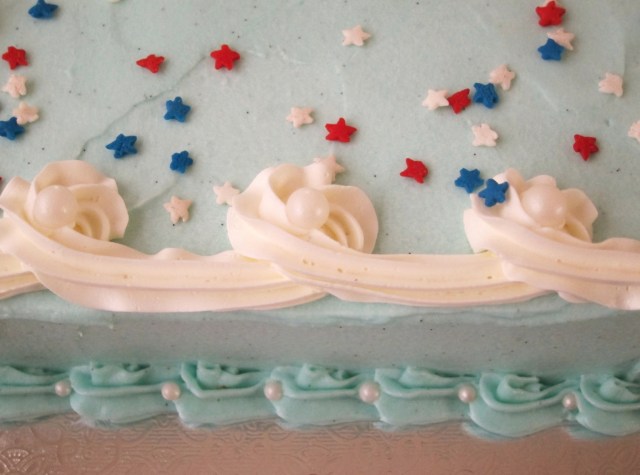
 I made one of the cakes lemon, using a large batch of my lemon yogurt cake recipe, then split the cake in two, slathering homemade lemon curd between the layers.  After a generous coating of blue-tinted cream cheese frosting, I took my time piping the borders of the citrusy dessert and added some pearls and patriotic sprinkles.  The white borders sort of reminded me of those draped curtains on the podiums and stages of political events, but I can bet with confidence that my version leaves a much better taste in your mouth.

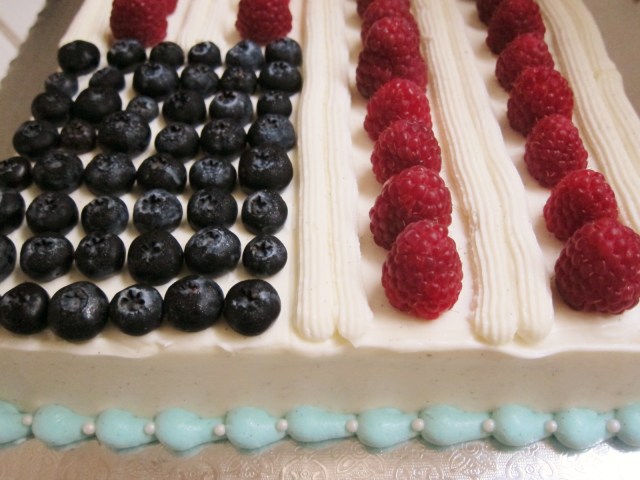
The second cake was a classic chocolate sponge — one whose recipe I really can’t take credit for.  It was given to me long ago by a friend who lived in NYC briefly; she got it from a chef at a local diner.  It’s a no-fail, go-to cake that pleases a crowd.  In my many modifications of it, I’ve found that it goes wonderfully with tart berries, so after I coated this one with cream cheese icing, I turned the top into a blueberry and raspberry American flag. I’d seen similar designs in various places over the years, but had never made my own.

I think it’s safe to say that the election debate cakes were a hit.  They were completely gone by the time I left, serving close to 100 guests.  But far more intimate and meaningful: a couple of weeks before the debate party, my dear friend and co-worker Elizabeth had a birthday.  We couldn’t have cake on her actual birthday, so we went out to lunch together. And that night, I came home and decorated her birthday cake.  (A fun day, indeed!)

Elizabeth has a gluten intolerance, so I made the cake layers using a mixture of non-wheat flours.  I’ve managed to succeed at gluten-free baking at various times over the years, with both Elizabeth and other wheatless loved ones motivating me.  Not every try has been triumphant, but this time, the cake went fast and tasted great.  I decorated it with pastel colors, which the birthday girl loves, and used her favorite frosting beneath the little pearls. We ate the cake the day after with as much joy as we would have on her actual birthday.

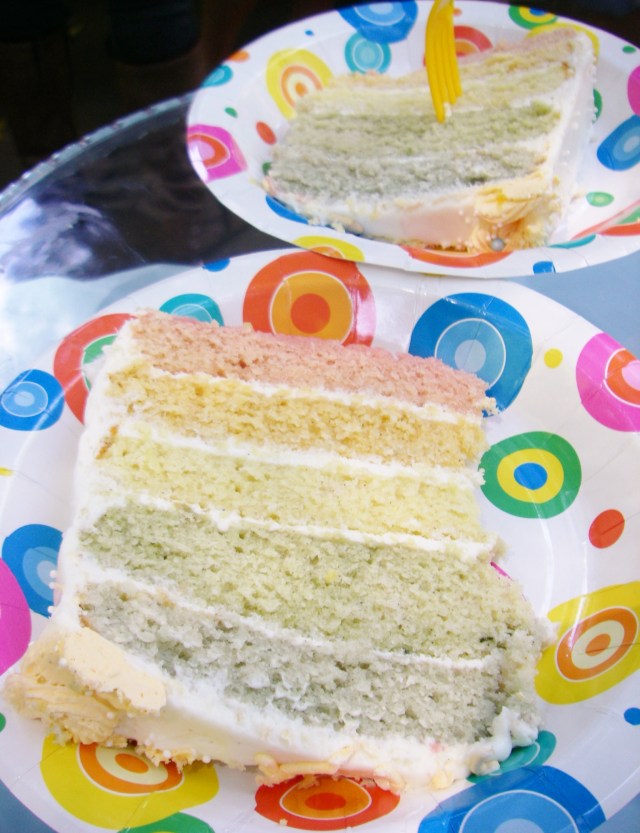
Speaking of pastels and birthdays, I’ve been meaning to follow up on the naturally dyed birthday cake I wrote about a few months ago.  That post focused on my recipe and practice run making the cake; the final draft was yet to come.  For instance, I’d failed in getting the green layer to… well… be green — and wasn’t sure what I’d do about it.

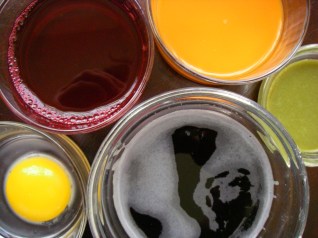
As elementary as this sounds, a few days before the party I remembered that yellow and blue make green.  So I took an egg yolk and some blueberry juice with a dash of baking soda, and whisked them together with a tiny pinch of spirulina powder (I wanted its vibrancy but definitely not its flavor).  Folded into batter and popped in the oven, this concoction proved to prosper.  Even with muted colors that didn’t cover the whole ROYGBIV spectrum, the slices turned out to look a bit like delicate little rainbows to me…

And thankfully, the cake itself was full of moisture and delectable flavor.  The party guests enjoyed it to the extent that that every crumb was quickly devoured, which made me glad I’d brought some extra cupcakes as back-up, secretly stuffed with lemon custard. And most important, the guest of honor devoured his piece with great enthusiasm and focus…

Posted in Cakes & Cupcakes | Tagged , , , , , , , , , , , | 8 Comments

Turkish Coffee Meringues

I’ve always thought of Turkish coffee as a special occasion sort of drink.  It’s not just coffee: it’s extra robust coffee that’s often spiced, sweetened, and presented in pretty little mugs.  And beneath the way it’s served is the distinctive way it’s prepared.  The coffee beans are ground into a very fine powder, then brewed filter-free using ornate metal pots made specifically for the process.  A delicate method that requires a careful eye, the water nearly bubbles over the edge before the concoction is ready.

Having only had it at friends’ houses and Turkish restaurants, I admit I may not have a grasp of authentic Turkish coffee.  But the versions I’ve tasted have been distinct and delicious enough to remember with fondness and a craving for more.  Not surprisingly, the brew has also often left me daydreaming of its rebirth as a dessert.  Here’s what I came up with.

Turkish Coffee Meringues (makes about 100 little meringues or 50 little sandwiches)

  • 1/2 cup egg whites (from about 4 eggs) at room temperature
  • 1/2 teaspoon cream of tartar (optional)
  • 1 cup sugar
  • 4 teaspoons instant espresso powder such as Medaglia D’oro
  • 2 – 3 teaspoons ground cardamom
  • 1/2 teaspoon ground cloves
  • Sprinkles and/or chocolate for melting (both optional)

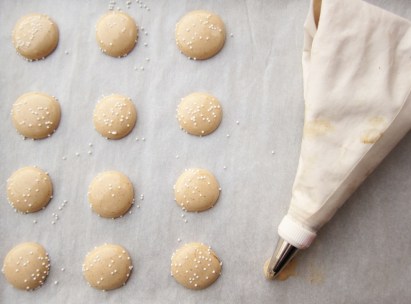
Preheat oven to 200 F.  Line 2 – 3 cookie sheets with parchment paper.  Beat egg whites on high until foamy.  With mixer on, add the cream of tartar (if using), then slowly add the sugar.  Gradually add the spices and keep beating until stiff peaks form.  Fit a pastry bag with the tip of your choice, fill with egg white mixture, and pipe small meringues onto the cookie sheets (about 1.25 – 1.5″ diameter).  Before placing meringues in oven, if desired, decorate them with sprinkles or more spices.  Bake for 60-75 minutes**.  (If using more than one oven rack, stop at the halfway mark and switch them.) Turn off and open oven, and let meringues sit inside 15 minutes or just until pan is warm (not hot) and meringues feel dry (no longer wet).  If desired, sandwich pairs of meringues with a bit of melted chocolate. Once chocolate has hardened, immediately store them in an airtight container at room temperature away from moisture.

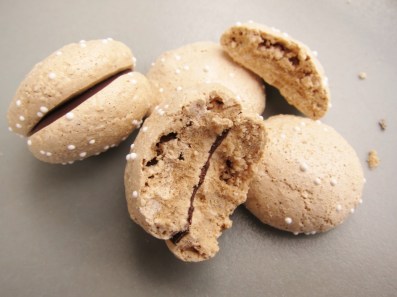
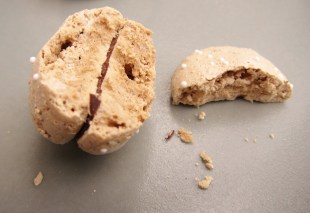
Flavorful and fragrant, Turkish coffee meringues are full of sweet coffee taste and delectable spice.  Not unlike the drink that inspired them, their little size delivers a robust burst of flavor and a welcome pick-me-up.  They are crisp, light and satisfying, and for me, they echo the festive feeling of their namesake brew.  Just as it should be with a homemade dessert, may you sense a celebration as you eat them!

Maybe next time…  I think of meringues as more of a candy than a cookie, so I like to keep mine small, but they can be made larger and baked longer. Try piping them with a more ornate pastry bag tip than the plain one I used here, and freely adjust the coffee and spice amounts to your liking. If you’re going to sandwich your meringues, melted caramel or white chocolate filling would be wondrous in place of dark chocolate. Other spices aside from cardamom would also be delicious.  If you live in a humid area like me, add a desiccant packet (look in your vitamin bottle) to your container of meringues.

**My area tends to be humid; an hour and 15 minutes has proven to be a good baking time for me, but if you live in a drier area, this might be too long (which will simply result in a toastier-colored, slightly drier meringue from the caramelized sugar). You might try pulling a meringue off a cookie sheet at the 1 hour mark and letting it cool; if it’s dry and not gooey, turn off the oven at this point.

P.S. As a bonus to their deliciousness, meringues are gluten-free, fat-free and dairy-free. (That is, as long as your fillings and decorations are, too.)

Posted in Baking with Tea & Coffee, Cookies & Bars, Sweets | Tagged , , , , , , , , , , , , , , , , , , , | 11 Comments