 I grew up spending lots of time with my grandma, who not only stocked prunes like a quintessential senior, but also brought home buttery prune-filled danishes whenever she visited San Francisco (along with fragrant loaves of fresh sourdough bread). As a kid, the pastries were a rare and dazzling treat: flaky, soft dough surrounding a gooey-sweet puree of rich fruit. Remembering them as an adult, I’ve long hoped to create my own prune dessert — and when I started seeing their fresh predecessors at the market this season, I decided it was time. Fresh and dried plums were destined to become a delicious duo.
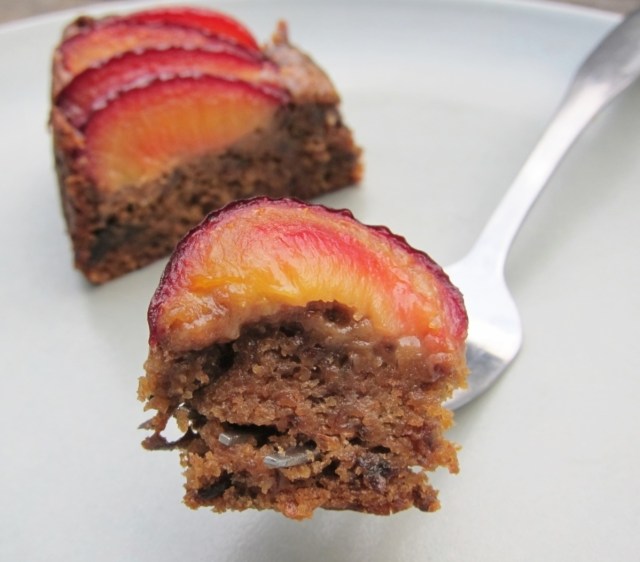
But I vowed to proceed with caution: I know prunes aren’t for everyone, and their reputation (ahem) tends to induce a giggle, despite their lesser-known popularity as a delicacy. So I’d be sure to showcase the fresh plums on the outside of my dessert and hide the dried ones in the batter. By steeping the prunes in vanilla then blending them with luscious maple syrup, I managed to create a flavorful, ultra-moist torte that’s free of refined cane sugar and makes as lovely a dessert as it does a breakfast or afternoon snack. What’s more: it’s been officially declared delicious by all sorts of tasters.
Double Plum Torte (makes an 8″ torte; serves 10)
- 10 ounces pitted prunes (about 1.5 cup packed)
- 2 tablespoons pure vanilla extract
- 1/4 cup water
- 10-12 ounces fresh plums, ripe but firm (about 3-6 plums depending on size) I used Santa Rosa plums but any variety should be fine
- 1/2 cup pure maple syrup, room temperature
- 1/2 cup unsalted butter, softened
- 1 large egg
- 1/2 cup all purpose flour
- 1/3 cup almond meal (skin-on; not blanched)
- 1/2 teaspoon salt
- 2 teaspoons baking powder
Place prunes in a small saucepan and cover with vanilla and water. Simmer covered for 5-7 minutes, stirring once or twice. Remove lid and turn off heat. Leave uncovered to cool down a bit. Meanwhile, grease an 8″ cake pan and line the bottom with a circle of parchment (alternatively, simply grease and flour an 8″ springform pan if you have one). Rinse and dry the fresh plums, slice each one into about 10-12 segments, and discard the pits. Set slices aside. Preheat oven to 350 F.
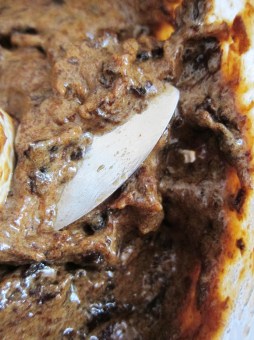
 Transfer the steeped prunes and any remaining liquid (there should be a small amount) into the bowl of a food processor; top with the maple syrup. Blend for about 2 minutes, stopping to scrape down sides of bowl, until a consistent paste has formed with speckles of prune no larger than raisins. Measure out 1.5 cups of the mixture; transfer to a large bowl (use any leftover as you wish). Add the soft butter and beat until evenly dispersed. Making sure the mixture is not too warm, add the egg and mix until incorporated.
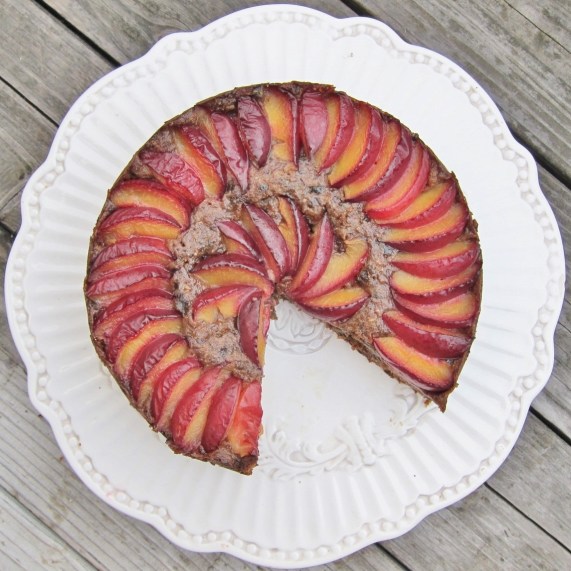
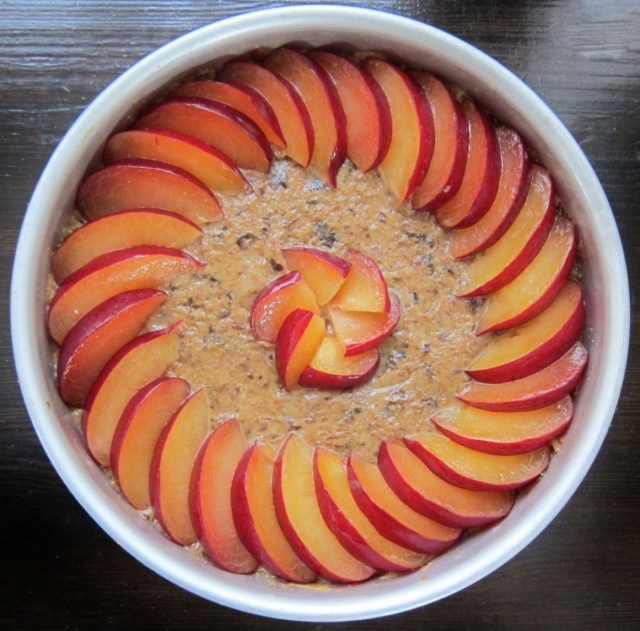 Into a separate small bowl, sift the flour, salt, and baking powder. Whisk in the almond meal, stirring well, until even with no lumps. Add flour mixture to prune mixture, stirring until a thick batter is formed. Spread batter evenly into prepared cake pan. Arrange the plum slices around the edge of the torte with a few in the center. Cover with tin foil and bake for 20 minutes, stopping to remove foil and rotate torte. Continue baking for another 25-30 minutes (a total of 45-50 minutes), checking with a toothpick toward the end; the center should not be too wet, though a few very moist crumbs will be inevitable.
 Remove from oven and let cool completely in pan. If using a springform pan, remove sides to serve. Otherwise, loosen sides with a butter knife, then carefully flip the cooled torte onto a plate; remove parchment, and carefully flip again onto your serving plate. Slice and enjoy. This torte tastes best the day it’s baked, but can be covered and refrigerated for up to two days. Before eating, bring it back to room temperature or warm it slightly.
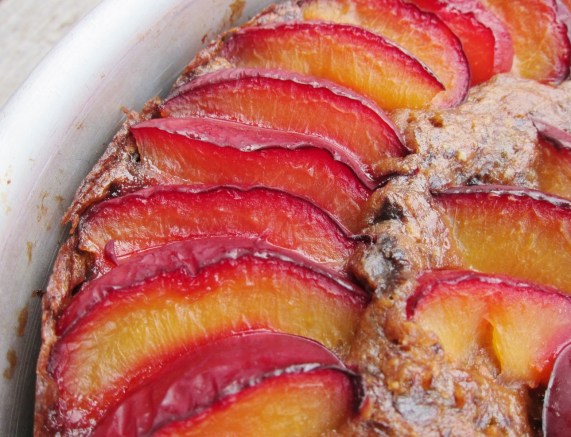
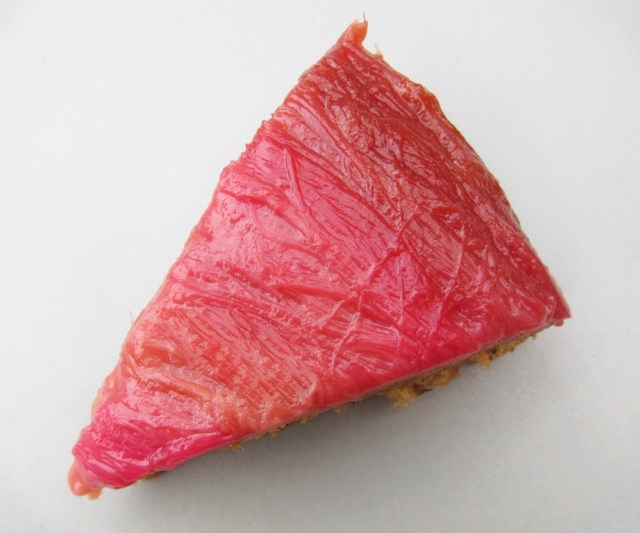
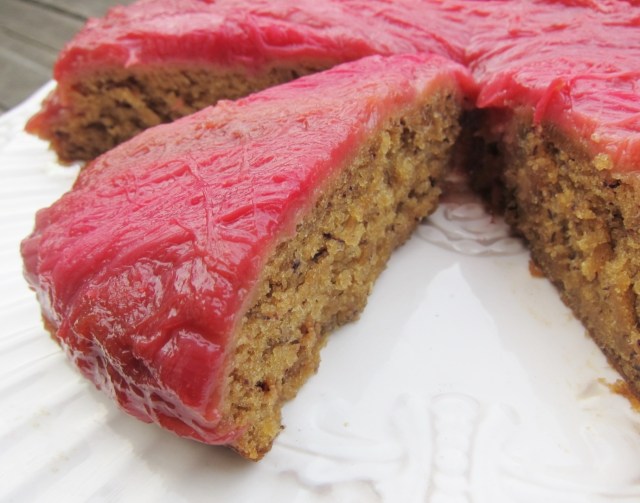
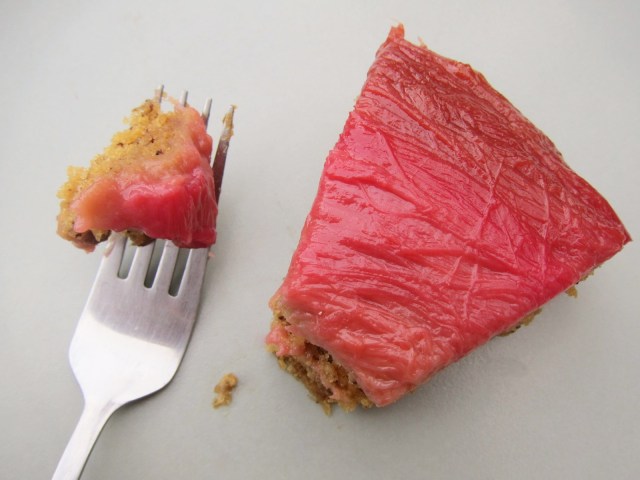
 With its fragrant maple-vanilla batter, this torte celebrates both dried and fresh plums in a single, succulent form. The tangy plum slices offer a burst of juicy flavor and vibrant color, while the dense, prune-rich cake is incredibly moist and naturally sweet. Having shared its slices with many tasters, I’m happy to say that it was enjoyed by all, from prune lovers to prune pessimists. I like to savor mine with a hot cup of coffee and a nod to my grandma, whose generosity with those delectable danishes is but one of the many ways she made my life sweet.
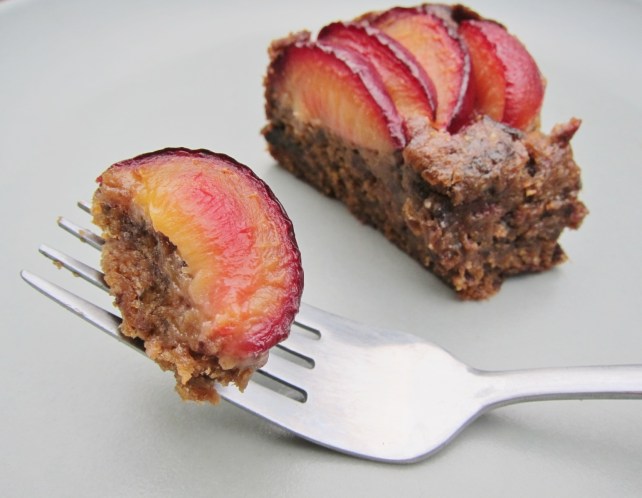 Maybe next time… As mentioned above, this torte is very moist and the areas directly under the fruit have the texture akin to a nice steamed pudding. I found this delightful as did many of my tasters, but if you prefer a less moist cake, skip the plum slices placed in the center. Fresh plum, vanilla, and maple make this a flavorful treat, but a bit of finely zested orange peel could be lovely in the batter, or perhaps a pinch of minced herbs like rosemary or thyme. To make it dairy free, replace the butter with Earth Balance or the like. To make a gluten free version, simply replace the all purpose flour with a multi-grain gluten free flour blend, such as Bob’s Red Mill.









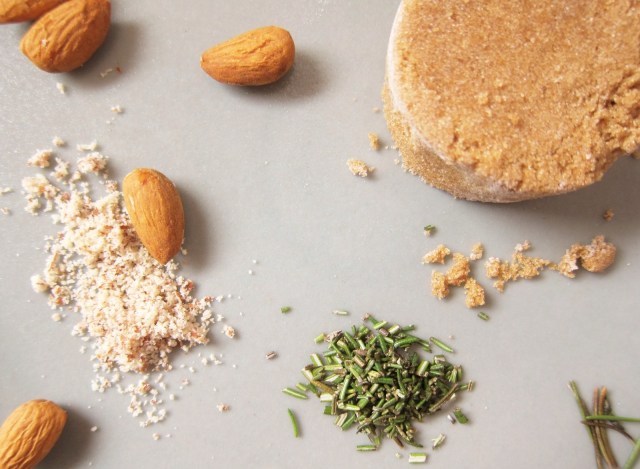
 When I started daydreaming about creative twists for traditional hamantaschen, playing with the dough came first. Raspberry jam filling had always been my favorite (albeit not quite conventional), and I couldn’t really imagine anything better. So I created a dough to complement the tart berry filling: nutty almond meal alongside the flour, molasses-rich brown sugar in place of white, and speckles of fresh rosemary for a nice herbal whisper. A splash of almond extract proved to further brighten my new dough’s complex flavors.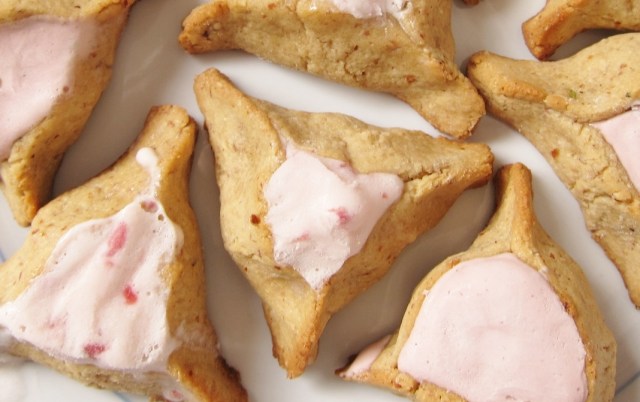
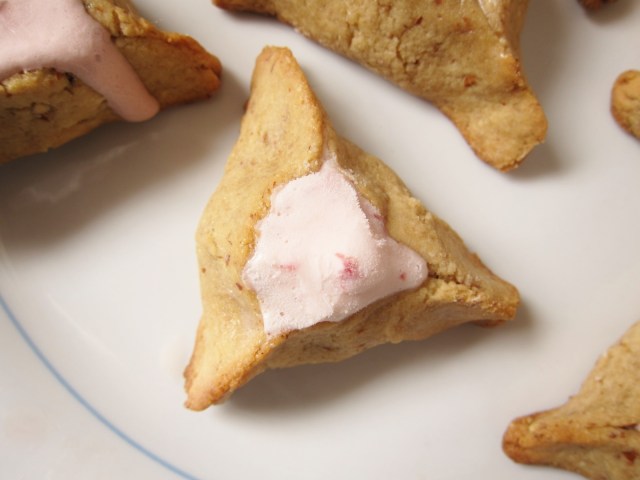
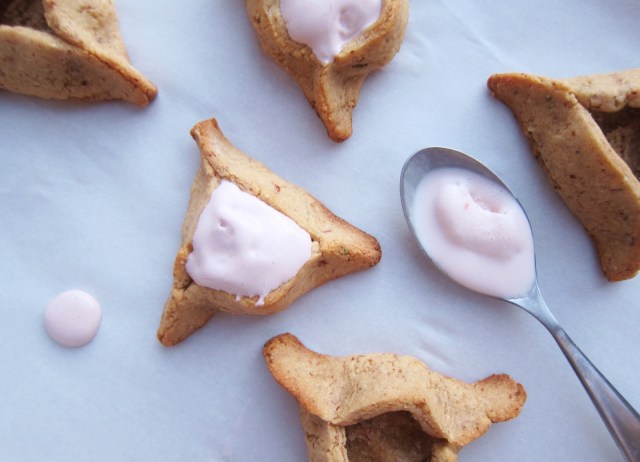
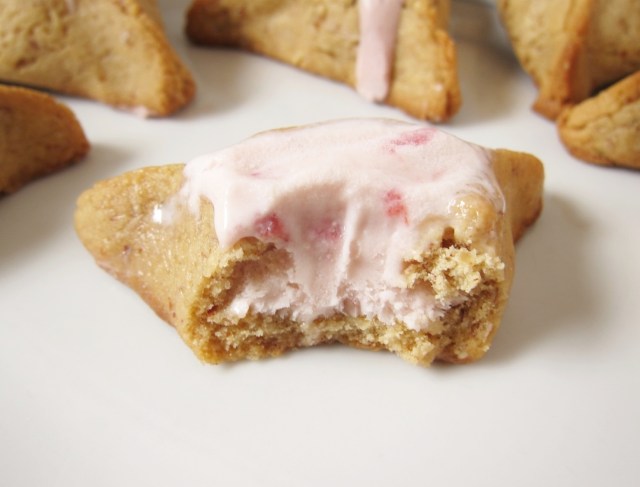
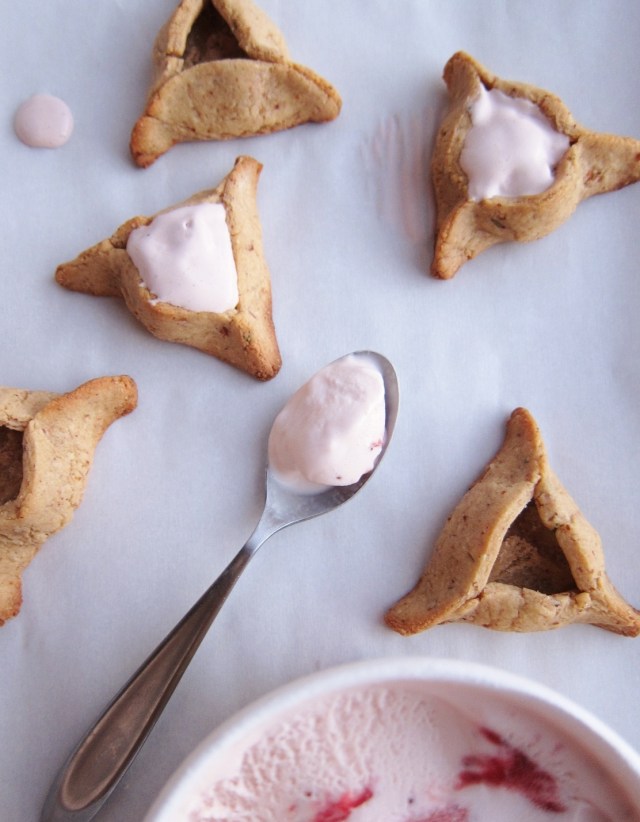
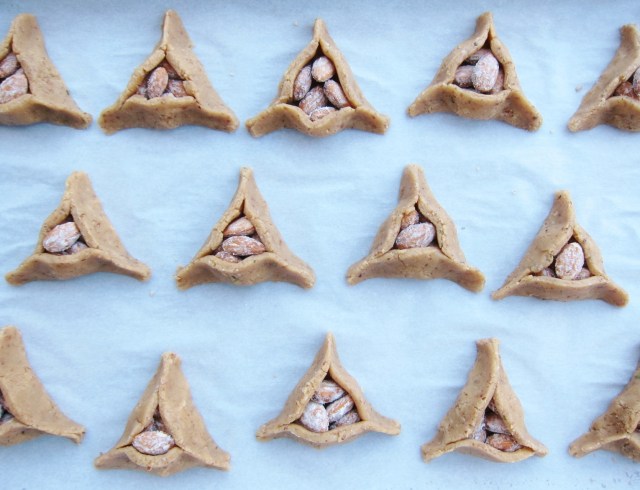
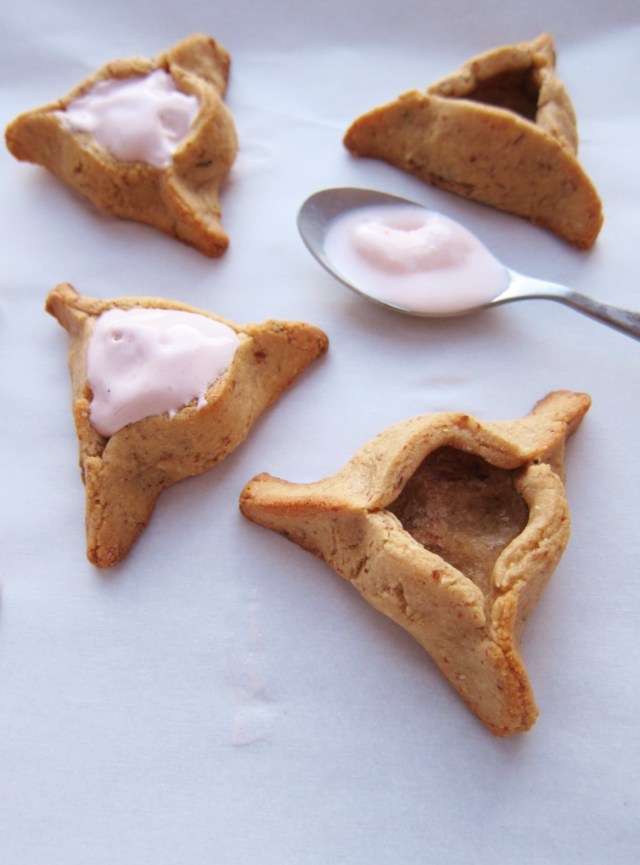
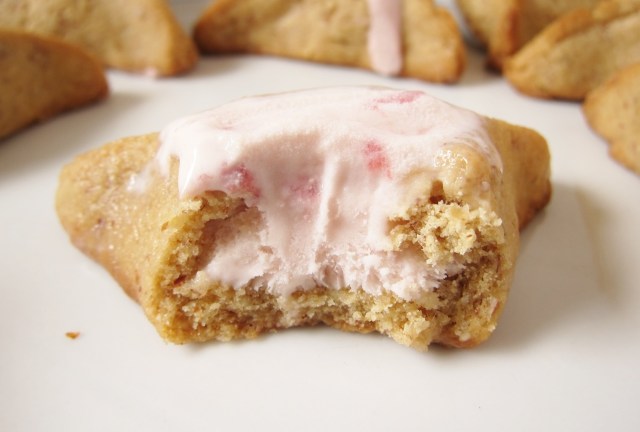 I knew it would have to be berry ice cream, and strawberry proved as wondrous as raspberry in the nutty herbal shell. It was now just a matter of how to blind-bake them. After trials with pie weights, dried beans, parchment pouches and more, I found that floured whole almonds worked best (and can be re-used to make almond meal for more hamantaschen: a delicious cycle of baking and savoring!). Like an ice cream sandwich’s festive little cousin, this ice cream filled cookie has only one downfall: it can’t be eaten warm from the oven. But I really don’t think you’ll mind once you taste one…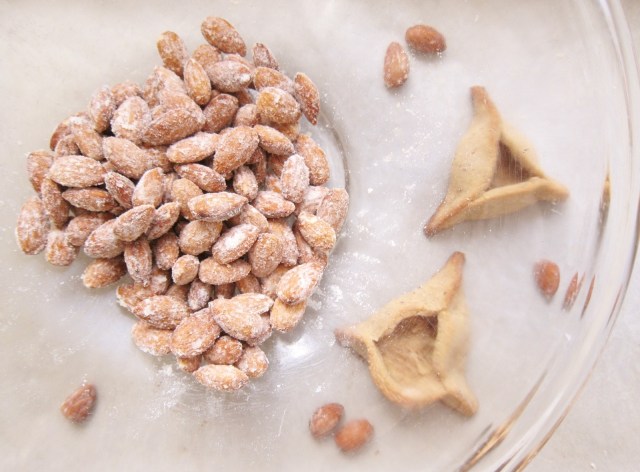
 Transfer unwrapped dough to an even, floured work surface. Using a floured rolling pin, roll dough into a slab with a thickness of no more than 1/8 to 1/6 inch. Re-flour rolling pin, surface, and all tools often. Using a floured 3″ round cookie cutter, cut out circles from dough. With a floured flat spatula, transfer each dough circle to the parchment lined baking sheets. (Beware: Work quickly, as letting the rolled dough sit out for too long will cause it to dry and will make it crack when trying to fold it.)
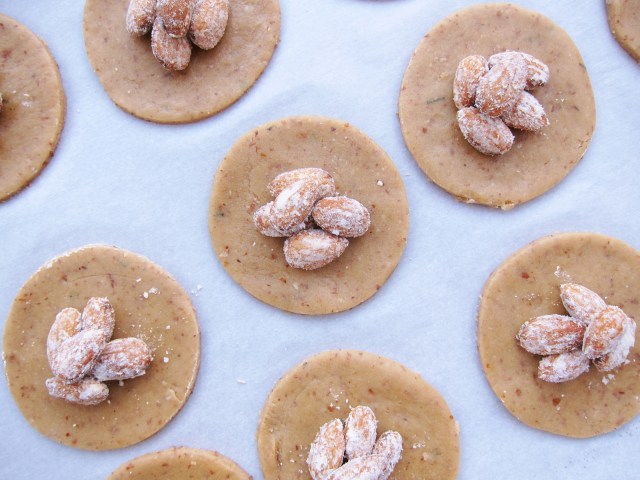 Immediately place 5 floured almonds in the center of each cookie, then fold up 3 edges to form a triangle. Pinch corners of the opening tightly to prevent cookies from flopping open while baking. Place in freezer for at least 30 minutes; this will help ensure that they hold their shape. While cookies freeze, preheat the oven to 375 F, and unwrap the remaining dough, repeating the rolling, cutting, filling, folding and freezing process.
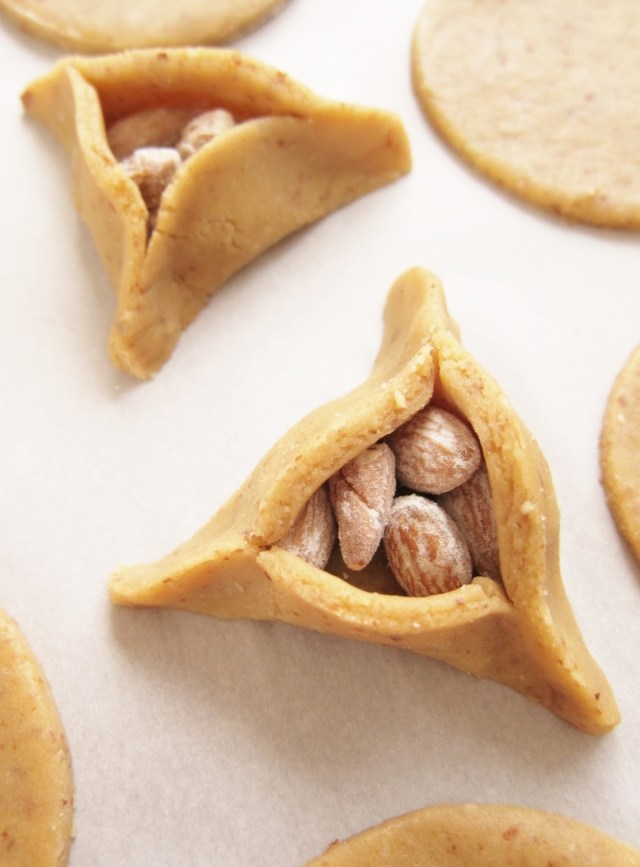 Bake frozen cookies one sheet at a time for 8 to 10 minutes, or until edges and bottoms are toasty brown. Remove from oven and let cool on cookie sheets for 10 minutes or until cool enough to handle. Use a toothpick to loosen and remove whole almonds from each cookie’s center, bracing cookie with one hand while holding toothpick with the other. (I admit this sounds tedious, but the almonds shouldn’t be very stuck, and it goes fast. If any nuts refuse to budge, try stabbing the almond with the toothpick and prying it out, or just leave it – a toasted almond in a cookie isn’t such a bad surprise!)

 butter, sugar, flowers

